Book Bans and Book Challenges | Brisamina Alessio | TEDxYouth@HPA
TL;DR
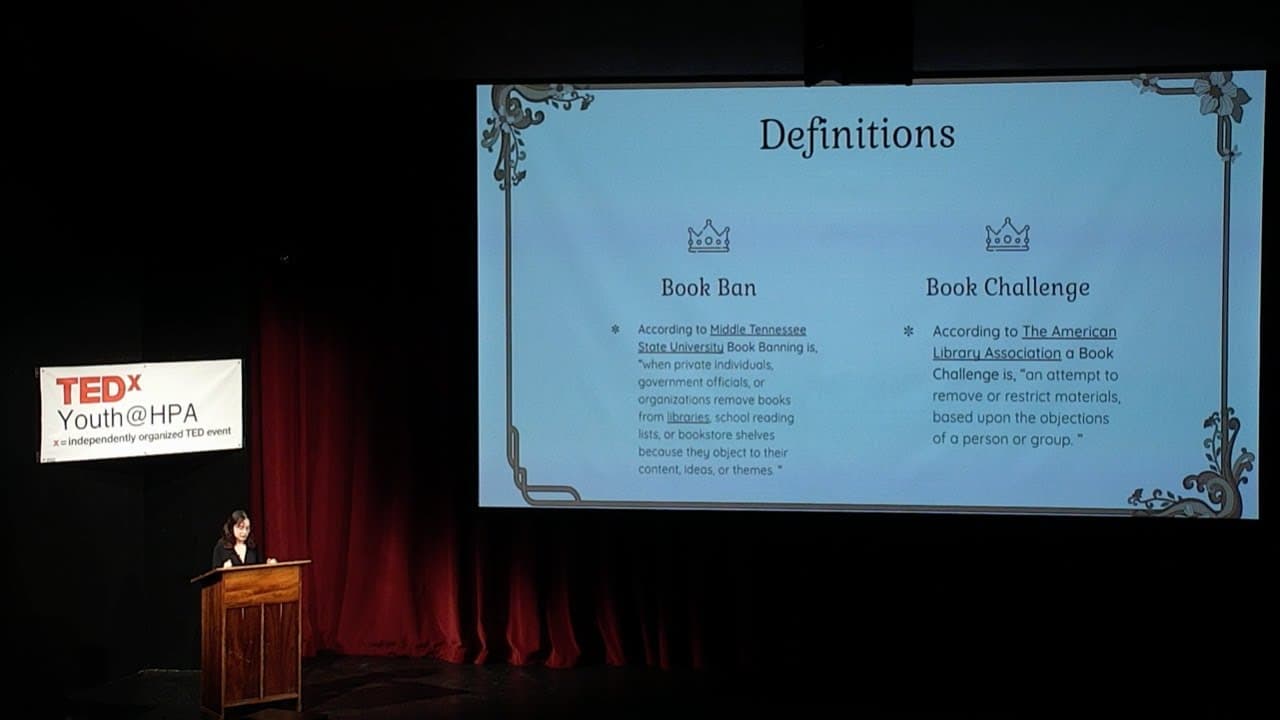
Book bans and challenges restrict reading materials based on objections to content, limiting learning and diversity.
Transcript
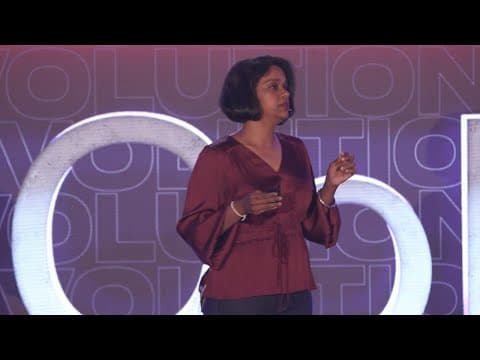
hi everyone um I hope you're having a great evening um my name is Mina and I'm a senior here at HPA and today I'm going to be talking about book bands and book challenges a little bit about what they are why they happen and when they have happened but first I want to tell you a little bit more about me and why I think this is such an interesting to... Read More
Key Insights
- 📔 Personal experiences with books can shape one's perspective on book bans and challenges.
- 🤕 Book bans and challenges restrict access to diverse perspectives and ideas.
- 🤕 Historical examples of book bans demonstrate the impact on literature and society.
- 💦 Modern examples, such as the banning of popular works like "Harry Potter" and "The Handmaid's Tale," reflect ongoing censorship issues.
- 🤕 Book bans and challenges can limit learning opportunities and intellectual freedom.
- 🤕 Understanding the reasons behind book bans, such as objections to explicit content or controversial themes, is essential.
- 🤔 Education should involve critical thinking about banned books and challenging censorship.
Install to Summarize YouTube Videos and Get Transcripts
Explore YouTube Video Summarizer or Get YouTube Transcript Extractor
Questions & Answers
Q: What is a book ban, and how does it differ from a book challenge?
A book ban is the removal of a book due to objections to its content, while a book challenge is an attempt to restrict or remove materials based on objections from individuals or groups. Both limit access to diverse perspectives and ideas.
Q: Why are books banned or challenged?
Books are often banned or challenged due to explicit sexuality, obscenity, LGBTQ+ content, drugs and alcohol references, violence, and religious themes. These reasons reflect societal discomfort with certain topics or perspectives.
Q: What are some historical examples of book bans?
Historical book bans include the burning of works by John do Albert Einstein, Sigman Freud, and Helen Keller in Nazi Germany, and the burning of Kurt Vonnegut's "Slaughterhouse-Five" in North Dakota. These bans typically target controversial or challenging content.
Q: Why is it important to address book bans and challenges?
Book bans restrict access to diverse ideas, limit learning opportunities, and promote censorship. Understanding and addressing book bans is crucial for protecting intellectual freedom and promoting critical thinking.
Summary & Key Takeaways
-
The speaker shares personal experiences with books, leading into a discussion on book bans and challenges.
-
Book bans involve removing literature from libraries or schools due to objections to content.
-
Historical and modern examples of book bans highlight the impact on literature and education.
Read in Other Languages (beta)
Share This Summary 📚
Summarize YouTube Videos and Get Video Transcripts with 1-Click
Try YouTube Summary with ChatGPT & Claude or YouTube Transcript Generator
Explore More Summaries from TEDx Talks 📚


Summarize YouTube Videos and Get Video Transcripts with 1-Click
Try YouTube Summary with ChatGPT & Claude or YouTube Transcript Generator