Seeing Like Mantis Shrimp to Spot Cancer
TL;DR
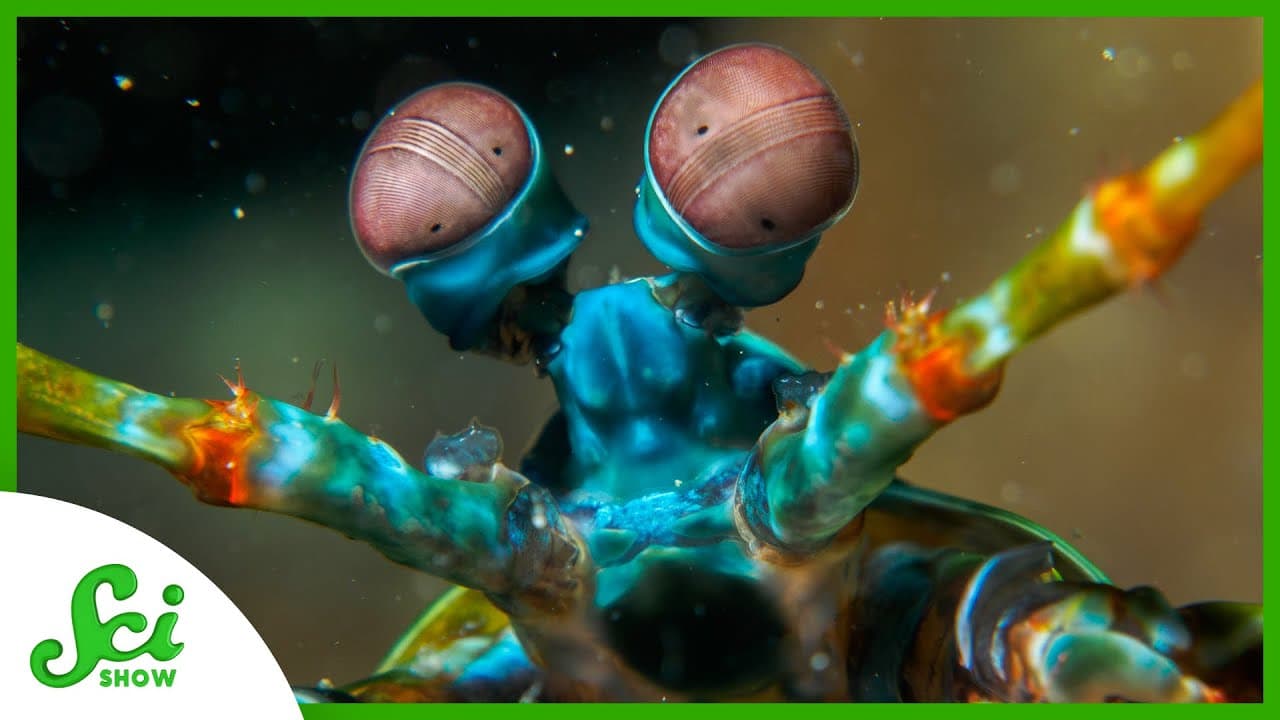
Researchers have developed cameras inspired by the advanced eyesight of mantis shrimp that can detect early stages of cancer by viewing multiple types of polarized light.
Transcript
[♪ INTRO] Mantis shrimp have lots of striking characteristics. They have big, rainbow-colored bodies and they punch so strong it can break glass. But one of their more discreet superpowers is the ability to see polarized light. This might not seem like a huge deal. Except that cancer cells interact with polarized light in a unique way. So resea... Read More
Key Insights
- 🙂 Mantis shrimp have advanced eyesight with multiple color receptors and the ability to detect polarized light, including circular polarized light.
- 🙂 Cameras inspired by mantis shrimp eyesight have been developed to detect cancer by viewing multiple types of polarized light.
- ♋ Scattering of polarized light by cancer cells differs from healthy cells due to irregular shape, density, and nucleii, allowing for early cancer detection.
- 😒 The use of mantis shrimp-inspired cameras can improve cancer detection during procedures like colonoscopies, leading to less invasive treatments and faster recoveries.
- 🛩️ These cameras are smaller, lighter, and more affordable than existing technologies, making them suitable for resource-limited locations.
- 🍤 The development of mantis shrimp-inspired cameras brings the superpower of advanced eyesight to cancer detection.
- 🐭 Early prototypes of the cameras have successfully differentiated between healthy and cancerous tissue in mice.
Install to Summarize YouTube Videos and Get Transcripts
Explore YouTube Video Summarizer or Get YouTube Transcript Extractor
Questions & Answers
Q: How do mantis shrimp detect polarized light?
Mantis shrimp have advanced eyesight with compound eyes divided into three sections. They have receptors capable of detecting different kinds of polarized light, including circular polarized light, which they use for hunting and communication.
Q: How are researchers developing cameras inspired by mantis shrimp eyesight?
Researchers are stacking silicon photodiodes in their cameras to mimic the stacked photosensitive bits in mantis shrimp eyes. They also use metallic nanowires as polarization filters to enable the detection of polarized light from different directions.
Q: How does polarized light scattering help detect cancer?
When polarized light is aimed at tissues in the body, it is scattered by cells. Healthy cells scatter the light in a similar way, while cancerous cells scatter it differently due to their irregular shape, density, and nucleii. Changes in the direction of circular polarized light can indicate the aggressiveness of cancer.
Q: How can mantis shrimp-inspired cameras improve cancer detection?
The cameras can be used during procedures such as colonoscopies to detect tumors at much earlier stages. This allows for less invasive treatments and decreased recovery times. The cameras are also smaller, lighter, and more affordable than existing technologies.
Summary & Key Takeaways
-
Mantis shrimp have advanced eyesight with compound eyes and sixteen color receptors, including six receptors for detecting polarized light.
-
The ability of mantis shrimp to detect polarized light is being leveraged by researchers to develop cameras for early cancer detection.
-
Cancer cells scatter polarized light differently from healthy cells, and a camera that can view multiple types of polarized light can identify cancer in its early stages.
Read in Other Languages (beta)
Share This Summary 📚
Summarize YouTube Videos and Get Video Transcripts with 1-Click
Try YouTube Summary with ChatGPT & Claude or YouTube Transcript Generator
Explore More Summaries from SciShow 📚


Summarize YouTube Videos and Get Video Transcripts with 1-Click
Try YouTube Summary with ChatGPT & Claude or YouTube Transcript Generator