How daylight saving time affects our bodies, minds -- and world | Sleeping with Science
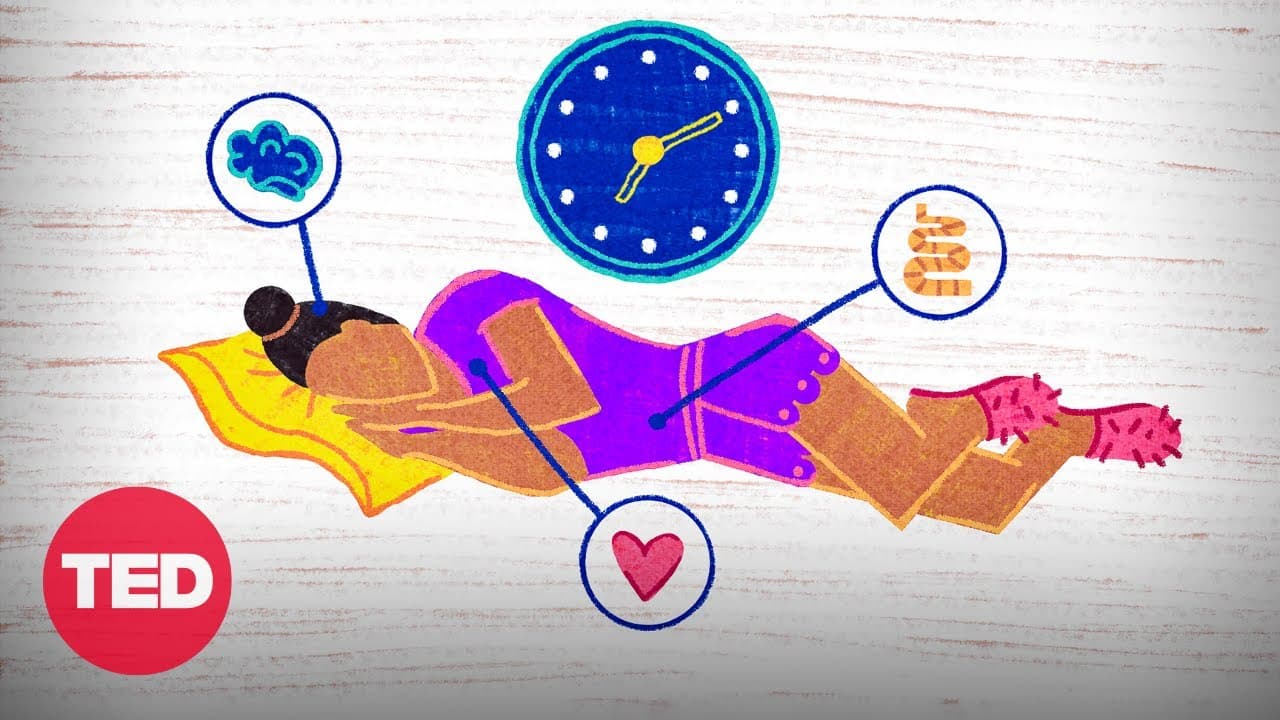
TL;DR
Daylight saving time significantly affects health and economy.
Transcript
Transcriber: TED Translators Admin Reviewer: Did you know that there is a global experiment performed on approximately 1.6 billion people across 75 countries twice a year? It’s called daylight saving time. [Sleeping with Science] The sleep-associated consequences are more significant than you may realize. For example in the spring, when we lose one... Read More
Key Insights
- Daylight saving time impacts 1.6 billion people across 75 countries, illustrating its global reach and significance.
- Losing an hour of sleep in spring correlates with a 24% increase in heart attacks, highlighting the health risks of sleep deprivation.
- Gaining an hour of sleep in autumn results in a 21% reduction in heart attacks, showing the positive effects of additional sleep.
- Daylight saving time also affects road traffic accidents, strokes, and suicide rates, indicating widespread societal impacts.
- The economy is not immune, with stock market returns experiencing a downturn after the spring time change.
- The human brain and body are highly sensitive to even minor sleep changes, underscoring the importance of sleep.
- Small increases in sleep can lead to immediate and long-term health benefits, emphasizing sleep as a vital investment.
- Reframing sleep from a cost to an investment can enhance health and societal well-being.
Install to Summarize YouTube Videos and Get Transcripts
Explore YouTube Video Summarizer or Get YouTube Transcript Extractor
Questions & Answers
Q: What is the global impact of daylight saving time?
Daylight saving time affects approximately 1.6 billion people across 75 countries, making it a significant global phenomenon. The biannual time change has widespread implications, influencing not only individual health but also societal factors like road safety and economic performance. Its pervasive impact underscores the importance of understanding and potentially reevaluating this practice.
Q: How does losing an hour of sleep in spring affect health?
Losing an hour of sleep in spring due to daylight saving time is associated with a 24% increase in heart attacks. This statistic highlights the serious health risks linked to even minor sleep deprivation. The increased incidence of heart attacks underscores the critical role sleep plays in maintaining cardiovascular health and overall well-being.
Q: What are the health benefits of gaining an hour of sleep in autumn?
Gaining an hour of sleep in autumn is linked to a 21% reduction in heart attacks, demonstrating the positive health effects of additional sleep. This reduction emphasizes the protective benefits of sleep on cardiovascular health and suggests that even small increases in sleep duration can have significant health advantages.
Q: In what ways does daylight saving time affect societal outcomes?
Daylight saving time affects various societal outcomes, including road traffic accidents, strokes, and suicide rates. These changes indicate that the time shift has far-reaching implications beyond individual health. The alterations in these rates suggest that sleep deprivation can have profound effects on public safety and mental health.
Q: How does daylight saving time influence economic performance?
The economy is influenced by daylight saving time, particularly through stock market performance. Following the spring time change, there is often a downturn in stock market returns. This suggests that the loss of sleep can have negative economic consequences, highlighting the interconnectedness of sleep and economic stability.
Q: Why is sleep considered a vital investment according to the content?
Sleep is considered a vital investment because it offers both immediate and long-term health benefits. By reframing sleep from a cost to an investment, individuals and societies can prioritize sleep to enhance health outcomes and resilience. The content emphasizes the importance of recognizing sleep's value in improving overall well-being.
Q: What does the content suggest about the sensitivity of the human brain and body to sleep changes?
The content suggests that the human brain and body are highly sensitive to even minor changes in sleep. This sensitivity is evident in the significant health and societal impacts observed with daylight saving time. It underscores the necessity of maintaining adequate sleep for optimal functioning and health.
Q: How can reframing sleep as an investment benefit society?
Reframing sleep as an investment can benefit society by encouraging healthier sleep habits, leading to improved physical and mental health outcomes. This perspective can also enhance productivity and economic performance, as adequate sleep is linked to better decision-making and reduced errors. Overall, it promotes a healthier, more resilient society.
Summary & Key Takeaways
-
Daylight saving time is a global phenomenon affecting 1.6 billion people in 75 countries. The time change has significant consequences on health, with an increase in heart attacks during spring and a decrease in autumn. It also impacts road accidents, strokes, suicide rates, and economic performance.
-
The spring transition, which results in losing an hour of sleep, correlates with a 24% rise in heart attacks. Conversely, gaining an hour in the fall results in a 21% decrease. These statistics reveal the profound impact sleep has on health and societal outcomes.
-
The economy is affected by daylight saving time, with stock market returns dipping after the spring transition. This highlights the fragility of our systems to sleep loss, but also the potential benefits of increased sleep, which can lead to improved health and societal resilience.
Read in Other Languages (beta)
Share This Summary 📚
Summarize YouTube Videos and Get Video Transcripts with 1-Click
Try YouTube Summary with ChatGPT & Claude or YouTube Transcript Generator
Explore More Summaries from TED 📚






Summarize YouTube Videos and Get Video Transcripts with 1-Click
Try YouTube Summary with ChatGPT & Claude or YouTube Transcript Generator