What are the 11 key areas of Data Management and specific data roles?
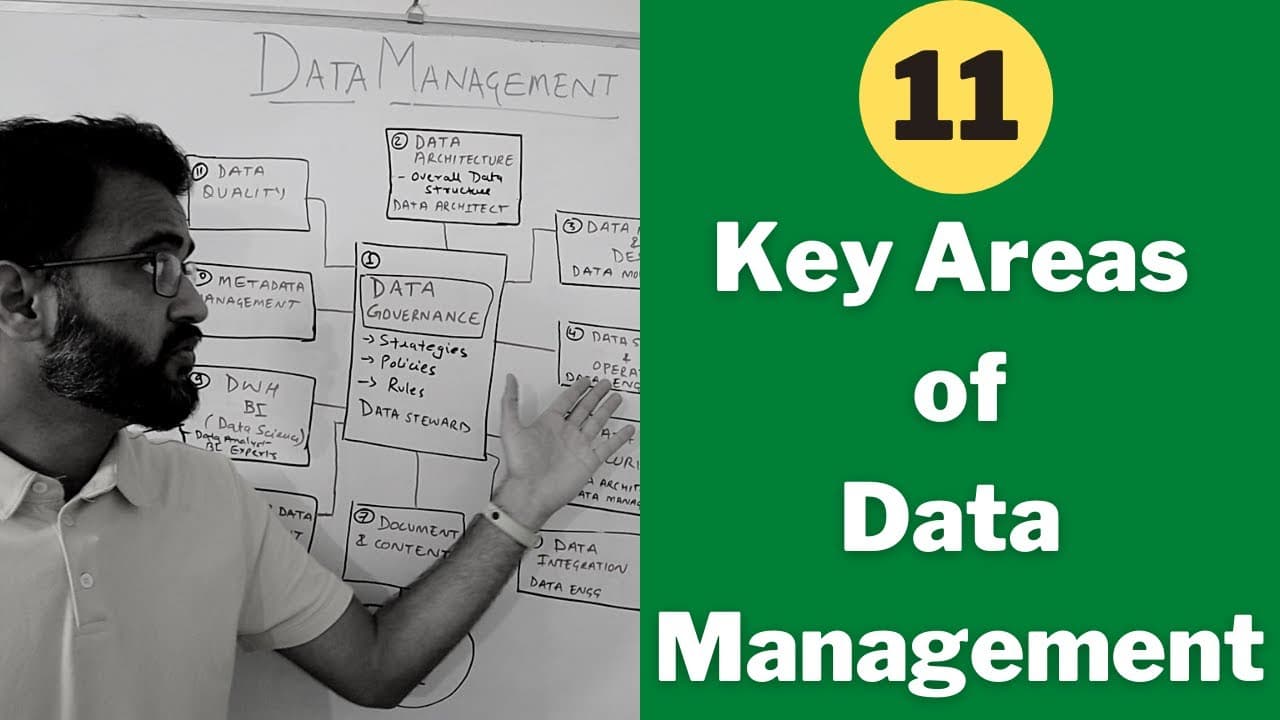
TL;DR
Overview of 11 essential data management areas and roles.
Transcript
hello friends welcome to itk fun day your own channel where we make it interesting for everyone and in this video we will understand what is data management now when we say data management it pretty much covers every aspect of data and overall data industry in which we work but if we go by the standards there are 11 clear and precise areas which ha... Read More
Key Insights
- Data management encompasses 11 key areas crucial for the effective handling of data within an organization, ensuring security, reliability, and efficiency.
- Data governance is central, acting like a government to create policies and frameworks for managing data across all areas.
- Data architecture involves defining the design and structure of data systems, with roles like chief data architects playing a key part.
- Data modeling and design focus on creating conceptual, logical, and physical data models to guide data extraction and storage.
- Data storage and operations ensure data is acquired, maintained, and recovered properly, with data engineers playing a pivotal role.
- Data security involves compliance and authorization measures to protect data, often coordinated with security teams.
- Data integration, often associated with ETL processes, involves creating pipelines for data extraction and loading.
- Master data management ensures the quality and consistency of key business entities like customer data across the organization.
Install to Summarize YouTube Videos and Get Transcripts
Explore YouTube Video Summarizer or Get YouTube Transcript Extractor
Questions & Answers
Q: What is the role of data governance in data management?
Data governance acts like a government within an organization, establishing strategies, policies, and frameworks for managing data. It ensures that data is controlled, maintained, and utilized effectively across all areas, connecting with every aspect of data management to maintain consistency and compliance.
Q: How does data architecture contribute to effective data management?
Data architecture defines the design and structure of data systems, determining how data fits into specific designs. Roles like chief data architects are responsible for managing and defining these architectures, ensuring that other disciplines follow the established patterns to maintain data consistency and efficiency.
Q: What is the importance of data modeling and design?
Data modeling and design involve creating conceptual, logical, and physical data models that guide data extraction, acquisition, and storage. These models ensure that data is organized and utilized effectively, aligning with the data architecture strategy to support specific use cases and business needs.
Q: What role do data engineers play in data storage and operations?
Data engineers are crucial in data storage and operations, responsible for acquiring, maintaining, and recovering data. They ensure that data pipelines run smoothly and are maintained correctly, playing a key role in the overall management and integrity of an organization's data assets.
Q: How is data security managed within data management?
Data security involves implementing compliance measures, audits, and authorization processes to protect data. While there is no specific role solely for data security, data architects, managers, and engineers collaborate with security teams to develop a comprehensive data security framework tailored to the organization's needs.
Q: What is the function of data integration in data management?
Data integration, often associated with ETL processes, involves creating pipelines for acquiring data from sources and loading it into destinations. This integration layer is crucial for ensuring seamless data flow and connectivity within an organization, with data engineers playing a prominent role in its implementation.
Q: Why is master data management important?
Master data management ensures the quality and consistency of key business entities, such as customer data, across the organization. It helps maintain accurate records, preventing redundancy and ensuring that different business teams have a unified view of critical data, which is essential for effective decision-making and resource allocation.
Q: What challenges does metadata management address?
Metadata management addresses challenges related to data organization and redundancy. In environments like data lakes, it helps prevent the creation of data swamps by managing metadata that explains the origin, purpose, and structure of data. This management ensures data integrity and usability, supporting effective data governance and quality control.
Summary & Key Takeaways
-
The video outlines 11 key areas of data management, including data governance, architecture, modeling, storage, security, integration, and more. Each area involves specific roles and responsibilities crucial for effective data handling.
-
Data governance, at the center of data management, creates policies and frameworks for managing data. Data architecture and modeling define the structure and design of data systems, guiding data extraction and storage processes.
-
Data storage and operations focus on maintaining data integrity, with data engineers ensuring data pipelines function correctly. Data security involves protecting data through compliance and authorization, often requiring collaboration with security teams.
Read in Other Languages (beta)
Share This Summary 📚
Summarize YouTube Videos and Get Video Transcripts with 1-Click
Try YouTube Summary with ChatGPT & Claude or YouTube Transcript Generator
Explore More Summaries from IT k Funde 📚

Summarize YouTube Videos and Get Video Transcripts with 1-Click
Try YouTube Summary with ChatGPT & Claude or YouTube Transcript Generator