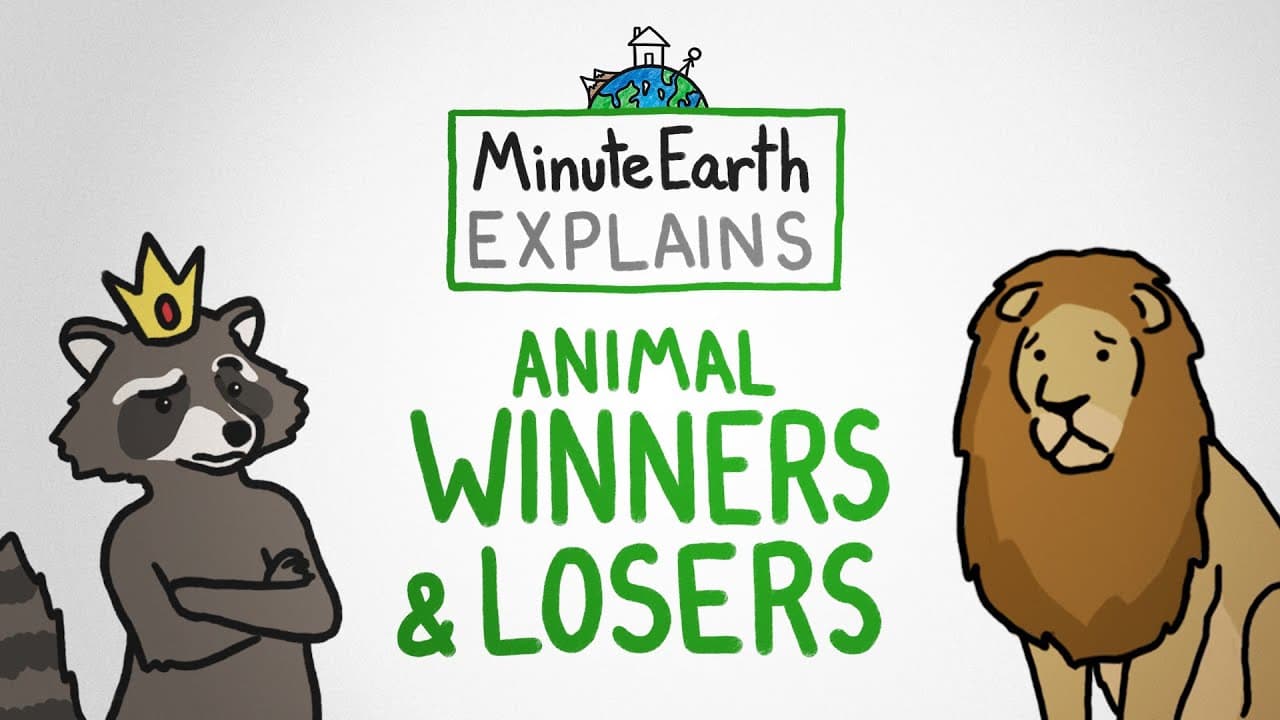
MinuteEarth Explains: Animal Winners and Losers
TL;DR
This video explores different examples of winners and losers in the animal kingdom, including monkeys' tails, apex predators, and the impact of humans on certain species.
Transcript
Hi, this is Kate from MinuteEarth. Among animals, some species seem to have it all, and others...don’t. Today, we’re sharing four tales of winners and losers in the animal kingdom. Let’s get right to it with a tale about, well, tails. Many of the monkeys scampering around the forests of Central and South America have something special on their butt... Read More
Key Insights
- 🍸 Monkeys in Central and South America have evolved prehensile tails due to the abundance of vines in their forests.
- 😮 The decline of apex predators has led to the rise of mesopredators in various ecosystems.
- 🧑🏭 Human actions have had a significant impact on the populations of certain species, with winners and losers depending on factors such as hunting and habitat changes.
Install to Summarize YouTube Videos and Get Transcripts
Explore YouTube Video Summarizer or Get YouTube Transcript Extractor
Questions & Answers
Q: Why do monkeys in Central and South America have prehensile tails while monkeys in Africa and Asia do not?
The difference in tails is likely due to the difference in forests. The forests in Central and South America have more vines that monkeys use, making prehensile tails useful for balance. In Asia, where forests have fewer vines, monkeys do not find prehensile tails as beneficial.
Q: What are mesopredators and how are they replacing apex predators?
Mesopredators are smaller predators that are rising to the top of the food chain due to the decline of apex predators. They have different hunting behaviors and ecological impacts compared to apex predators.
Q: How have human actions affected the populations of Asian bears and American ferrets?
In Asia, bear bile has been falsely believed to have medicinal properties, leading to the killing and imprisonment of bears for their gallbladders. This has decimated the Asiatic black bear population. In contrast, bears in North America have benefited from decreased hunting and the growth of new-growth forests. The American ferrets' decline in North America can be attributed to the loss of their primary food source, prairie dogs, due to human activities like ranching.
Q: What is an invasive species and how do they cause harm?
Invasive species are introduced species that harm ecosystems, economy, or human health. They can outcompete native species, disrupt food chains, and cause economic damage. Examples include yellow crazy ants in Australia and rabbits in New Zealand.
Summary & Key Takeaways
-
Many monkeys in Central and South America have prehensile tails, which help them navigate the forest canopy. Monkeys in Africa and Asia, however, do not have this adaptation.
-
Apex predators, such as lions and tigers, have faced threats from human activities, leading to the rise of mesopredators.
-
Human actions have influenced the success or decline of certain species, such as Asian bears and American ferrets, due to hunting and habitat changes.
Read in Other Languages (beta)
Share This Summary 📚
Summarize YouTube Videos and Get Video Transcripts with 1-Click
Try YouTube Summary with ChatGPT & Claude or YouTube Transcript Generator
Explore More Summaries from MinuteEarth 📚





Summarize YouTube Videos and Get Video Transcripts with 1-Click
Try YouTube Summary with ChatGPT & Claude or YouTube Transcript Generator