Why Are Some Countries Rich and Others Poor?
TL;DR
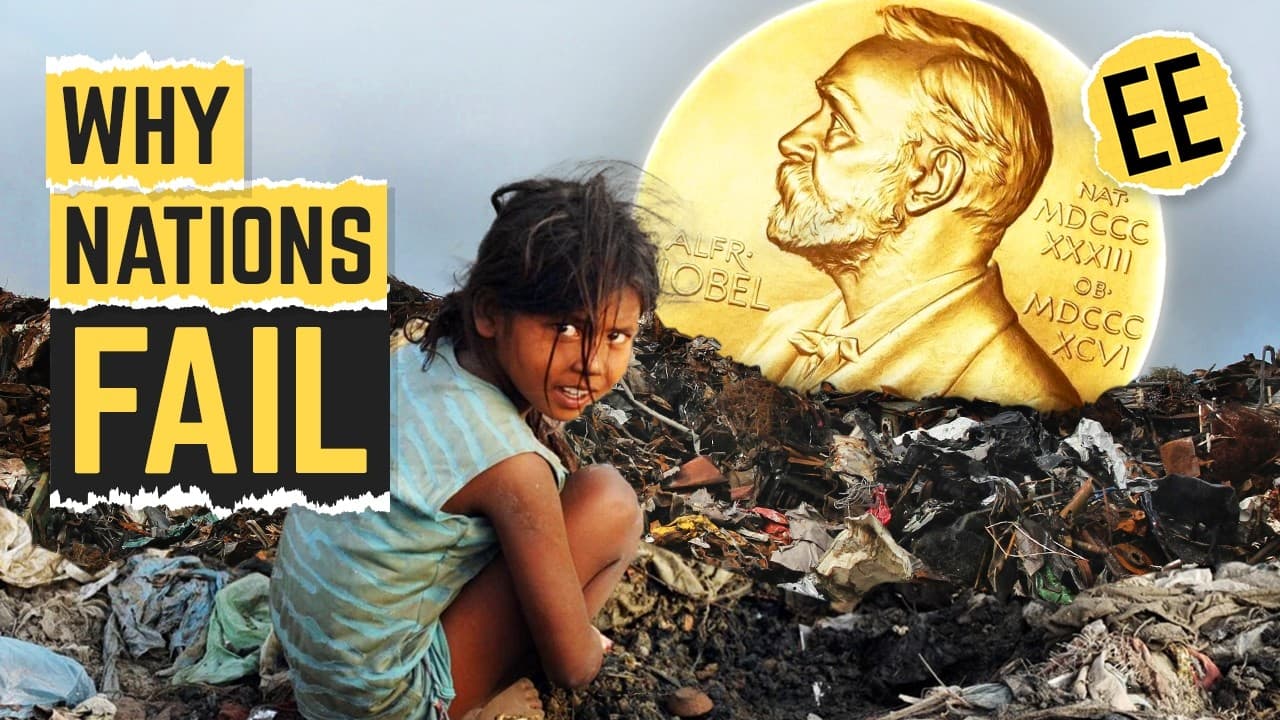
The 2024 Nobel Prize in Economics was awarded to Daron Acemoglu, Simon Johnson, and James A. Robinson for their work explaining why some countries are rich while others remain poor. They argue that the stability and reliability of a country's institutions are key determinants of its economic success, rather than natural resources or geography.
Transcript
this fagus Rick's Bank prize in economic Sciences in honor of Alfred Nobel known more commonly but less correctly simply as the Nobel prize in economics is an annual prize awarded to economists who have made significant contributions to the social sciences the reason why the Nobel prize in economics technically has a different name is because it wa... Read More
Key Insights
- The Nobel Prize in Economics is officially the Sveriges Riksbank Prize in Economic Sciences in Memory of Alfred Nobel.
- Economics was not originally included in the Nobel Prizes but was added later by the Swedish Central Bank.
- Daron Acemoglu, Simon Johnson, and James A. Robinson won the 2024 Nobel Prize for explaining economic disparities between nations.
- They argue that the stability and reliability of a country's institutions determine its economic success.
- Countries with good institutions allow people to invest in skills and resources confidently, leading to economic growth.
- Rich countries are not rich because they can afford good institutions; rather, good institutions make them rich.
- Historical analysis shows that colonialism's legacy affected institutional development, impacting modern economic status.
- Nonviolent power transitions and fair institutions are key to improving economic conditions in poorer nations.
Install to Summarize YouTube Videos and Get Transcripts
Explore YouTube Video Summarizer or Get YouTube Transcript Extractor
Questions & Answers
Q: How does the Nobel Prize in Economics differ from other Nobel Prizes?
The Nobel Prize in Economics, officially known as the Sveriges Riksbank Prize in Economic Sciences in Memory of Alfred Nobel, differs from other Nobel Prizes because it was not part of the original awards established by Alfred Nobel. It was added later by the Swedish Central Bank, which funds it separately from the other Nobel Prizes. This distinction is why it is sometimes referred to as the Nobel Prize in Economics, although this is technically incorrect.
Q: Why do some countries remain poor despite having natural resources?
Some countries remain poor despite having natural resources because economic success is more closely tied to the stability and reliability of institutions than to natural resources. Good institutions provide the framework for fair resource allocation, investment security, and economic growth. Without these, countries may struggle with corruption, mismanagement, and exploitation, preventing them from fully leveraging their natural resources for economic development.
Q: What role do institutions play in economic success?
Institutions play a critical role in economic success by providing a stable and reliable framework for resource allocation and investment. They ensure that individuals and businesses can invest in skills and resources with confidence, knowing their efforts will be fairly rewarded. Good institutions support economic growth by fostering a trustworthy environment for trade, innovation, and development, leading to increased prosperity.
Q: How did historical colonialism impact modern economic disparities?
Historical colonialism impacted modern economic disparities by shaping the development of institutions in colonized regions. Wealthy regions before colonialism often had institutions imposed to control and exploit local populations, leading to corruption and poor management post-independence. In contrast, less prosperous regions with settler colonies developed institutions to support independent operations, fostering economic growth. These historical legacies have contributed to current economic inequalities between nations.
Q: Can good institutions alone make a country wealthy?
Good institutions are a crucial factor in making a country wealthy, but they are not the sole determinant. While they provide the necessary framework for economic growth by ensuring fair and reliable systems, other factors such as political stability, education, infrastructure, and global economic conditions also play significant roles. However, without good institutions, achieving and sustaining wealth becomes significantly more challenging.
Q: What is the relationship between democracy and economic success?
Democracy is often associated with economic success because it typically involves checks and balances that promote fair and transparent governance. This environment fosters good institutions, which are essential for economic growth. Democratic systems tend to encourage accountability, protect property rights, and provide political stability, all of which contribute to a conducive environment for economic development and prosperity.
Q: Why are nonviolent power transitions important for economic improvement?
Nonviolent power transitions are important for economic improvement because they maintain stability and continuity within a country's institutions. Violent transitions or revolutions can lead to instability, disrupt economic activities, and create power vacuums that may result in corruption and mismanagement. Peaceful transitions allow for the gradual implementation of reforms and the strengthening of institutions, which are essential for sustainable economic growth.
Q: How can poorer nations improve their economic conditions?
Poorer nations can improve their economic conditions by focusing on building and maintaining robust, fair, and reliable institutions. This involves ensuring transparency, accountability, and the rule of law, which encourage investment and economic activity. Additionally, fostering education, infrastructure development, and political stability are crucial. International cooperation and learning from successful economies can also provide valuable insights and support for implementing effective policies.
Summary & Key Takeaways
-
The 2024 Nobel Prize in Economics was awarded to economists Daron Acemoglu, Simon Johnson, and James A. Robinson for their groundbreaking work on economic inequality. They demonstrated that the stability and reliability of a country's institutions are crucial for its economic success, rather than natural resources or geographic position. Their research highlights how historical contexts, particularly colonial legacies, have shaped current economic disparities.
-
The laureates argue that good institutions enable individuals and businesses to invest confidently, fostering economic growth. They emphasize that economic success stems from robust institutions that ensure fair and reliable systems for resource allocation. Their work challenges the notion that wealth allows for good institutions, instead positing that good institutions create wealth.
-
Their historical analysis reveals that colonialism's legacy has left scars on institutional development, affecting modern economies. They advocate for nonviolent power transitions and the establishment of fair institutions as essential steps towards improving economic conditions in poorer nations. Their research offers practical recommendations for policy-making aimed at reducing global economic inequality.
Read in Other Languages (beta)
Share This Summary 📚
Summarize YouTube Videos and Get Video Transcripts with 1-Click
Try YouTube Summary with ChatGPT & Claude or YouTube Transcript Generator
Explore More Summaries from Economics Explained 📚






Summarize YouTube Videos and Get Video Transcripts with 1-Click
Try YouTube Summary with ChatGPT & Claude or YouTube Transcript Generator