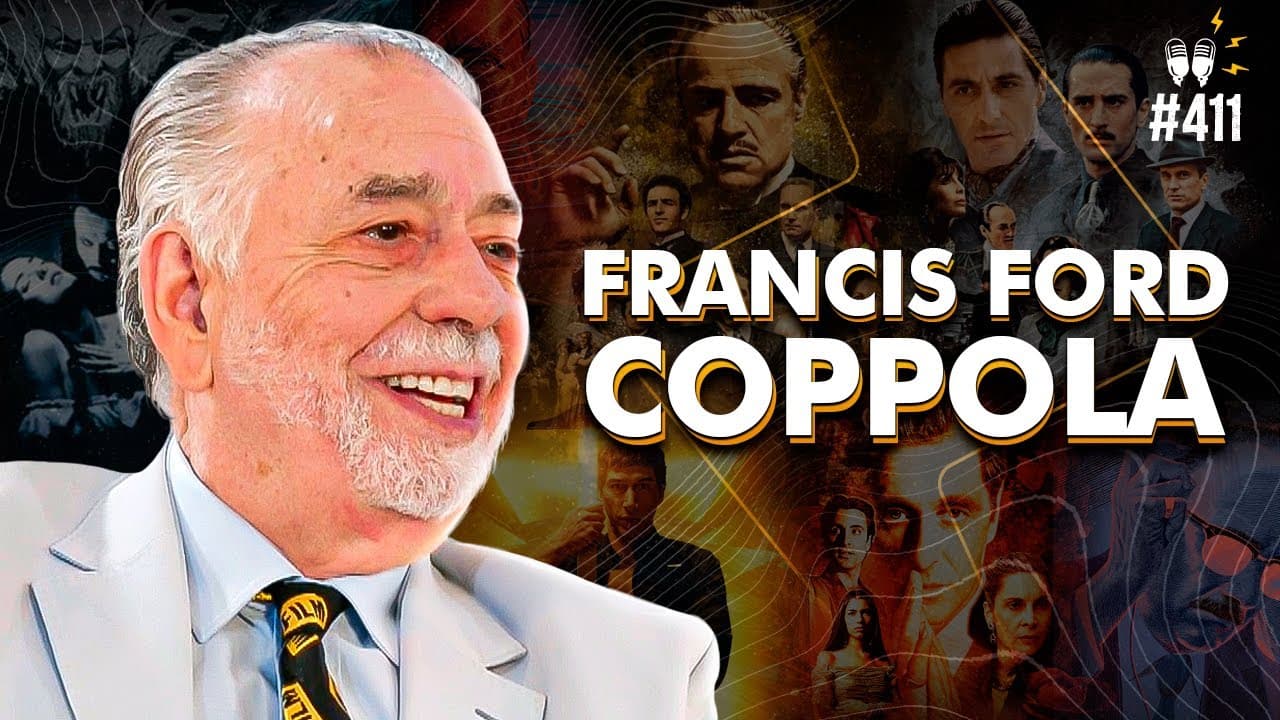
Entrevista com FRANCIS FORD COPPOLA
TL;DR
Coppola discusses Megalopolis, cinema risks, and technology's role.
Transcript
for for for megalopolis is not as easy to to enjoy as your regular Blockbuster uh especially if that's what you used to uh so uh I think that uh do you think that the the audience is ready to receive uh this kind of movie especially in a in a industry that is kind of they go with superheroes only and there are no place for there is no place for for... Read More
Key Insights
- Megalopolis challenges traditional blockbuster norms with its significant budget and risk-taking approach, aiming to illuminate contemporary life and provoke thought.
- Coppola compares the divisive reaction to Megalopolis to that of Apocalypse Now, suggesting that such reactions indicate a film's potential impact and value.
- Art films like Megalopolis defy the industry's risk-averse tendencies, emphasizing the importance of risk in creating meaningful art.
- Coppola believes technology should further human creativity, with innovations like AI and CRISPR needing careful regulation to prevent unintended consequences.
- He reflects on historical technological advancements, emphasizing creativity born from playful experimentation, and envisions a future where technology aids human creativity.
- Coppola funded Megalopolis himself, drawing parallels to his experience with Apocalypse Now, emphasizing long-term artistic value over immediate financial success.
- He expresses a desire for his children to live in a beautiful world, a theme reflected in Megalopolis's message.
- Coppola's next project, Distant Vision, aims to innovate with live cinema techniques, blending live performances with cinematic storytelling.
Install to Summarize YouTube Videos and Get Transcripts
Explore YouTube Video Summarizer or Get YouTube Transcript Extractor
Questions & Answers
Q: What is the main challenge Megalopolis faces in the current cinema industry?
Megalopolis challenges the current cinema industry by not adhering to traditional blockbuster norms. It has a significant budget typically not associated with art films and aims to provoke thought and illuminate contemporary life, contrasting with the risk-averse nature of many current films that prioritize financial success over artistic expression.
Q: How does Coppola compare Megalopolis to Apocalypse Now?
Coppola compares Megalopolis to Apocalypse Now by highlighting their similar divisive receptions. Both films were met with extreme opinions, ranging from being called the worst to the greatest. He suggests that such polarized reactions indicate a film's potential impact and its deviation from industry norms, which often leads to long-term recognition.
Q: What is Coppola's view on the role of technology in cinema?
Coppola views technology as a tool to further human creativity rather than limit it. He acknowledges the importance of innovations like AI and CRISPR but stresses the need for careful regulation to prevent unintended consequences. He believes that technology should aid in creative processes, allowing for new forms of artistic expression in cinema.
Q: Why did Coppola decide to fund Megalopolis himself?
Coppola decided to fund Megalopolis himself to maintain creative control and focus on the film's long-term artistic impact rather than immediate financial success. Drawing from his experience with Apocalypse Now, he values creating films that continue to resonate with audiences over time, believing that true artistic value transcends initial box office performance.
Q: What is Coppola's vision for his next project, Distant Vision?
Coppola's next project, Distant Vision, aims to innovate with live cinema techniques. This approach blends live performances with cinematic storytelling, allowing actors to control the timing instead of editors. He envisions using new technology, originally developed for sports, to create a film experience that feels both live and cinematic.
Q: How does Coppola view the relationship between risk and art?
Coppola believes that risk is essential to creating meaningful art. He criticizes the industry's tendency to avoid risk, likening it to making art without passion. For Coppola, risk is a fundamental component of artistic expression, necessary for producing work that challenges norms and provokes thought, as seen in films like Megalopolis.
Q: What message does Coppola hope to convey with Megalopolis?
With Megalopolis, Coppola hopes to convey a message about the importance of understanding and illuminating contemporary life. He aims to provoke thought and discussion about current global issues, encouraging audiences to reflect on the world they live in. The film seeks to challenge viewers to think critically and engage with complex topics.
Q: How does Coppola's personal life influence his filmmaking?
Coppola's personal life, particularly his role as a father, influences his filmmaking by driving his desire to create a better world for future generations. He expresses a wish for his children to live in a beautiful world, a theme reflected in Megalopolis's message. His films often explore themes of legacy and the impact of art on society.
Summary & Key Takeaways
-
Francis Ford Coppola discusses his film Megalopolis, highlighting its departure from blockbuster norms and its aim to illuminate contemporary life. He compares its reception to Apocalypse Now, suggesting divisive reactions indicate a film's significance.
-
Coppola emphasizes the importance of risk in art, criticizing the industry's tendency to avoid it. He reflects on technology's role in cinema, advocating for responsible use of innovations like AI and CRISPR to prevent negative outcomes.
-
Funding Megalopolis himself, Coppola draws on his experience with Apocalypse Now, focusing on long-term artistic impact. He plans to explore live cinema techniques in his next project, Distant Vision, blending live performances with film.
Read in Other Languages (beta)
Share This Summary 📚
Summarize YouTube Videos and Get Video Transcripts with 1-Click
Try YouTube Summary with ChatGPT & Claude or YouTube Transcript Generator
Explore More Summaries from Flow Podcast 📚


Summarize YouTube Videos and Get Video Transcripts with 1-Click
Try YouTube Summary with ChatGPT & Claude or YouTube Transcript Generator