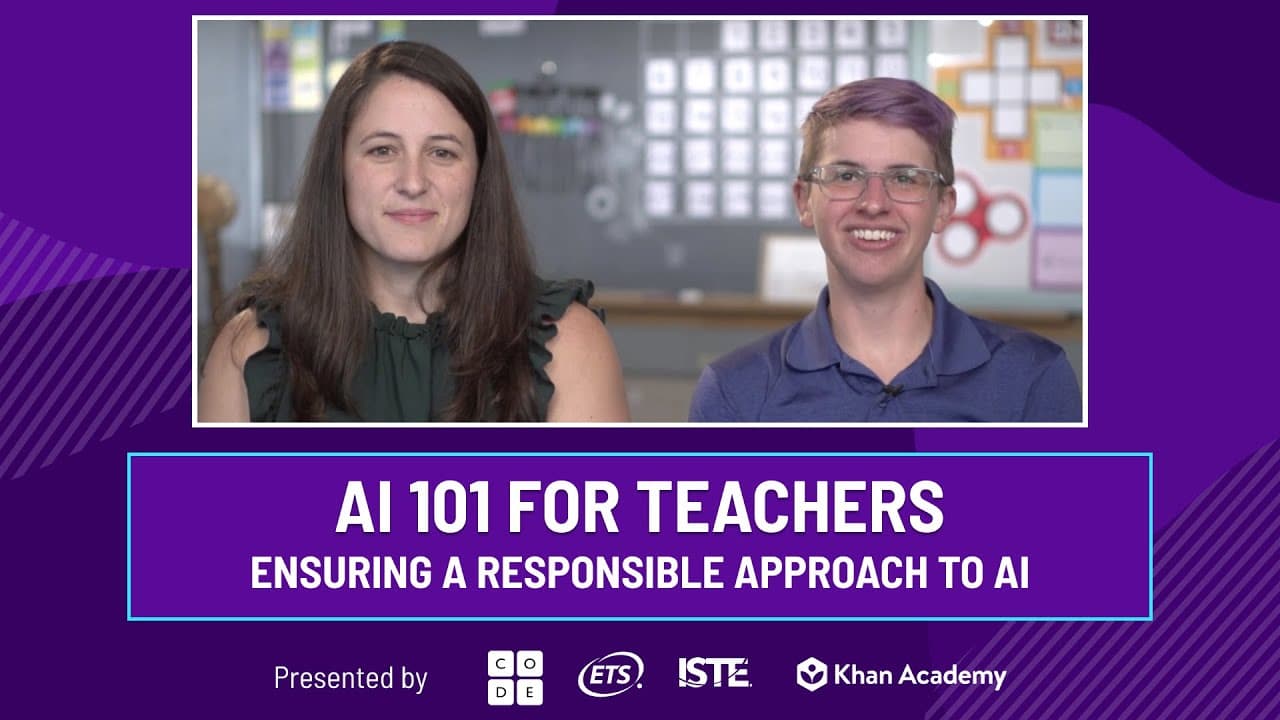
AI 101 for Teachers: Ensuring a Responsible Approach to AI
TL;DR
Explores ethical AI use in education, focusing on privacy and bias.
Transcript
hi welcome to session four of AI 101 for teachers professional learning Series so far we have been focusing mostly on the benefits of AI which might be leaving some of you with some important questions like wait a minute I've heard that sometimes AI can make mistakes or even provide biased responses how do I ensure I'm using AI resp... Read More
Key Insights
- AI offers significant educational benefits but raises concerns about privacy and misinformation, necessitating responsible use and critical evaluation.
- Educators should leverage AI to differentiate instruction but must ensure data privacy and accuracy in AI-generated content.
- AI systems can exhibit biases due to the data they're trained on, which can lead to discriminatory outcomes.
- Data privacy is crucial, especially in educational settings, where students' information must be protected and used ethically.
- AI tools should comply with regulations like FERPA and COPPA to ensure safe use in classrooms.
- Misinformation generated by AI requires educators to teach digital literacy and critical thinking to students.
- Algorithmic bias is a significant concern, as it can perpetuate existing societal inequities if not addressed.
- Educators should be proactive in understanding AI's impact and advocating for ethical use in educational environments.
Install to Summarize YouTube Videos and Get Transcripts
Explore YouTube Video Summarizer or Get YouTube Transcript Extractor
Questions & Answers
Q: What are the main concerns about using AI in education?
The main concerns include data privacy, misinformation, and algorithmic bias. Educators worry about how student data is used, whether AI-generated information is accurate, and how biases in AI systems can lead to unfair outcomes. These issues necessitate a responsible approach to AI in education.
Q: How can educators ensure AI-generated content is accurate?
Educators must act as experts, reviewing AI-generated content for accuracy before using it in the classroom. They should cross-check information with reliable sources and teach students to critically evaluate AI-generated content, fostering digital literacy and skepticism to combat misinformation.
Q: What role does data privacy play in AI use in schools?
Data privacy is crucial in schools, where students' personal information must be protected. AI tools should comply with privacy regulations like FERPA and COPPA. Educators need to understand privacy policies, adjust settings to enhance privacy, and empower students to make informed decisions about data sharing.
Q: How can algorithmic bias affect AI's use in education?
Algorithmic bias can lead to discriminatory outcomes, affecting decisions in areas like student assessments and resource allocation. Biases arise from the data AI systems are trained on, which can reflect societal prejudices. Educators should be aware of these biases and work to mitigate their impact.
Q: Why is it important to teach digital literacy in the context of AI?
Digital literacy is essential to help students critically assess the information produced by AI, which can include misinformation. Teaching digital literacy equips students with skills to verify information, recognize biases, and make informed decisions, fostering a more discerning and responsible use of AI.
Q: What strategies can educators use to address AI misinformation?
Educators can teach students to exercise healthy skepticism, corroborate information, and evaluate online sources. Assignments can involve debunking AI-generated content, and educators should use a variety of tools to complement AI's strengths and weaknesses, promoting a balanced approach to information.
Q: How can AI tools be evaluated for educational use?
AI tools should be evaluated for compliance with educational privacy standards, like FERPA and COPPA. Educators should review privacy policies, check for educational-specific safety features, and test tools for potential misuse, ensuring they are safe and appropriate for classroom use.
Q: What is the future of AI in education according to the session?
The session envisions AI as a tool that can equalize educational opportunities and enhance learning experiences. However, it emphasizes the need for ethical considerations, addressing biases, and ensuring data privacy. The future involves integrating AI responsibly, with educators playing a crucial role in guiding its use.
Summary & Key Takeaways
-
This session explores the ethical considerations of using AI in education, focusing on privacy and algorithmic bias. It emphasizes the importance of responsible AI use and provides strategies for educators to navigate these challenges.
-
AI tools offer educational benefits but also pose risks related to data privacy and misinformation. Educators must critically evaluate AI-generated content and ensure compliance with privacy regulations.
-
Addressing algorithmic bias is crucial as AI systems can perpetuate societal inequities. Educators should foster digital literacy and critical thinking to help students navigate AI's influence on information.
Read in Other Languages (beta)
Share This Summary 📚
Summarize YouTube Videos and Get Video Transcripts with 1-Click
Try YouTube Summary with ChatGPT & Claude or YouTube Transcript Generator
Explore More Summaries from Code.org 📚






Summarize YouTube Videos and Get Video Transcripts with 1-Click
Try YouTube Summary with ChatGPT & Claude or YouTube Transcript Generator