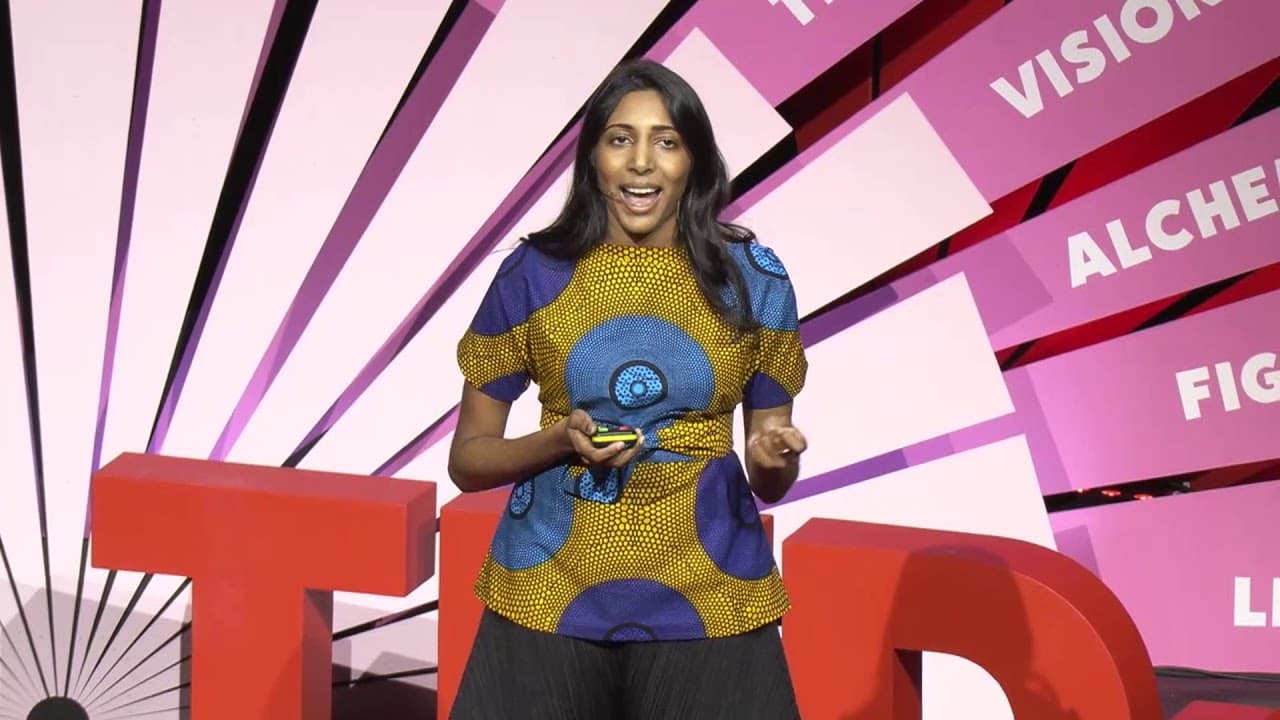
Why I talk to white supremacists | Vidhya Ramalingam | TEDxLondonWomen
TL;DR
Vidhya Ramalingam uses dialogue and technology to counter extremism.
Transcript
a man with the swastika tattoo gives me a long hard stare it's a beautiful summer day people around me are shuffling uncomfortably and I don't know if it's they or I that are more uncomfortable I put a light smile on my face look him in the eye and give a nod of my head to say hello this was the way many of these encounters ... Read More
Key Insights
- Vidhya Ramalingam, an advocate for migrant rights, immersed herself in white nationalist environments to understand their motivations and ideologies.
- Building relationships and understanding human emotions are crucial in changing the minds of individuals involved in hate movements.
- Angela, a former neo-Nazi, transformed her life through kindness and compassion experienced in prison, leading her to co-found Life After Hate.
- Human relationships, often marked by kindness or compassion, are key in helping individuals leave extremist movements.
- The Internet can be a tool for fostering positive connections and offering alternatives to those at risk of violent extremism.
- Moonshot CVE uses technology to identify people at risk of extremism and engage them with supportive content and counseling.
- Advertising technology is repurposed to offer at-risk individuals safer alternatives and support, showing a high engagement rate.
- New technology allows for scalable, personalized interactions, helping individuals leave extremist movements without attending rallies.
Install to Summarize YouTube Videos and Get Transcripts
Explore YouTube Video Summarizer or Get YouTube Transcript Extractor
Questions & Answers
Q: Why did Vidhya Ramalingam decide to attend white nationalist rallies?
Vidhya Ramalingam attended white nationalist rallies to understand the motivations and ideologies of individuals involved in these movements. As an advocate for migrant rights, she realized that no one was engaging directly with these individuals to comprehend their reasons for joining such causes. By immersing herself in their environment, she aimed to foster dialogue and potentially influence change through understanding and empathy.
Q: What role did human relationships play in Angela's transformation?
Human relationships played a crucial role in Angela's transformation. While in prison, Angela experienced unexpected kindness from a woman of color, which challenged her existing beliefs. This act of compassion led her to question her ideology and eventually form friendships with individuals she once viewed as enemies. These interactions helped dismantle her worldview and inspired her to leave the neo-Nazi movement, becoming a peace activist and co-founder of Life After Hate.
Q: How does Moonshot CVE use the Internet to counter extremism?
Moonshot CVE leverages the Internet to counter extremism by identifying individuals at risk through their digital footprint. They use advertising technology to engage these individuals with supportive content and counseling, offering them safer alternatives. By repurposing targeted advertising, they reach those seeking extremist content and provide opportunities for positive interaction, aiming to change their paths and reduce violent extremism.
Q: What evidence supports the effectiveness of Moonshot CVE's approach?
Moonshot CVE's approach is supported by evidence showing high engagement rates with their content. Violent extremists are disproportionately likely to interact with offers of social support and self-help content. For instance, white supremacists were 48% more likely to engage with this content than the general public. This indicates that the key to starting a conversation with someone in a hate movement is appealing to their human emotions and building relationships.
Q: What challenges does the Internet pose for combating hate movements?
The Internet poses significant challenges for combating hate movements as it allows hate to flourish in new ways. Social media platforms enable the rapid spread of extremist content and false rumors, facilitating the formation of online communities that encourage violence. This environment makes it difficult to intervene and change individuals' minds, as online perpetrators are part of networks that reinforce their beliefs and actions.
Q: How does Moonshot CVE plan to scale its efforts globally?
Moonshot CVE plans to scale its efforts globally by using new technology to facilitate personalized interactions at scale. They employ human-in-the-loop social work messaging bots to send tailored messages to tens of thousands of individuals at risk of extremism. This approach ensures that when someone responds, they communicate with a qualified social worker. Their ambition is to reach individuals in all U.S. counties, offering localized assistance to leave extremist movements.
Q: What is the significance of Vidhya Ramalingam's work on far-right extremism?
Vidhya Ramalingam's work on far-right extremism is significant because it addresses the root causes of hate movements through understanding and dialogue. Her approach highlights the importance of human relationships in transforming individuals' beliefs and behaviors. By founding Moonshot CVE, she combines technology with empathy to offer alternatives to those at risk, demonstrating that change is possible and providing a model for combating extremism in the digital age.
Q: What impact has Moonshot CVE had on tech companies' response to extremism?
Moonshot CVE has impacted tech companies' response to extremism by pioneering partnerships that address violent content on their platforms. They collaborate with companies like Google to repurpose advertising technology for social good, offering interventions to individuals seeking extremist content. This approach has influenced how tech companies view their role in combating extremism, encouraging them to explore innovative solutions that leverage their platforms' capabilities for positive change.
Summary & Key Takeaways
-
Vidhya Ramalingam, an advocate for migrant rights, immersed herself in white nationalist environments to understand their motivations. Through building relationships and understanding human emotions, she realized that acceptance and compassion are key in changing the minds of individuals involved in hate movements.
-
Angela, a former neo-Nazi, transformed her life through kindness experienced in prison and now co-founds Life After Hate. Human relationships, marked by compassion, help people leave extremist movements. The Internet can foster positive connections and offer alternatives to those at risk of violent extremism.
-
Moonshot CVE uses technology to identify at-risk individuals and engage them with supportive content. Advertising technology is repurposed to offer safer alternatives, showing high engagement rates. New technology allows scalable, personalized interactions, helping individuals leave extremist movements without attending rallies.
Read in Other Languages (beta)
Share This Summary 📚
Summarize YouTube Videos and Get Video Transcripts with 1-Click
Try YouTube Summary with ChatGPT & Claude or YouTube Transcript Generator
Explore More Summaries from TEDx Talks 📚


Summarize YouTube Videos and Get Video Transcripts with 1-Click
Try YouTube Summary with ChatGPT & Claude or YouTube Transcript Generator