Phantom Trading Full course | Entry Type | Part 01 of 02
TL;DR
Explains risk and confirmation entry strategies for order blocks in trading.
Transcript
when it comes to looking at entries on order blocks there are two types of entries that you can use both with their own pros and cons there's the risk entry and the confirmation entry the risk entry is an entry type that is much more aggressive in that you are placing your buy or sell limit order on an order block looking for price to tap i... Read More
Key Insights
- There are two main entry types for order blocks: risk entry and confirmation entry, each with distinct pros and cons.
- Risk entry is aggressive, placing limit orders on order blocks without waiting for confirmation, suitable for prevailing trends.
- Confirmation entry is conservative, requiring a change in market structure before entering, reducing the risk of being stopped out.
- Risk entry offers high risk-reward by refining points of interest on lower time frames, but increases the chance of being stopped out.
- Confirmation entry provides additional assurance by waiting for a break of structure, but may miss trades that move without testing newly created order blocks.
- Both entry types can be refined using multiple time frames, such as moving from a four-hour to a 15-minute chart for better precision.
- The choice between entry types depends on market conditions, such as the speed and direction of price movement and the presence of multiple points of interest.
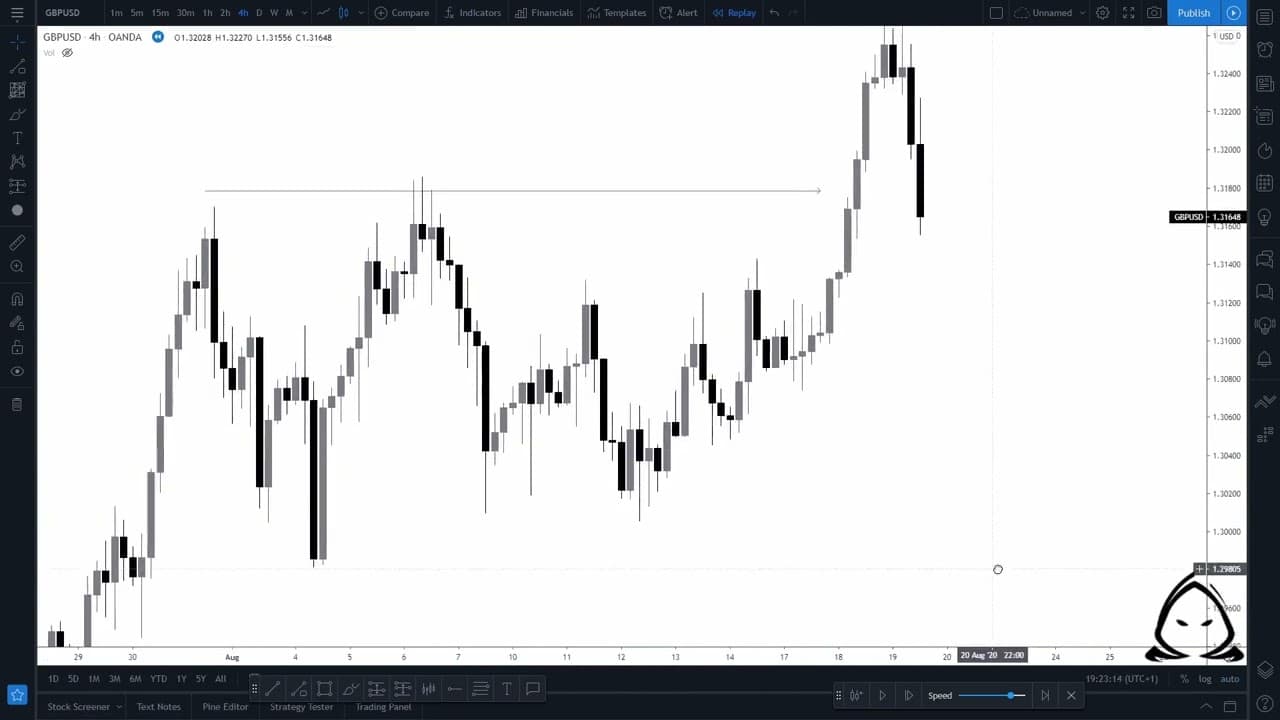
- Examples using GBP/USD illustrate how to identify and refine order blocks on various time frames for both risk and confirmation entries.
Install to Summarize YouTube Videos and Get Transcripts
Explore YouTube Video Summarizer or Get YouTube Transcript Extractor
Questions & Answers
Q: What are the two types of entry strategies discussed?
The two types of entry strategies discussed are risk entry and confirmation entry. Risk entry is an aggressive strategy where traders place limit orders directly on order blocks without waiting for confirmation, suitable for prevailing trends. Confirmation entry, on the other hand, is more conservative, requiring a change in market structure before entering a trade, thereby reducing the risk of being stopped out.
Q: What are the pros and cons of risk entry?
Risk entry offers the advantage of high risk-reward potential by refining points of interest on lower time frames, allowing traders to capitalize on quick market movements. However, the downside is the increased likelihood of being stopped out due to minimal confirmation. This strategy is best used when the point of interest aligns with the prevailing trend, allowing for aggressive market entry.
Q: How does confirmation entry differ from risk entry?
Confirmation entry differs from risk entry by requiring additional confirmation before entering a trade. Traders wait for a break of structure in favor of the point of interest, which provides more assurance of market direction. While this strategy reduces the risk of being stopped out, it may miss trades that move without testing newly created order blocks, making it more conservative compared to risk entry.
Q: What role do time frames play in refining entry strategies?
Time frames play a crucial role in refining entry strategies by providing different levels of detail and precision. Traders can start with a higher time frame, such as a four-hour chart, to identify points of interest, and then refine these points on lower time frames, like a 15-minute chart, for more precise entry points. This multi-time frame analysis enhances the effectiveness of both risk and confirmation entries.
Q: When is it best to use a risk entry?
A risk entry is best used when the point of interest and overall trade idea align with the prevailing market trend, such as looking for buys in an upward trend. It is also suitable when price is correctively moving back to an overall point of interest, allowing traders to capitalize on quick market movements without waiting for confirmation.
Q: What are the ideal conditions for using a confirmation entry?
The ideal conditions for using a confirmation entry include scenarios where the range between a higher time frame point of interest and a lower time frame refinement is large. It is also suitable when price is rapidly moving back to a point of interest, and when there are multiple points of interest or order blocks to consider, allowing traders to wait for the market to show its hand before entering.
Q: How do examples with GBP/USD illustrate the strategies?
Examples with GBP/USD illustrate the strategies by showing how to identify and refine order blocks on various time frames, such as moving from a four-hour chart to a 15-minute chart. These examples demonstrate the application of both risk and confirmation entries, highlighting the importance of market structure, momentum, and the choice of entry type based on prevailing market conditions.
Q: What factors influence the choice between risk and confirmation entries?
The choice between risk and confirmation entries is influenced by factors such as market speed, direction, and the presence of multiple points of interest. Traders must consider the aggressiveness of market movements, the alignment with prevailing trends, and the potential for market structure changes when deciding which entry strategy to use. The examples provided in the content highlight how these factors impact the decision-making process.
Summary & Key Takeaways
-
The content discusses two types of entry strategies for trading order blocks: risk entry and confirmation entry. Risk entry is more aggressive, placing limit orders without confirmation, while confirmation entry waits for a market structure change. Both strategies have their advantages and drawbacks, depending on market conditions.
-
Risk entry offers high potential rewards through refined points of interest on lower time frames but increases the likelihood of being stopped out. Confirmation entry provides more assurance by waiting for a structure break, though it might miss trades that don't test new order blocks.
-
Traders can refine entry strategies using multiple time frames, such as moving from a four-hour chart to a 15-minute chart. The choice between risk and confirmation entries depends on factors like market speed, direction, and multiple points of interest. Examples with GBP/USD demonstrate these strategies in action.
Read in Other Languages (beta)
Share This Summary 📚
Summarize YouTube Videos and Get Video Transcripts with 1-Click
Try YouTube Summary with ChatGPT & Claude or YouTube Transcript Generator