The Future of Supersonic Air Travel
TL;DR
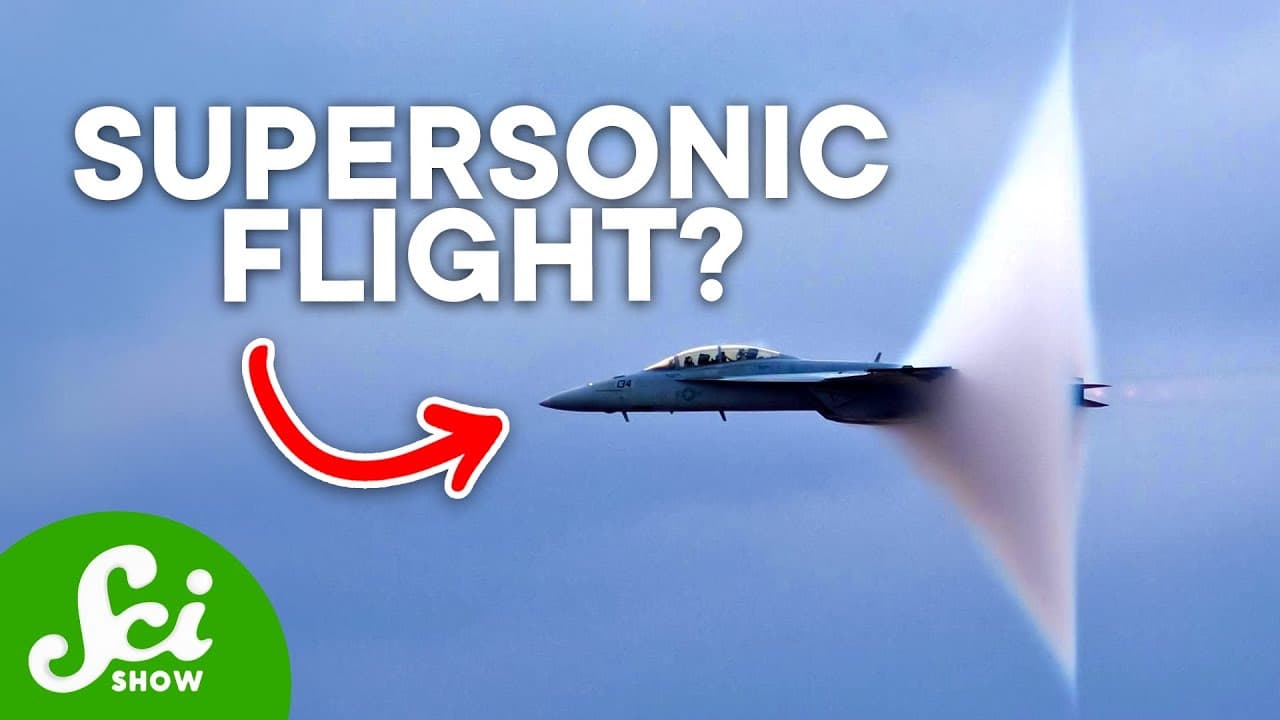
Faster-than-sound travel may become a reality again, with ongoing developments in supersonic and hypersonic flight technology, aiming to reduce sonic booms and overcome temperature challenges.
Transcript
Why can’t I just get on a plane and go from, like, Montana to London, in a couple hours? I just want to experience the thrill of zooming through the sky faster than the speed of sound? Well, if you flew on a Concorde jet back before they were grounded -- or you happen to be a fighter pilot -- then you’ve probably experienced faster-than-sound trave... Read More
Key Insights
- ✈️ Supersonic commercial flight was achieved in the past with the Concorde and Tupolev planes, but they were retired due to financial and safety concerns.
- 😒 Overcoming the sound barrier and minimizing the impact of sonic booms are challenges in developing supersonic planes for commercial use.
- 🐎 Hypersonic planes, traveling at speeds five times or more than the speed of sound, face additional challenges such as extreme temperatures and the need for specialized engines.
- 💨 NASA and other companies are actively exploring ways to make supersonic and hypersonic flight commercially viable, including efforts to reduce noise and develop more efficient engines.
- 🗺️ Advancements in technology, such as scramjet engines, show promise in making hypersonic travel a reality, but more practical and efficient options are needed.
- 🗺️ The future of supersonic and hypersonic travel holds potential for significantly reduced travel times, but significant engineering challenges still need to be addressed.
- 🗺️ The potential benefits of supersonic and hypersonic travel include faster transcontinental and intercontinental flights, opening up new possibilities for travel and transportation.
Install to Summarize YouTube Videos and Get Transcripts
Explore YouTube Video Summarizer or Get YouTube Transcript Extractor
Questions & Answers
Q: Why did the Concorde planes stop being used commercially?
The Concorde planes were retired in 2003 due to financial reasons, decreased demand, and safety concerns following a crash in 2000.
Q: How do supersonic planes tackle the issue of sonic booms?
Efforts are being made to reduce the impact of sonic booms by considering different engine placements, such as directing shockwaves upwards, and redirecting shockwaves to orbit the ground.
Q: What challenges do hypersonic planes face?
Hypersonic planes need to withstand extreme temperatures and require specialized engines, such as scramjet engines, which only work at hypersonic speeds.
Q: Are there any practical and commercially viable hypersonic planes currently available?
No, currently, there are no commercially viable hypersonic planes available. The X-43A, an unmanned test plane, uses a scramjet engine but requires a booster rocket to reach hypersonic speeds.
Summary & Key Takeaways
-
Supersonic flight, experienced by the Concorde in the past, may return with advancements in commercial planes, enabling travel faster than the speed of sound.
-
Overcoming the sound barrier, which can cause damage to planes, is a significant challenge for engineers, requiring innovations to minimize noise and resistance.
-
Hypersonic flights, traveling at speeds five times or more than the speed of sound, face additional challenges such as extreme temperatures and the need for specialized engines.
Read in Other Languages (beta)
Share This Summary 📚
Summarize YouTube Videos and Get Video Transcripts with 1-Click
Try YouTube Summary with ChatGPT & Claude or YouTube Transcript Generator
Explore More Summaries from SciShow 📚


Summarize YouTube Videos and Get Video Transcripts with 1-Click
Try YouTube Summary with ChatGPT & Claude or YouTube Transcript Generator