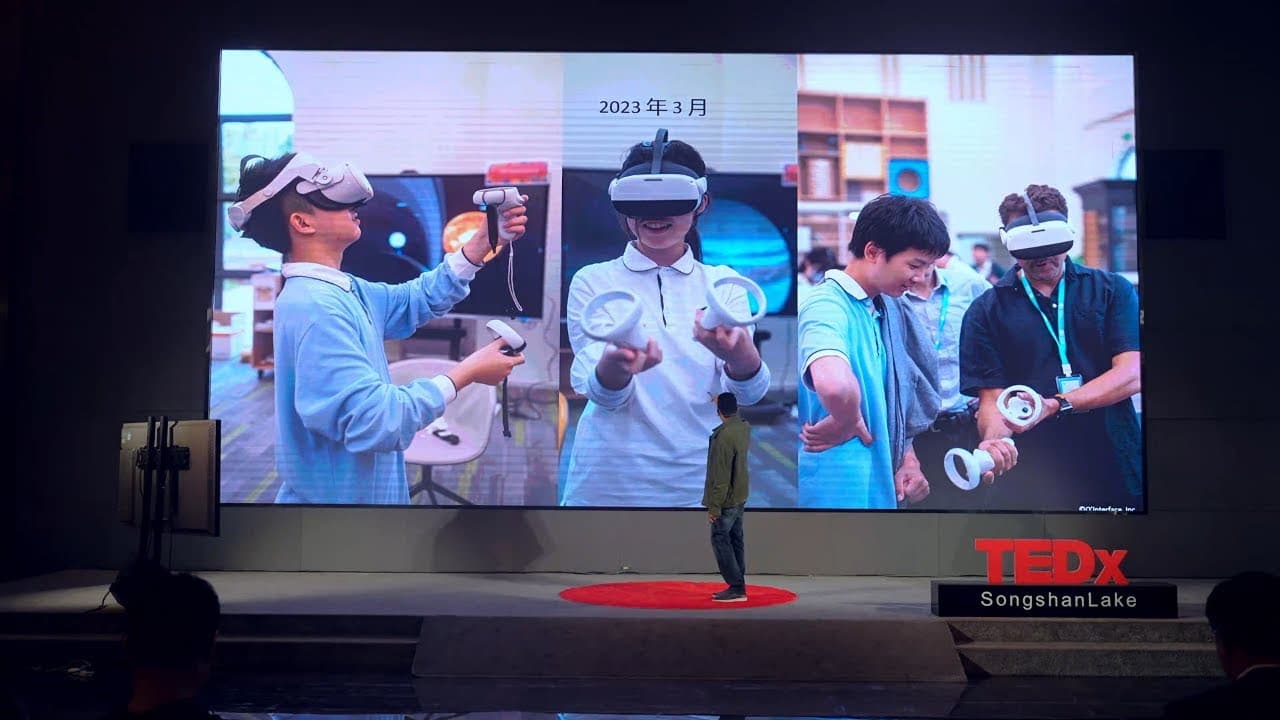
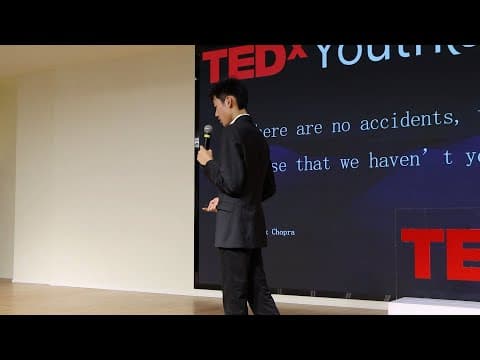
The Power Of Immersive Learning In Education | Raj Oswal | TEDxSongshanLake
TL;DR
Immersive VR experiences in education can enhance STEM learning and student engagement.
Transcript
[Applause] my dad was an engineering student he came came all the way from India on a scholarship to study Computer Engineering way before I was born to achieve this he obviously had to excel in math and science so what happened to me why was math and science so hard why did I always feel so lost in dealing with abstract equations and science Conce... Read More
Key Insights
- 🇭🇰 Wearable headsets for AR/VR can make STEM subjects emotionally appealing.
- 🎓 Kinesthetic learning accounts for a significant portion of retention in education.
- 🧑🎓 Combining VR experiences with traditional teaching methods can enhance student engagement.
- 🎓 Collaboration and cost are current limitations of VR technology in education.
- 🤗 A hybrid approach that combines VR with hands-on projects shows promise.
- 💦 Working with educators and aligning experiences with curriculum is essential.
- 🆘 Immersive experiences can help inspire the next generation of STEM leaders.
Install to Summarize YouTube Videos and Get Transcripts
Explore YouTube Video Summarizer or Get YouTube Transcript Extractor
Questions & Answers
Q: How does the speaker propose to make STEM subjects emotionally appealing?
The speaker suggests using wearable headsets for immersive AR/VR experiences to create engaging and interactive educational content that connects with students emotionally.
Q: What percentage of learning does the speaker attribute to hands-on practice?
The speaker points out that the practice of doing, or kinesthetic learning, accounts for 75% retention according to the learning pyramid, highlighting the importance of hands-on experiences in education.
Q: What are some limitations of the current VR technology for educational use?
The speaker mentions that new headsets are expensive, collaboration can be challenging, and wearing headsets for extended periods can be uncomfortable, suggesting room for improvement in VR technology for education.
Q: How does the speaker propose to address the limitations of VR technology for educational use?
The speaker suggests a hybrid approach that combines VR immersive experiences with collaborative learning, aiming to overcome the limitations by incorporating hands-on projects and traditional teaching methods.
Summary & Key Takeaways
-
The speaker discusses their struggles with STEM subjects despite their father's engineering background.
-
They propose using wearable headsets for AR/VR experiences to make STEM subjects emotionally appealing.
-
By combining immersive experiences with traditional teaching, they aim to boost student engagement and retention in STEM subjects.
Read in Other Languages (beta)
Share This Summary 📚
Summarize YouTube Videos and Get Video Transcripts with 1-Click
Try YouTube Summary with ChatGPT & Claude or YouTube Transcript Generator
Explore More Summaries from TEDx Talks 📚


Summarize YouTube Videos and Get Video Transcripts with 1-Click
Try YouTube Summary with ChatGPT & Claude or YouTube Transcript Generator