How to say “we” in Vietnamese (it’s not always “chúng ta”) | Learn Vietnamese with TVO
TL;DR
Learn different ways to say 'we' in Vietnamese.
Transcript
foreign foreign and welcome back to TVO YouTube channel I believe that when it comes to learning Vietnamese then pronouns is one of the most difficult aspects and like our students said in the beginning of the video both in English however in Vietnamese they are very different so in today's videos let's find out what are the different ways to say w... Read More
Key Insights
- Vietnamese pronouns are complex, differing significantly from English, especially in terms of inclusivity and exclusivity.
- The video highlights the formal and informal versions of saying 'we' in Vietnamese, emphasizing context and social nuances.
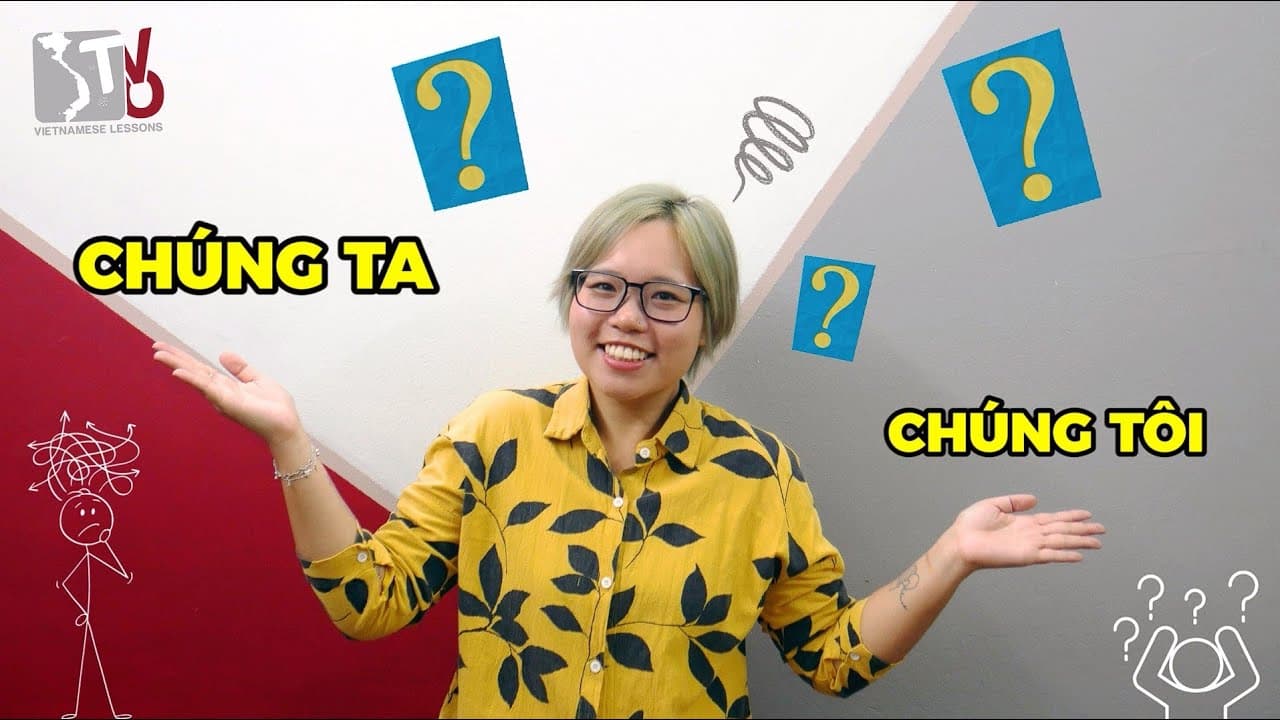
- In Vietnamese, 'chúng ta' includes the listener, while 'chúng tôi' excludes them, showcasing a unique linguistic feature.
- Casual conversations in Vietnamese often use less formal pronouns, adapting to the social context and relationships.
- Understanding Vietnamese pronouns requires knowledge of age, gender, and social hierarchy, adding layers to language learning.
- For learners, substituting pronouns with phrases like 'me and my family' can simplify communication.
- The video encourages practice and confidence in using Vietnamese pronouns despite potential mistakes.
- Tieng Viet Oi offers resources and classes for learners to improve their Vietnamese language skills.
Install to Summarize YouTube Videos and Get Transcripts
Explore YouTube Video Summarizer or Get YouTube Transcript Extractor
Questions & Answers
Q: What makes Vietnamese pronouns different from English pronouns?
Vietnamese pronouns are more complex than English pronouns due to their dependence on social context, age, and gender. Unlike English, which uses a relatively straightforward pronoun system, Vietnamese requires speakers to consider who they are talking to and the relationship dynamics, making it a unique aspect of the language.
Q: How does the video suggest handling the complexity of Vietnamese pronouns?
The video suggests using informal alternatives and phrases like 'me and my family' to simplify pronoun usage. It encourages learners to practice and speak confidently despite the complexity, emphasizing that making mistakes is part of the learning process. The video also recommends watching additional resources for a deeper understanding.
Q: Why is understanding the difference between 'chúng ta' and 'chúng tôi' important?
Understanding the difference between 'chúng ta' and 'chúng tôi' is crucial because it affects inclusivity in communication. 'Chúng ta' includes the listener, while 'chúng tôi' excludes them, which can change the meaning of a conversation. Mastery of these pronouns ensures clarity and respect in social interactions.
Q: What resources does Tieng Viet Oi offer for learning Vietnamese?
Tieng Viet Oi provides a range of resources, including video content, transcripts, translations, and both online and face-to-face classes. They aim to offer practical, communication-based lessons to help learners understand and use Vietnamese effectively, with a focus on making the learning process enjoyable and accessible.
Q: How can learners practice Vietnamese pronouns effectively?
Learners can practice Vietnamese pronouns effectively by engaging with native speakers, using informal alternatives when unsure, and repeatedly practicing in different social contexts. The video encourages learners to be confident, not fear mistakes, and utilize resources like Tieng Viet Oi's classes and videos for guided practice.
Q: What is the role of social context in using Vietnamese pronouns?
Social context plays a significant role in using Vietnamese pronouns, as it dictates the choice of pronouns based on the listener's age, gender, and social status. This requires speakers to be aware of their relationship with the listener and adjust their language accordingly to maintain respect and clarity in communication.
Q: What challenges do learners face with Vietnamese pronouns?
Learners face challenges with Vietnamese pronouns due to their complexity and the need to consider various social factors. The pronoun system is not only more extensive than in English but also requires a deep understanding of cultural nuances, making it a challenging yet rewarding aspect of learning Vietnamese.
Q: How does the video encourage learners to overcome difficulties in learning Vietnamese?
The video encourages learners to overcome difficulties by practicing regularly, engaging with additional resources, and maintaining a positive attitude towards making mistakes. It emphasizes the importance of confidence and perseverance, assuring learners that understanding Vietnamese pronouns is achievable with consistent effort and practice.
Summary & Key Takeaways
-
The video explores various ways to say 'we' in Vietnamese, focusing on the differences between 'chúng ta' and 'chúng tôi'. It explains the importance of context, as 'chúng ta' includes the listener while 'chúng tôi' excludes them. Understanding these nuances is crucial for effective communication.
-
Vietnamese pronouns are complex, influenced by age, gender, and social situations. The video provides practical tips for learners, suggesting informal alternatives and encouraging the use of phrases like 'me and my family' to avoid confusion. Confidence and practice are emphasized for mastering these pronouns.
-
Tieng Viet Oi offers language resources and classes to help learners navigate the intricacies of Vietnamese pronouns. The video encourages viewers to engage with the content, practice regularly, and not fear making mistakes, as this is part of the learning process.
Read in Other Languages (beta)
Share This Summary 📚
Summarize YouTube Videos and Get Video Transcripts with 1-Click
Try YouTube Summary with ChatGPT & Claude or YouTube Transcript Generator
Explore More Summaries from Tieng Viet Oi - Vietnamese Lessons 📚

Summarize YouTube Videos and Get Video Transcripts with 1-Click
Try YouTube Summary with ChatGPT & Claude or YouTube Transcript Generator