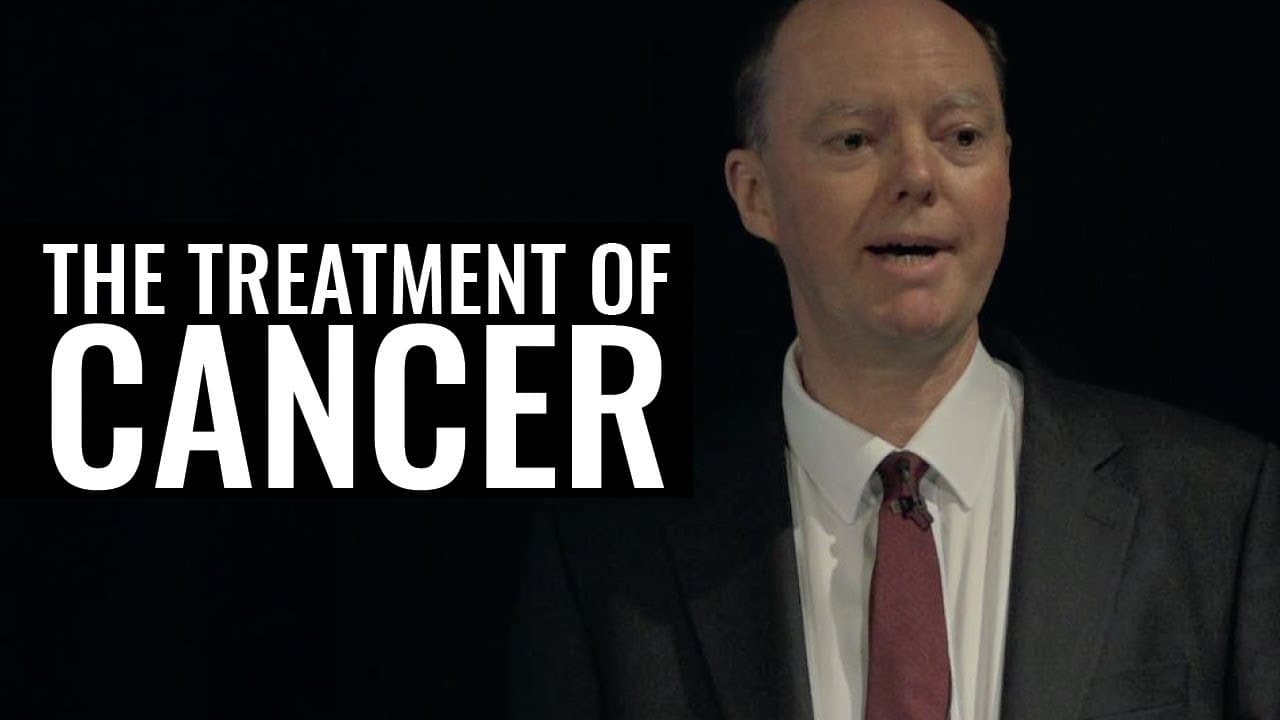
The Treatment of Cancer - Professor Chris Whitty
TL;DR
Cancer treatment has seen significant advancements over the past few decades, with improvements in surgery, radiotherapy, chemotherapy, and immunotherapy. Early diagnosis and targeted treatments are key to improving survival rates.
Transcript
good evening this evening I'm going to be talking about something which causes enormous concern to anybody who thinks they might have the diagnosis and that is cancer and for any doctors in the audience you will know that one of the worst conversations you have begins with the phrase you have cancer and you can see someone in front of you freezing ... Read More
Key Insights
- 🖐️ Early diagnosis plays a crucial role in improving cancer treatment outcomes.
- 🌱 Advances in technology, such as imaging scans and genetic testing, have helped with early detection and personalized treatment plans.
- 🎯 Combination therapies, including surgery, radiotherapy, chemotherapy, and targeted treatments, are often more effective than single modalities.
- 😨 Palliative care is an important aspect of cancer treatment, focusing on symptom management and improving quality of life for patients.
- 👶 The cost of new cancer drugs is a significant concern, as it can limit access and put a strain on healthcare budgets.
- 🍉 Prevention strategies, including lifestyle changes and genetic testing, are crucial in reducing the burden of cancer in the long term.
Install to Summarize YouTube Videos and Get Transcripts
Explore YouTube Video Summarizer or Get YouTube Transcript Extractor
Questions & Answers
Q: What were some early theories and treatments for cancer?
In the past, theories about cancer included the belief that it was infectious. Surgical removal of tumors was attempted, but it was a dangerous and often unpleasant procedure.
Q: How have survival rates for various cancers improved over the years?
Survival rates for many cancers have improved significantly over the past 40 years. For example, prostate cancer and breast cancer now have survival rates of over 80% after 10 years. Testicular cancer and melanoma have even higher survival rates, while lung cancer still has relatively low survival rates.
Q: What is the role of radiotherapy in cancer treatment?
Radiotherapy uses high-energy radiation to kill cancer cells. It can be used as a standalone treatment for some cancers, as well as before or after surgery to shrink tumors or prevent recurrence. Advances in radiotherapy technology and planning techniques have allowed for more precise targeting of cancer cells.
Q: How does immunotherapy work in cancer treatment?
Immunotherapy aims to activate the body's immune system to recognize and destroy cancer cells. This can be done through immune checkpoint inhibitors, which block proteins that prevent the immune system from attacking cancer cells. Vaccines and antibody treatments are also being developed to target specific cancer cells.
Summary & Key Takeaways
-
Cancer treatment has evolved significantly over time, from limited surgical options in the past to more modern approaches such as radiotherapy, chemotherapy, and immunotherapy.
-
Advances in technology, such as CT and MRI scans, have improved the accuracy of cancer diagnosis, allowing for better treatment planning.
-
The development of targeted therapies, such as tyrosine kinase inhibitors and hormone blockers, has revolutionized cancer treatment, leading to improved survival rates in many cases.
Read in Other Languages (beta)
Share This Summary 📚
Summarize YouTube Videos and Get Video Transcripts with 1-Click
Try YouTube Summary with ChatGPT & Claude or YouTube Transcript Generator
Explore More Summaries from Gresham College 📚

Summarize YouTube Videos and Get Video Transcripts with 1-Click
Try YouTube Summary with ChatGPT & Claude or YouTube Transcript Generator