What Happens When You Freeze To Death?
TL;DR
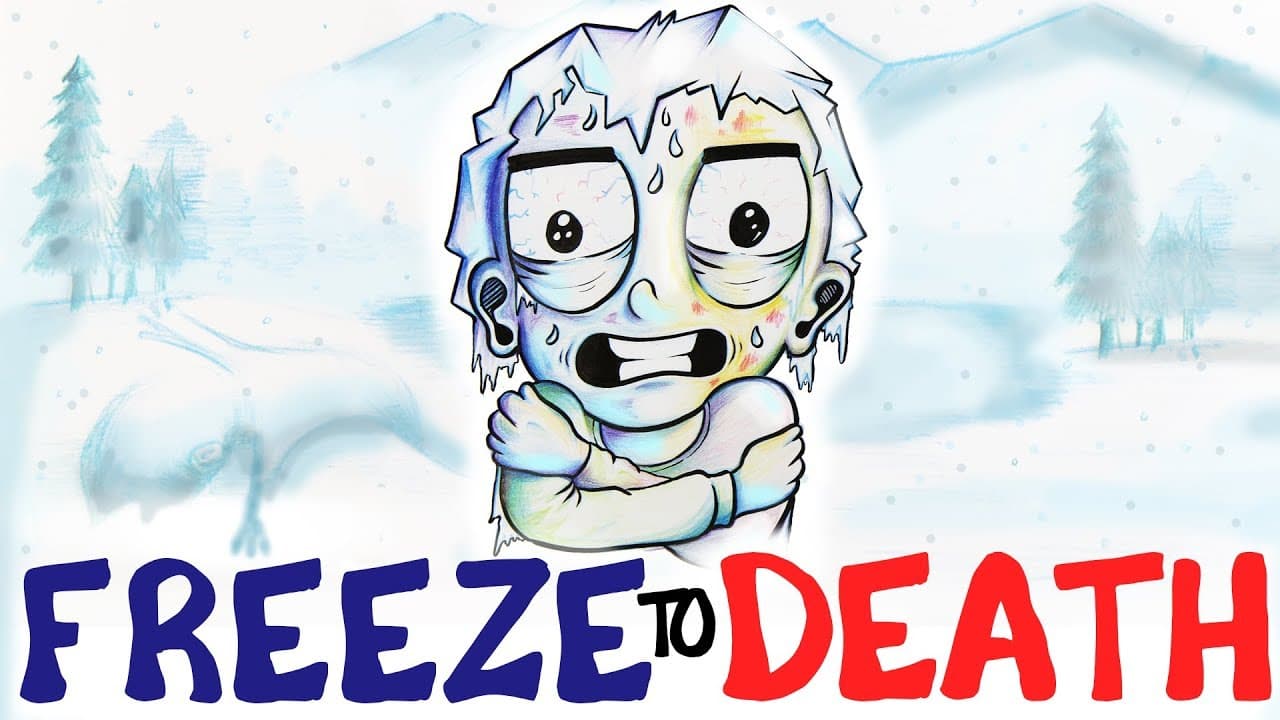
When exposed to extreme cold, the body undergoes various adaptive mechanisms such as vasoconstriction and shivering thermogenesis to maintain core body temperature. However, if exposed for too long, frostbite and organ failure can occur.
Transcript
Humans don't have fur like many of our ancestors, but our bodies still have the ability to adapt to cold weather. However, when pushed these mechanisms can fail leading to an extreme breakdown. So, what actually happens to your body and brain when you freeze to death? Hypothermia occurs when the core body temperature drops below 37 degrees Celsius,... Read More
Key Insights
- 🥵 Hypothermia occurs when body temperature drops below 37 degrees Celsius, triggering adaptive responses to generate heat and maintain core body temperature.
- 🥶 Prolonged exposure to extreme cold can result in frostbite, causing ice crystals to damage cells and tissues.
- 🥺 Eyes are susceptible to freezing in extreme cold, leading to corneal damage and light sensitivity.
- 💦 Factors like body composition, clothing, and environment influence how quickly body temperature drops.
- 🥰 Advanced hypothermia stages include loss of coordination, slowed heart rate, and delirium.
- 😅 Brain damage from extreme cold may cause victims to undress due to the perception of being too hot.
- 😣 Resuscitation from severe hypothermia is possible with bypass surgery, although amputations may be required.
Install to Summarize YouTube Videos and Get Transcripts
Explore YouTube Video Summarizer or Get YouTube Transcript Extractor
Questions & Answers
Q: How does the body adapt to extreme cold temperatures?
When exposed to extreme cold, the body activates vasoconstriction, shivering thermogenesis, and the activation of brown adipose tissue to generate heat and maintain core body temperature.
Q: What happens if you develop frostbite?
Frostbite occurs when ice crystals form in the skin and other tissues, leading to cell damage and dehydration. The body responds with vasodilation and vasoconstriction, causing further damage to the skin.
Q: Can exposure to extreme cold lead to permanent eye damage?
Yes, corneas can freeze in extreme cold, causing corneal damage and sensitivity to light. However, if removed from the cold quickly, the corneas can thaw without permanent damage.
Q: How long can a person survive in freezing temperatures?
The survival time varies depending on factors like body composition, clothing, temperature, and environment. In advanced stages of hypothermia, organ failure occurs, leading to delirium and ultimately death.
Summary & Key Takeaways
-
Hypothermia occurs when the body's core temperature drops below 37 degrees Celsius, triggering adaptive responses like vasoconstriction and shivering to generate heat.
-
Prolonged exposure to extreme cold can lead to frostbite, which causes ice crystals to form in cells and can result in cell death and tissue damage.
-
The eyes are also vulnerable to freezing in extreme cold, causing corneal damage and hypersensitivity to light.
Read in Other Languages (beta)
Share This Summary 📚
Summarize YouTube Videos and Get Video Transcripts with 1-Click
Try YouTube Summary with ChatGPT & Claude or YouTube Transcript Generator
Explore More Summaries from AsapSCIENCE 📚






Summarize YouTube Videos and Get Video Transcripts with 1-Click
Try YouTube Summary with ChatGPT & Claude or YouTube Transcript Generator