Restoring a lost sense of touch | Podcast | Overheard at National Geographic
TL;DR
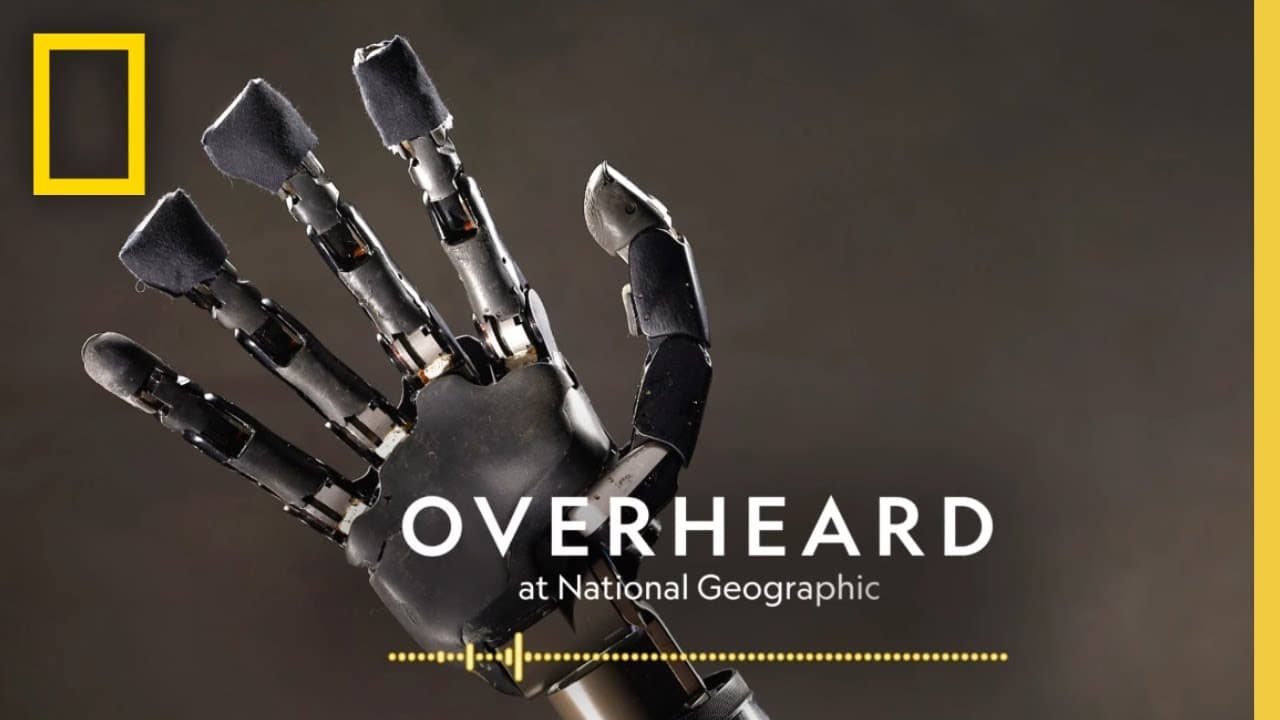
Advancements in prosthetics allow for touch sensations, bridging science fiction to reality.
Transcript
as a kid growing up in the late 70s science fiction was all about bionic body parts there was the six million dollar man with the whole we can rebuild him better than he was before and then most famously in a galaxy far far away there was luke skywalker who in the climactic scene of the empire strikes back loses his right hand in a lightsaber fight... Read More
Key Insights
- 🛜 Touch-enabled prosthetics connect wires to nerves, enabling sensations of pressure and texture.
- ❓ Brandon's journey showcases the emotional and physical transformation brought about by touch-enabled prosthetics.
- 👨🎨 Pain may serve as a valuable addition to prosthetic technology for a more natural and protective response.
- 🛟 Prosthetics focusing on touch can significantly impact daily life for amputees, enabling them to engage in simple but meaningful activities.
- ❓ Researcher Dustin Tyler is at the forefront of developing touch-enabled prosthetics for enhanced functionality.
- 🌉 Virtual reality experiments like long-distance touch show the potential for prosthetic technology to bridge physical gaps.
- 👤 The goal of touch-enabled prosthetics is to provide users with a sense of embodiment and integration of the prosthesis as part of their body.
Install to Summarize YouTube Videos and Get Transcripts
Explore YouTube Video Summarizer or Get YouTube Transcript Extractor
Questions & Answers
Q: How do experimental prosthetics enable touch sensations?
Experimental prosthetics connect wires to nerves, allowing for electrical signals to provide sensations of pressure and texture, mimicking touch.
Q: How did Brandon lose his arm, and what led him to opt for amputation?
Brandon lost his arm in a work accident when a conveyor belt caught his hand, leading to a difficult decision of trying to save it or opting for amputation due to function loss.
Q: What role does pain play in the development of touch-enabled prosthetics?
Pain is considered an essential aspect of life by some, and researchers are exploring incorporating pain sensations into prosthetics for a more natural and protective response.
Q: How can touch-enabled prosthetics impact daily life for amputees?
Touch-enabled prosthetics can enhance daily tasks like holding hands or simple actions that were challenging with traditional prosthetics, giving users a more complete experience.
Summary & Key Takeaways
-
Experimental prosthetics now allow for touch sensations by connecting wires directly to nerves.
-
Brandon, a maintenance technician, shares his journey from losing his arm to regaining sensation with a touch-enabled prosthesis.
-
Researchers like Dustin Tyler are pushing the boundaries of touch technology to enhance prosthetic functionality.
Read in Other Languages (beta)
Share This Summary 📚
Summarize YouTube Videos and Get Video Transcripts with 1-Click
Try YouTube Summary with ChatGPT & Claude or YouTube Transcript Generator
Explore More Summaries from Podcast | Overheard at National Geographic 📚




Summarize YouTube Videos and Get Video Transcripts with 1-Click
Try YouTube Summary with ChatGPT & Claude or YouTube Transcript Generator