Illustration Tutorial: Basics of Shading
TL;DR
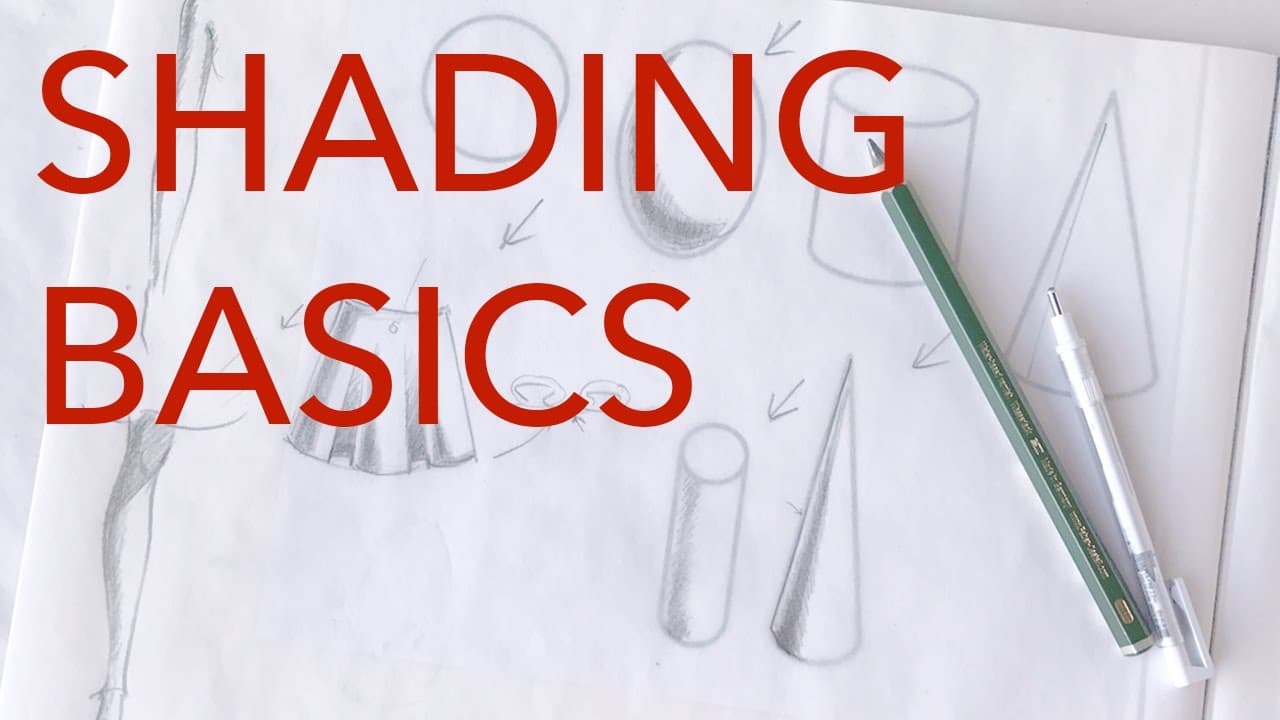
This video provides a simple method for shading to create a 3D effect in artwork using diagonal light sources.
Transcript
hey everyone welcome to my very first fundamentals Friday video in this video we're gonna go over the basics of shading fancy famous artists are known for the beautiful ways they can manipulate light and shadow in their paintings and that's magical and beautiful I don't do any of that okay the way I lie and shadow my stuff is incredibly rudimentary... Read More
Key Insights
- 🙂 Diagonal light sources create realistic shadows, enhancing the three-dimensional quality of artwork.
- 🌓 Shading a quarter to a third of an object helps create the illusion of depth and volume.
- 💠 Complex shapes, like skirts, arms, and legs, can be shaded by treating their components as basic shapes and following the same shading principles.
- 🎭 Varying the intensity and blending of shadows can add drama or subtlety to the artwork.
- 😓 Cast shadows should be sharp, while form shadows can be blended for a softer effect.
- 🔉 The basics of shading can be applied to more complex shapes and different mediums, such as color pencils and markers.
- 💠 Practicing shading basic shapes is essential for mastering shading in more complex artwork.
Install to Summarize YouTube Videos and Get Transcripts
Explore YouTube Video Summarizer or Get YouTube Transcript Extractor
Questions & Answers
Q: What is the importance of a diagonal light source in shading?
A diagonal light source creates more dynamic and realistic shadows, adding depth and dimension to the artwork. It helps objects look three-dimensional instead of flat.
Q: Why is it recommended to shadow a quarter to a third of an object?
Shadowing a quarter to a third of an object gives the illusion of the object wrapping around, contributing to the three-dimensional effect. A thin line for shading may look unnatural and unrealistic.
Q: How does shading a skirt differ from shading a cone or cylinder?
Shading a skirt involves shading individual drapes, each behaving like a cone. The shadows become larger as they move away from the light source. Additionally, cast shadows from the outside drapes are included.
Q: Can you explain how to shade an arm or leg?
For an arm or leg, the shadow is applied on the side facing away from the light, while the top receives light. The shadow follows the curve of the limb, and a cast shadow may be added if the limb is covered by clothing or other objects.
Summary & Key Takeaways
-
The video explains the three types of shadows created by a diagonal light source: shadows on the side away from the light, shadows cast by objects, and form shadows.
-
Demonstrations are given for shading basic shapes such as cones, cylinders, and spheres.
-
The video also discusses shading more complex shapes, such as skirts, arms, and legs, by applying the same principles learned from shading basic shapes.
Read in Other Languages (beta)
Share This Summary 📚
Summarize YouTube Videos and Get Video Transcripts with 1-Click
Try YouTube Summary with ChatGPT & Claude or YouTube Transcript Generator
Explore More Summaries from Zoe Hong 📚


Summarize YouTube Videos and Get Video Transcripts with 1-Click
Try YouTube Summary with ChatGPT & Claude or YouTube Transcript Generator