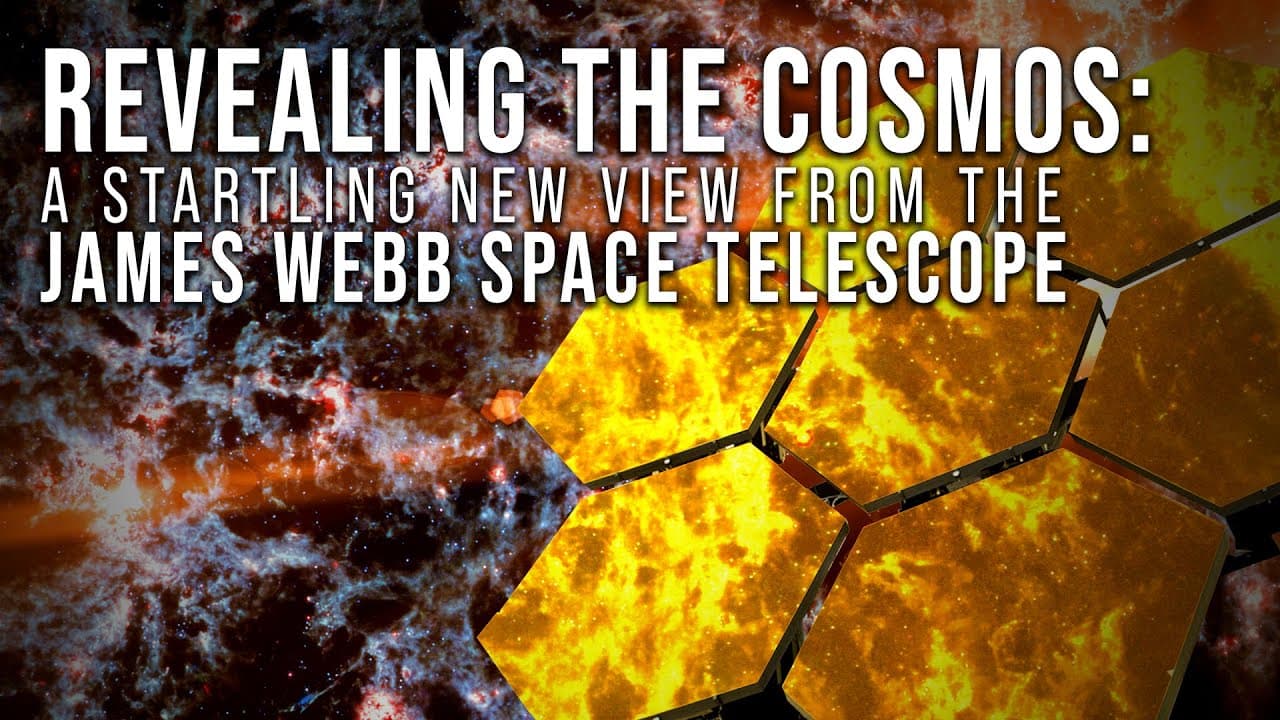
Revealing the Cosmos: A Startling New View from the James Webb Space Telescope
TL;DR
The James Webb Telescope has recently produced unprecedented images of the universe, including gas clouds, dying stars, and planets in our solar system. It has also challenged our understanding of early galaxy formation and holds the promise of providing insights into black holes, dark matter, and dark energy.
Transcript
thank you on Christmas Day 2021 a massive rocket was launched from French Guiana carrying not only the largest Space Telescope ever built but also the hopes and dreams of thousands of scientists and Engineers from 14 countries who made this moment happen [Applause] two months and a million miles later the James Webb Telescope arrived at its destina... Read More
Key Insights
- 🤩 The James Webb Telescope has produced images of gas clouds, dying stars, and planets in our solar system with unprecedented clarity.
- 💁 Early galaxies formed more quickly and were bigger and hotter than previously anticipated, challenging our understanding of galaxy formation.
- 🕶️ The telescope's data holds promise for providing insights into black holes, dark matter, and dark energy.
- 👻 The telescope has the ability to capture images at different wavelengths, allowing for a more detailed analysis of celestial objects.
Install to Summarize YouTube Videos and Get Transcripts
Explore YouTube Video Summarizer or Get YouTube Transcript Extractor
Questions & Answers
Q: What has the James Webb Telescope discovered about early galaxies?
The telescope's data has shown that early galaxies formed more quickly and were bigger and hotter than previously anticipated. This challenges our understanding of galaxy formation models and suggests that something unexpected may be influencing the process.
Q: What has the telescope revealed about planetary systems in our solar system?
The telescope has captured stunning images of planets in our solar system, including the rings of Neptune and the intricate dust rings formed by orbiting binary stars. These images provide valuable insights into the dynamics and composition of these planetary systems.
Q: How has the James Webb Telescope expanded our knowledge of black holes and dark matter?
The telescope's data is already challenging our understanding of black holes, dark matter, and dark energy. It has the potential to provide valuable insights into the nature of these phenomena and offer new perspectives on their role in the cosmos.
Q: How does the James Webb Telescope's capabilities compare to the Hubble telescope?
The James Webb Telescope has surpassed the capabilities of the Hubble telescope, providing unprecedented clarity and detail in its images of the universe. It has the ability to capture images at different wavelengths and analyze the composition of celestial objects in greater detail.
Summary & Key Takeaways
-
The James Webb Telescope has captured images of gas clouds, dying stars, and planets in unprecedented clarity, surpassing the capabilities of the Hubble telescope.
-
These images have challenged our understanding of early galaxy formation and provide insights into the nature of black holes, dark matter, and dark energy.
-
The telescope's data has shown that early galaxies formed more quickly and were bigger and hotter than previously anticipated.
-
The telescope has also revealed new information about planetary systems in our own solar system, such as the stunning rings of Neptune and the intricate dust rings created by orbiting binary stars.
Read in Other Languages (beta)
Share This Summary 📚
Summarize YouTube Videos and Get Video Transcripts with 1-Click
Try YouTube Summary with ChatGPT & Claude or YouTube Transcript Generator
Explore More Summaries from World Science Festival 📚



Summarize YouTube Videos and Get Video Transcripts with 1-Click
Try YouTube Summary with ChatGPT & Claude or YouTube Transcript Generator