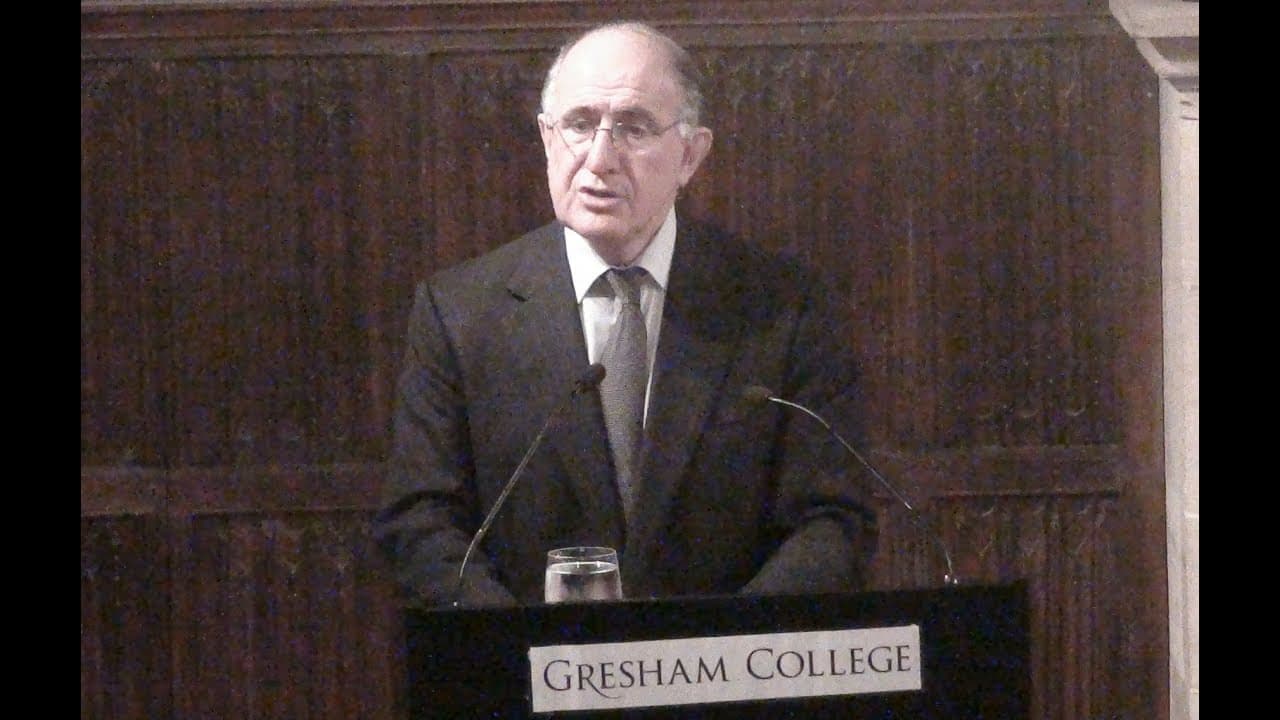
Leadership at a Time of Transition and Turbulence: Lecture Three - Professor Ken Costa
TL;DR
Leadership in a globalized and digital world must be based on shared values and moral norms, with stewardship being the most effective form of leadership.
Transcript
well they just have a good evening um thank you very much for coming to this last contribution in the series on leadership uh in a time of transition and turbulence in the preceding lectures and conversations that i've had with guests general lord danette and speed sutherland we've explored the case for leadership today and the kind of leadership t... Read More
Key Insights
- 😮 The digital revolution has facilitated the rise of leaderless movements, challenging traditional hierarchical leadership structures.
- ⚾ Leadership must be based on shared values and moral norms to have legitimacy and lasting results.
- 👋 Stewardship, where leaders serve their followers and act in their best interests, is the most effective form of leadership in a globalized and connected world.
- ✊ The internet and social media have given individuals and communities the power to challenge leaders and influence public discourse.
- 👋 The concept of morality and the recognition of good and bad behavior is essential for leadership in a globalized and digital world.
- 🛟 The development of a common moral understanding and the integration of moral values into daily life is crucial for inspiring a moral spirit in society.
- 🤢 Leadership must be guided by deep-seated moral norms and not rely on shifting and relativistic treatment of moral ideas.
Install to Summarize YouTube Videos and Get Transcripts
Explore YouTube Video Summarizer or Get YouTube Transcript Extractor
Questions & Answers
Q: How has the digital revolution influenced leadership and the emergence of leaderless movements?
The digital revolution has facilitated the rise of leaderless movements by providing platforms like social media for people to connect, organize, and mobilize with unprecedented speed. These movements have challenged traditional hierarchical leadership structures.
Q: What is the difference between legitimacy and success in leadership?
Legitimacy refers to the acceptance and support of leaders by their followers, which is achieved through moral behavior and the perception that the leader's actions align with shared values. Success, on the other hand, can be measured by factors like political or business achievements but does not guarantee legitimacy.
Q: What is the "wiki morality" the speaker refers to?
"Wiki morality" is a term used to describe the shifting and relativistic treatment of moral ideas in the digital world. Ideas and inspiration from various sources are often accepted without critical evaluation, leading to a lack of consistent moral norms.
Q: How does the concept of stewardship relate to leadership in the modern world?
Stewardship is a form of leadership where leaders act as servants to their followers and prioritize their best interests. In a globalized and digital world, where trust in traditional authority is declining, stewardship can provide a moral basis for leadership and inspire genuine authority and success.
Summary & Key Takeaways
-
Leadership in the age of globalization and digital revolution faces new challenges, particularly with the rise of leaderless movements facilitated by social media.
-
There is a need for leadership to be based on shared values and moral norms, as well as a legitimacy through moral behavior and strategy.
-
The concept of stewardship, where leaders serve their followers and act in their best interests, is the most suitable form of leadership for the modern world.
Read in Other Languages (beta)
Share This Summary 📚
Summarize YouTube Videos and Get Video Transcripts with 1-Click
Try YouTube Summary with ChatGPT & Claude or YouTube Transcript Generator
Explore More Summaries from Gresham College 📚


Summarize YouTube Videos and Get Video Transcripts with 1-Click
Try YouTube Summary with ChatGPT & Claude or YouTube Transcript Generator