Terminology
TL;DR
Explains key trading terms and strategies for security traders.
Transcript
all right folks before delving into the the Deep deeply technical chapters of two and three here's a quick run through to correct the terminology we use on day-to-day basis as security Traders so on the right side we have the PD Matrix with all the different key levels that we look for before entering a trade of course in this hierarchy the... Read More
Key Insights
- Candlesticks represent market buy/sell orders, indicating market maker actions to push prices higher or lower.
- Fair Value Gaps (FVG) are price gaps indicating market maker urgency, often leading to sensitive price zones.
- Breakers, specific candles, signal zero drawdown entry points, differing from zone-based trading strategies.
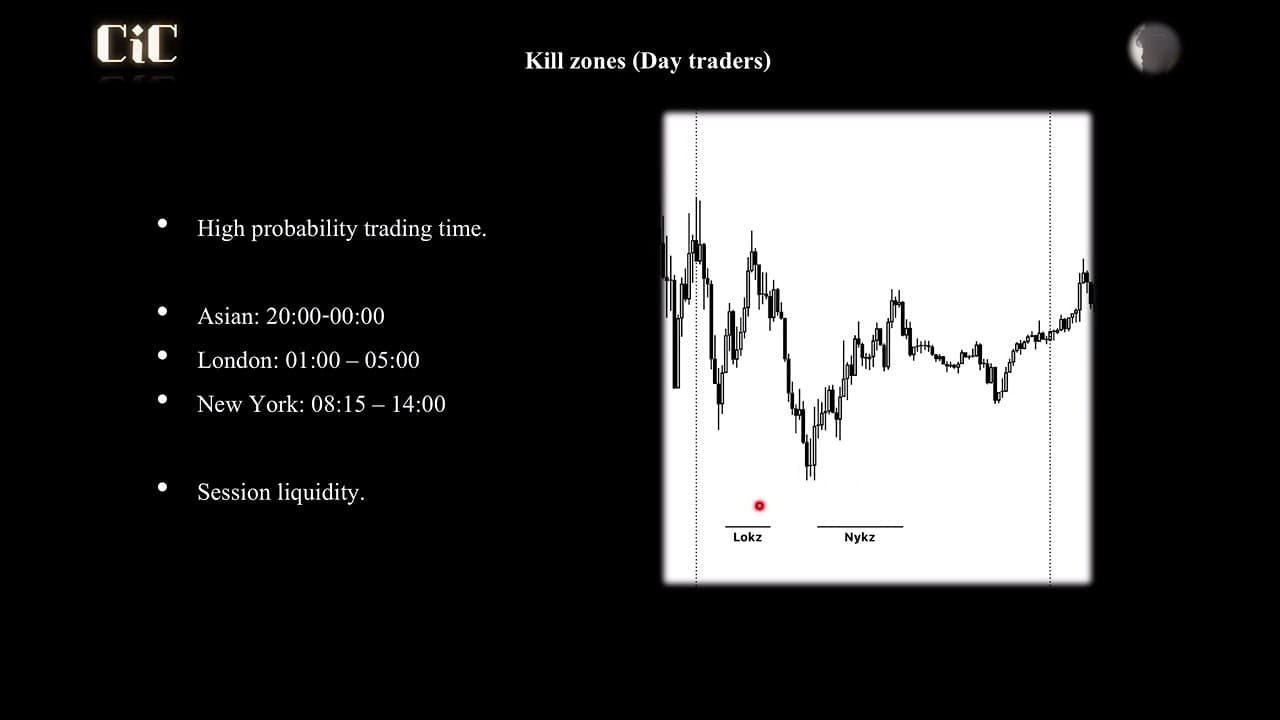
- Kill Zones are high-probability trading windows where price moves faster, crucial for day and weekly traders.
- Model Number One involves specific candles that liquidate highs/lows, offering precise trading opportunities.
- Turtle Soup strategy leverages old highs/lows for market maker manipulation, aiding in trade predictions.
- Rejection Blocks are sensitive zones at order block closing prices, used to predict price reversals.
- Optimal Trade Entry (OT) involves deep retracements post-market structure shift, creating lucrative trade setups.
Install to Summarize YouTube Videos and Get Transcripts
Explore YouTube Video Summarizer or Get YouTube Transcript Extractor
Questions & Answers
Q: What is the significance of candlesticks in trading?
Candlesticks are crucial visual tools in trading that represent the buy or sell orders in the market at any given moment. They reflect market maker actions, such as injecting liquidity to push prices higher or lower. Understanding candlesticks helps traders predict market movements based on the open, high, low, and close prices.
Q: How do Fair Value Gaps (FVG) influence trading decisions?
Fair Value Gaps (FVG) are significant because they indicate one-sided market heaviness and urgency by market makers. These gaps are sensitive price zones filled with leftover orders that need rebalancing. Traders can use FVGs to identify potential entry points, as they often lead to quick market movements once revisited.
Q: What differentiates breakers from zone-based trading strategies?
Breakers focus on specific candles rather than zones, providing precise entry points with minimal drawdown. A bullish or bearish breaker is identified by a specific candle that caused a significant market movement. Traders using breakers aim for zero drawdown entries by focusing on the closing price of these candles, offering a more precise trading approach.
Q: Why are Kill Zones important for traders?
Kill Zones are critical for traders because they represent high-probability windows where price movements are faster. These timeframes, such as the Asian, London, and New York sessions, offer traders opportunities to enter trades when the market is most active. Recognizing Kill Zones helps traders optimize their entry and exit strategies for better profitability.
Q: What is the Turtle Soup strategy in trading?
The Turtle Soup strategy involves using old highs and lows to predict market maker manipulations. Market makers push prices above old highs or below old lows to entice new trades or stop out existing ones. Traders can leverage this strategy to anticipate market reversals, as it capitalizes on the market makers' need to manipulate these levels for liquidity.
Q: How does the Optimal Trade Entry (OT) strategy work?
The Optimal Trade Entry (OT) strategy involves identifying deep retracements following a market structure shift. After a significant price move, the market often retraces to scare away traders who are on the right side of the market. By recognizing these retracements, traders can enter trades at optimal points, aligning with the market's directional shift.
Q: What are Rejection Blocks and their role in trading?
Rejection Blocks are sensitive zones at the closing prices of order blocks, especially when there is a long wick. These zones serve as potential reversal points, as they indicate areas where retail traders might be stopped out before a price reversal. Understanding Rejection Blocks helps traders anticipate market movements and plan their trades accordingly.
Q: What is SMT and its historical significance in trading?
SMT, or Smart Money Technique, involves one asset class taking a low while another does not, indicating relative weakness. This concept, originally developed by Charles Dow, signals potential market bottoms. It highlights the market makers' strategy of pushing prices to manipulate liquidity, offering traders insights into market dynamics and potential entry points.
Summary & Key Takeaways
-
The content provides a detailed explanation of various trading terminologies and strategies used by security traders. It emphasizes the importance of understanding specific candles like breakers and model number one for precise trading entries, contrasting with broader zone-based trading approaches.
-
Key concepts like Fair Value Gaps and Kill Zones are discussed, highlighting their significance in identifying sensitive price zones and optimal trading windows. The content also introduces the Turtle Soup strategy, which utilizes old highs and lows for predicting market maker manipulations.
-
The Optimal Trade Entry (OT) strategy is explained as a deep retracement following a market structure shift, offering high-probability trade setups. Additionally, the content covers the concept of Rejection Blocks and the historical context of SMT, enhancing traders' understanding of market dynamics.
Read in Other Languages (beta)
Share This Summary 📚
Summarize YouTube Videos and Get Video Transcripts with 1-Click
Try YouTube Summary with ChatGPT & Claude or YouTube Transcript Generator