What Is the Learning Blind Spot and How to Overcome It?
TL;DR
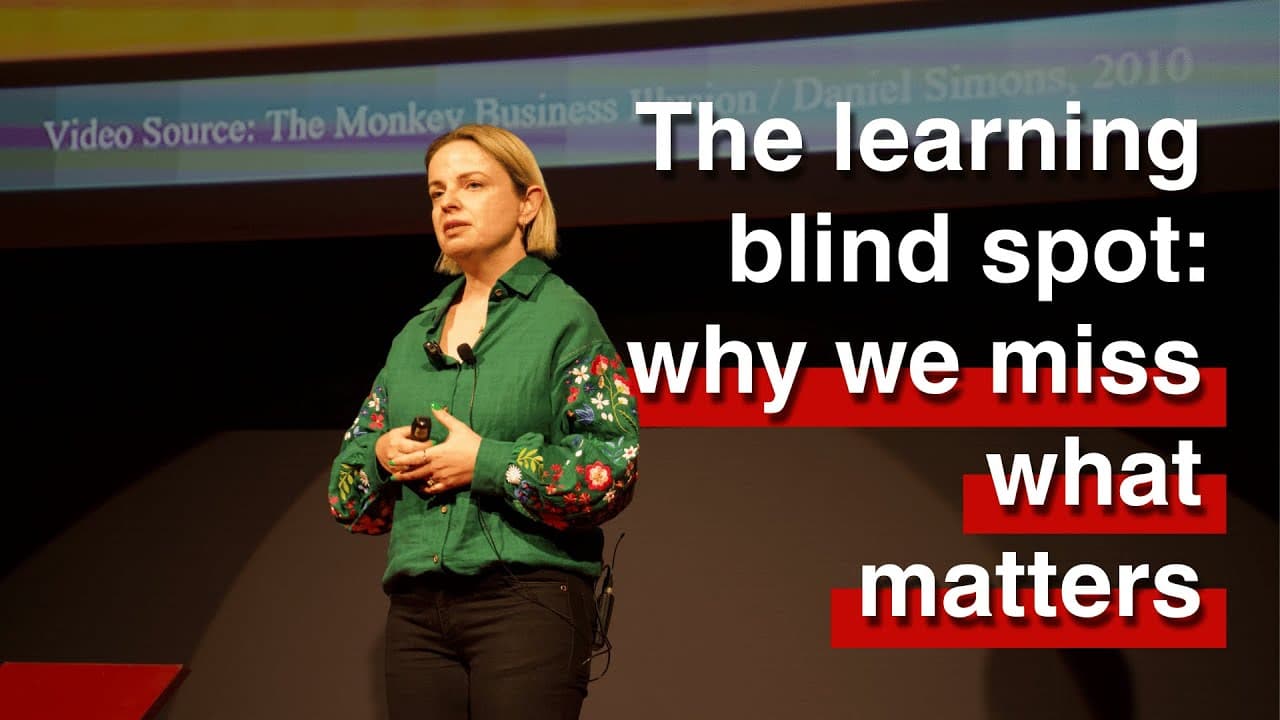
The learning blind spot refers to the common misperception that extensive note-taking leads to understanding, while it often results in cognitive overload and missed key concepts. To counteract this, students should reduce distractions, focus on chunking information, and reflect on mistakes to enhance retention and develop deeper understanding.
Transcript
[Applause] what if I told you that one of the biggest challenges in learning isn't a lack of intelligence or effort but is a blind spot every day students sit in lectures they highlight extensively take extensive notes believing that they're mastering the content i mean I was one of those students back in the old days i used to love sitting in lect... Read More
Key Insights
- 🛀 Extensive note-taking can create a false sense of achievement while neglecting the need for deeper understanding.
- 💁 Cognitive load theory emphasizes our limitations in processing information, affecting learning effectiveness.
- 💁 Learning strategies should promote focus and chunking of information to avoid cognitive overload.
- 🤩 Distractions, both self-imposed and external, significantly impede the ability to absorb key learning elements.
- ❓ Reflecting on mistakes provides valuable insights that enable more profound learning and improvement.
- 🦻 Simplification of complex materials can aid in comprehension and retention of information.
- 🙈 Practice is essential for mastery, aiding students in recognizing and addressing potential blind spots.
Install to Summarize YouTube Videos and Get Transcripts
Explore YouTube Video Summarizer or Get YouTube Transcript Extractor
Questions & Answers
Q: What is the primary issue students face with their learning strategies?
One of the biggest challenges is that students often cling to ineffective strategies, such as extensive note-taking, which can create a false sense of mastery over the material. Many students rely on these methods not out of laziness, but because they're not aware that better approaches exist. As students try to manage too much information simultaneously, they may fail to engage in deeper learning that can solidify their understanding.
Q: How does cognitive load theory relate to student learning?
Cognitive load theory posits that individuals can only hold about five to seven elements in their working memory at a time. When students are overwhelmed by too much information—such as dense slides or simultaneous tasks—they risk overlooking critical details. This overload can inhibit understanding and compromise their ability to connect the dots, resulting in significant learning gaps and knowledge blind spots.
Q: What should students do to combat cognitive overload while studying?
To combat cognitive overload, students should prioritize focus by minimizing distractions, such as silencing notifications or putting away devices. They should also adopt a chunking approach—breaking down information into smaller, digestible parts. By focusing on one chunk at a time and allowing their brains to process information fully, students can develop a clearer understanding of complex subjects without feeling overwhelmed.
Q: Why is it necessary to reflect on failures in learning?
Reflecting on failures is vital because it fosters deeper understanding and innovation in problem-solving. As the speaker shared, mistakes and failed experiments lead to critical insights about what doesn't work, encouraging learners to adopt new strategies. Such reflection allows students to approach problems with a fresh perspective, thereby uncovering insights that may have been missed previously.
Q: How can students improve their note-taking methods?
Students can enhance their note-taking by shifting from exhaustive detail to capturing essential keywords or concepts during lectures. This eliminates the pressure to write everything down, allowing them to actively engage with the material. Later, they can expand on their notes, fostering a more interactive learning process and reducing cognitive overload during class time.
Q: What role does practice play in improving learning outcomes?
Practice is fundamental to enhancing one’s expertise and combating inattentional blindness. The more experiences and problem-solving strategies students encounter, the better they become at identifying and addressing mistakes in the future. Repeating tasks helps solidify knowledge, making it easier to recognize patterns and apply learned techniques effectively in varying contexts.
Q: How can taking breaks benefit students dealing with complex subjects?
Taking breaks can help students refresh their cognitive load by allowing the information in their working memory to dissipate temporarily. When they return to studying or problem-solving later, their brain can make new connections that were previously obscured by cognitive fatigue. This strategy not only enhances comprehension but also enables them to approach problems with renewed clarity and insight.
Q: What is the significance of "inattentional blindness" in the context of learning?
Inattentional blindness in learning refers to the phenomenon where students focus so intensely on a particular aspect of a task that they fail to notice other important features or information. This can lead to gaps in understanding and missed opportunities for learning. Recognizing this tendency allows students to adjust their approach and seek a more balanced engagement with material.
Summary & Key Takeaways
-
Many students mistakenly believe they are mastering content by taking extensive notes, when in fact this can lead to a surface-level understanding and blind spots in their knowledge.
-
Cognitive load theory highlights that students can only process a limited amount of information at once, leading to potential oversight of important elements in lectures or study materials.
-
Effective strategies involve reducing distractions, breaking down information into manageable chunks, and reflecting on mistakes to improve understanding and retention.
Read in Other Languages (beta)
Share This Summary 📚
Summarize YouTube Videos and Get Video Transcripts with 1-Click
Try YouTube Summary with ChatGPT & Claude or YouTube Transcript Generator
Explore More Summaries from TEDx Talks 📚



Summarize YouTube Videos and Get Video Transcripts with 1-Click
Try YouTube Summary with ChatGPT & Claude or YouTube Transcript Generator