Nuclear rocket engines | Lex Fridman Podcast Clips
TL;DR
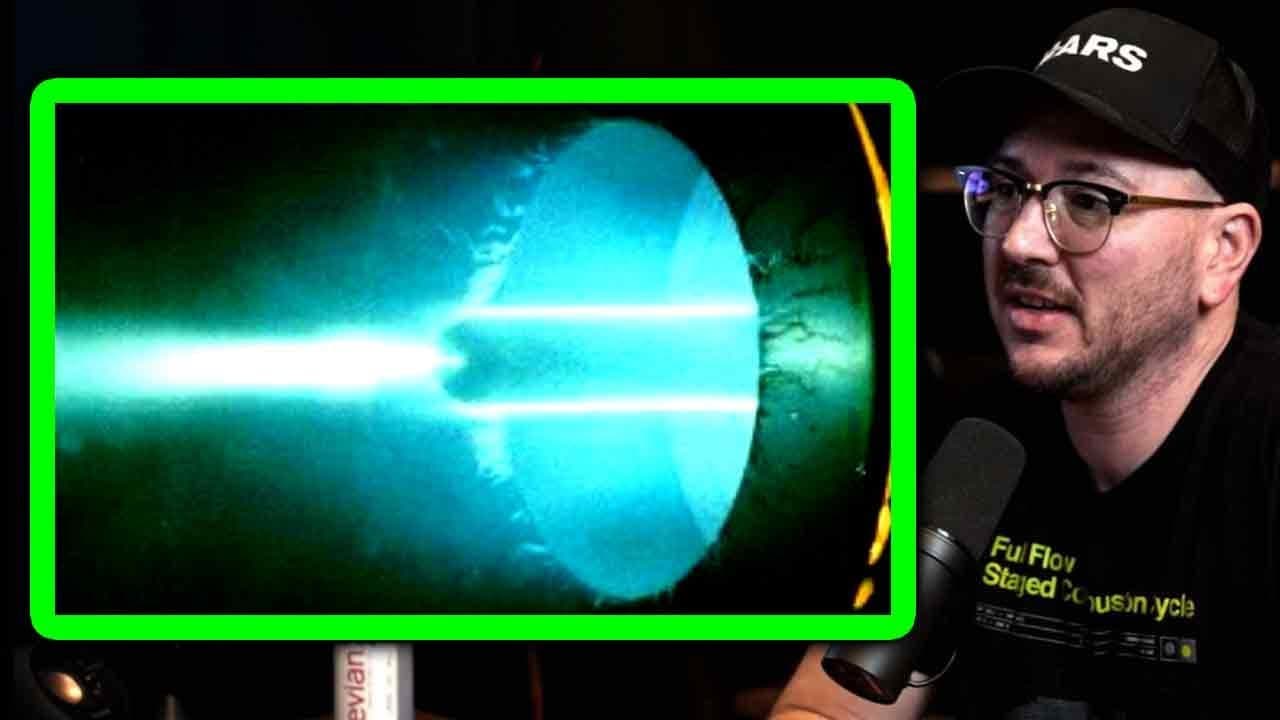
Nuclear propulsion, specifically nuclear fission and fusion, has great potential for space travel due to its high specific impulse and efficiency compared to chemical propulsion.
Transcript
so first let's talk about nuclear propulsion so out there interesting propulsion ideas uh so what do you think beyond the the chemical engines that we talked about what do you think about using nuclear fission and maybe even nuclear fusion for uh for propulsion we already have thermal nuclear reactors uh they're nuclear engines that have been teste... Read More
Key Insights
- ✋ Nuclear propulsion, specifically nuclear fission and fusion, offers higher specific impulse and efficiency compared to chemical propulsion.
- 🎟️ Nuclear thermal propulsion is suitable for interplanetary missions and could potentially be used for lunar missions as well.
- 😒 Challenges in implementing nuclear propulsion include the weight of nuclear reactors and limited use for certain missions.
Install to Summarize YouTube Videos and Get Transcripts
Explore YouTube Video Summarizer or Get YouTube Transcript Extractor
Questions & Answers
Q: How does nuclear propulsion work and what are its advantages over chemical propulsion?
Nuclear propulsion involves utilizing nuclear fission or fusion to heat up propellant, resulting in higher specific impulse and improved efficiency compared to chemical propulsion. It offers the potential for faster and more efficient space travel.
Q: Why hasn't nuclear propulsion been implemented extensively yet?
The challenges associated with nuclear propulsion include the weight of nuclear reactors in engines, the potential irradiation of gas propellant, and the limited use of these engines for interplanetary missions. These factors have hindered extensive implementation in space travel.
Q: Can nuclear thermal propulsion be used for lunar missions?
Nuclear thermal propulsion can indeed be beneficial for lunar missions, as it offers high specific impulse and efficiency. Using nuclear thermal propulsion for an Earth-Moon system can be a great choice, but the trade-off with using larger chemical rockets also needs to be considered.
Q: Is there a possibility of developing more advanced propulsion systems based on theoretical physics?
Theoretical physics may hold the key to exciting propulsion systems in the future. As our understanding of physics evolves, we may unlock new possibilities, such as utilizing black holes for propulsion. However, it is still in the early stages, and predicting specific advancements is challenging.
Summary & Key Takeaways
-
Nuclear propulsion, utilizing nuclear fission or fusion, offers a much higher specific impulse compared to chemical propulsion, leading to faster and more efficient space travel.
-
Nuclear thermal propulsion, which involves heating up propellant using nuclear fission, can provide specific impulses twice that of chemical propulsion due to the lightweight nature of hydrogen.
-
Challenges in implementing nuclear propulsion include the weight of nuclear reactors in engines, the irradiation of gas propellant, and the limited use of these engines for interplanetary missions.
Read in Other Languages (beta)
Share This Summary 📚
Summarize YouTube Videos and Get Video Transcripts with 1-Click
Try YouTube Summary with ChatGPT & Claude or YouTube Transcript Generator
Explore More Summaries from Lex Clips 📚




Summarize YouTube Videos and Get Video Transcripts with 1-Click
Try YouTube Summary with ChatGPT & Claude or YouTube Transcript Generator