How Do Hackers Use Malware to Steal Social Media Accounts?
TL;DR
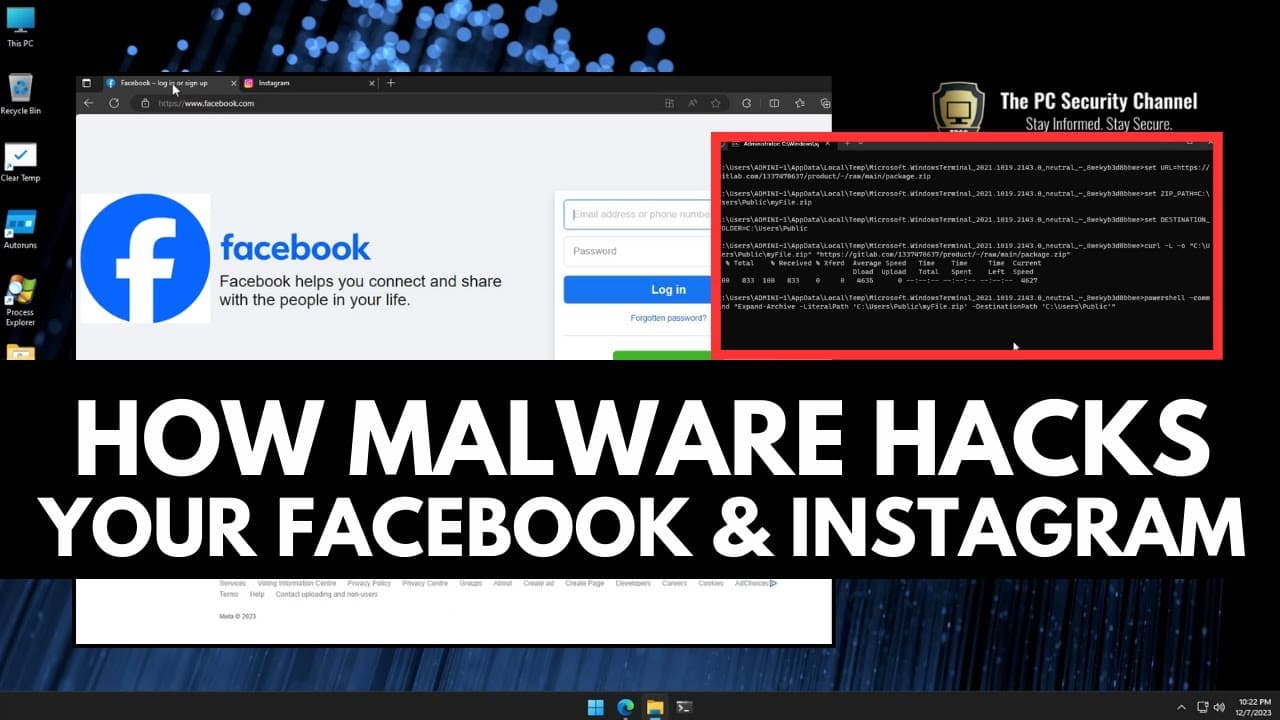
Hackers can easily steal social media accounts by tricking users into running malicious scripts from zip file attachments. These scripts steal browser credentials and send them to attackers via messaging apps like Telegram. Even unsuspecting users can become targets, making it crucial to stay vigilant against such malware threats.
Transcript
today we're going to do something special we're going to see the behind the scenes of how hackers sketch your Facebook and Instagram how do these accounts get hacked with malware how the data collected is sent and how a couple of clicks can get all your online accounts hacked it all starts off with a very simple message but obviously the red flag i... Read More
Key Insights
- 😇 Malware attacks often start with a seemingly innocent message attachment, such as a zip file.
- 🕵️ Attackers can leverage legitimate system tools and processes, making it difficult for traditional antivirus programs to detect the malicious activity.
- ☠️ Social media botnets are commonly used to spread info-stealers, with a success rate of one infection per 70 messages sent.
- 👋 These attacks can target individuals and businesses, particularly those who may be less tech-savvy or unfamiliar with cybersecurity best practices.
- 👻 Hackers can steal browser credentials, authentication tokens, and session tokens, allowing them to gain unauthorized access to online accounts.
- 💨 Malware-as-a-service provides a streamlined way for less-skilled individuals to carry out such attacks.
- 🤨 Guardio, a web extension, offers protection against info-stealers and other online threats by monitoring accounts for data breaches and suspicious activity.
Install to Summarize YouTube Videos and Get Transcripts
Explore YouTube Video Summarizer or Get YouTube Transcript Extractor
Questions & Answers
Q: How do hackers initiate the process of stealing Facebook and Instagram accounts?
Hackers often send a message with a zip file attachment, containing a script that references malware from online repositories. When the script is executed, it steals browser credentials and saves them in a Telegram chat.
Q: Can these attacks target any online account?
Yes, these attacks can target any online account by stealing browser credentials or authentication tokens, allowing attackers to log into accounts without using usernames or passwords.
Q: Are these attacks only carried out by skilled hackers?
No, malware-as-a-service offers tools and libraries for creating these attacks, making it accessible even to less-skilled individuals. It is a growing trend on the dark web.
Q: How do hackers use social media bots in their attacks?
Hackers use botnets to send messages with info-stealer attachments. These bots specifically target business accounts, increasing the odds of success by sending large volumes of malicious messages.
Summary & Key Takeaways
-
Hackers can exploit a simple message attachment, often in the form of a zip file, to install malware on your computer.
-
The installed script can reference malware from online repositories, stealing credentials and dumping them into a chat.
-
Stolen credentials allow hackers to gain access to your accounts, change passwords, and take control.
Read in Other Languages (beta)
Share This Summary 📚
Summarize YouTube Videos and Get Video Transcripts with 1-Click
Try YouTube Summary with ChatGPT & Claude or YouTube Transcript Generator
Explore More Summaries from The PC Security Channel 📚

Summarize YouTube Videos and Get Video Transcripts with 1-Click
Try YouTube Summary with ChatGPT & Claude or YouTube Transcript Generator