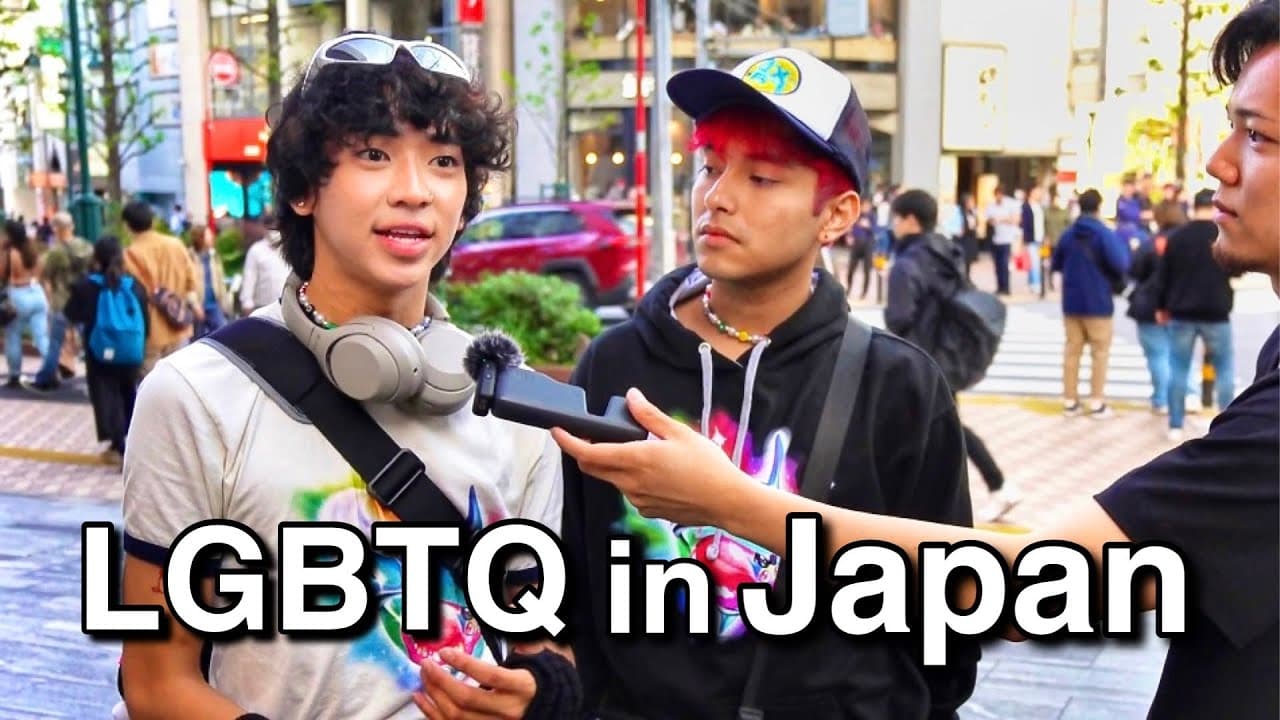
What's it like being LGBTQ+ in Japan?
TL;DR
LGBTQ+ in Japan face tolerance but still encounter societal taboos.
Transcript
guys how you doing I'm Takashi from Japan so today I came here Tokyo rainbow parade 2023. I'm gonna ask sexual minority people lgbtq people what's it like being lgbtq in Japan okay let's get started thank you for your time where you from he gets from I'm from El Salvador I'm from Japan I was born and ... Read More
Key Insights
- Japanese society is generally tolerant towards LGBTQ+ individuals, though acceptance is limited and societal taboos persist.
- Foreigners often experience different treatment regarding their sexuality, perceived as a 'foreigner thing' by some Japanese.
- LGBTQ+ visibility has improved in Japan, with more representation in media and events like Tokyo Rainbow Pride.
- Nichome, a major LGBTQ+ district in Tokyo, is a vital community hub for sexual minorities in Japan.
- Japan is considered safer for LGBTQ+ individuals compared to some conservative countries, though less open than Western nations.
- LGBTQ+ individuals often find it challenging to be open in professional settings, preferring to come out in personal or queer circles.
- Education on LGBTQ+ topics is minimal in Japanese schools, contributing to subtle discrimination and lack of awareness.
- Despite societal challenges, LGBTQ+ individuals in Japan generally feel safe and are encouraged to find supportive communities.
Install to Summarize YouTube Videos and Get Transcripts
Explore YouTube Video Summarizer or Get YouTube Transcript Extractor
Questions & Answers
Q: How are LGBTQ+ individuals generally treated in Japan?
LGBTQ+ individuals in Japan are generally treated with tolerance rather than outright acceptance. While there is little to no violence against them, societal taboos still exist, making it difficult for many to come out, especially in professional settings. Events like Tokyo Rainbow Pride help increase visibility and acceptance.
Q: Is there a difference in how Japanese and foreign LGBTQ+ individuals are perceived?
Yes, there is a perceived difference. Foreign LGBTQ+ individuals often encounter the notion that being gay is a 'foreigner thing,' partly due to limited representation in Japanese media. However, younger Japanese people are generally more accepting, influenced by exposure to international LGBTQ+ content.
Q: Has LGBTQ+ visibility improved in Japan over the years?
Yes, LGBTQ+ visibility in Japan has improved over the years. The rise of LGBTQ+ media, such as BL (Boys' Love) dramas and movies, and events like Tokyo Rainbow Pride, have contributed to greater awareness and acceptance, though challenges remain in societal and professional acceptance.
Q: What role does Nichome play for LGBTQ+ individuals in Japan?
Nichome, located in Tokyo, is a major LGBTQ+ district and serves as a vital community hub for sexual minorities in Japan. It provides a safe space for LGBTQ+ individuals to gather, socialize, and express themselves freely, fostering a sense of belonging and support within the community.
Q: How does Japan compare to other countries in terms of LGBTQ+ acceptance?
Japan is considered safer and more tolerant for LGBTQ+ individuals than some conservative countries, but it is less open than Western nations like the US or Canada. While violence is rare, societal taboos and limited professional acceptance remain challenges for sexual minorities in Japan.
Q: What challenges do LGBTQ+ individuals face in professional settings in Japan?
In professional settings, LGBTQ+ individuals in Japan often face challenges due to societal taboos and a lack of awareness. Many prefer to remain closeted at work, fearing discrimination or negative reactions. They tend to come out only in personal or queer circles where acceptance is more likely.
Q: What is the state of LGBTQ+ education in Japanese schools?
LGBTQ+ education in Japanese schools is minimal, contributing to a lack of awareness and subtle discrimination. The curriculum rarely covers sexual minorities, which can make LGBTQ+ students feel excluded and misunderstood. There is a call for more inclusive education to normalize diverse sexual orientations.
Q: What advice is given to LGBTQ+ individuals considering visiting Japan?
LGBTQ+ individuals considering visiting Japan are advised not to worry, as the country is generally safe despite societal challenges. They are encouraged to find supportive communities, such as those in Nichome, and to enjoy their time in Japan while contributing to greater visibility and acceptance.
Summary & Key Takeaways
-
The video explores the experiences of LGBTQ+ individuals in Japan, highlighting the societal tolerance yet persistent taboos. Interviewees discuss the differences in acceptance between Japanese and foreign sexual minorities, and the importance of community hubs like Nichome.
-
While Japan is safer for LGBTQ+ individuals than some conservative countries, it is still less open than places like the US or Canada. Visibility has improved, but challenges remain in professional settings and education about sexual minorities.
-
Interviewees emphasize the importance of community and visibility for LGBTQ+ individuals in Japan, encouraging others to visit and find supportive spaces. Despite societal challenges, there is a sense of safety and acceptance within certain circles.
Read in Other Languages (beta)
Share This Summary 📚
Summarize YouTube Videos and Get Video Transcripts with 1-Click
Try YouTube Summary with ChatGPT & Claude or YouTube Transcript Generator
Explore More Summaries from TAKASHii 📚



Summarize YouTube Videos and Get Video Transcripts with 1-Click
Try YouTube Summary with ChatGPT & Claude or YouTube Transcript Generator