2 Designers Hack The Same IKEA Coffee Table | Custom Crafted | Architectural Digest
TL;DR
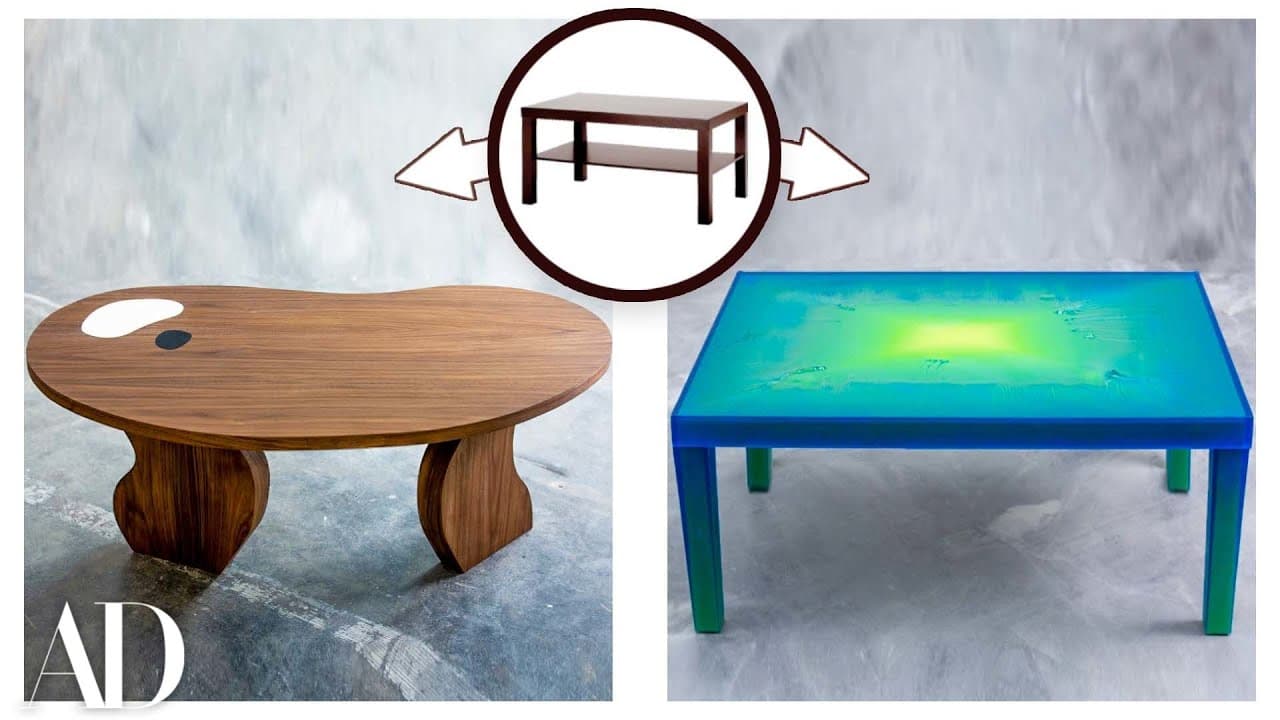
Two artists, Ginger Gordon and Quincy Ellis, creatively transform the Lack table into unique and artistic pieces using bold colors, sculptural elements, and light transparency.
Transcript
foreign [Applause] hi my name is ginger Gordon I would describe my style as bold free form and sculptural hi I'm Quincy Ellis and I would describe my style as light color and transparency my first impression of the Lack table was the price and I wanted to take something that clearly a lot of work went into but to elevate it into something that real... Read More
Key Insights
- 💦 Ginger Gordon transforms the Lack table through collaging, veneer work, and vibrant colors, elevating its aesthetic appeal.
- 🙂 Quincy Ellis creates geometric molds and uses quick-drying resin to achieve a shifting color effect and enhance the light transparency of the Lack table.
- 🧑🎨 Both artists maintain the flat-pack ability of the Lack table in their transformations, showcasing their innovative and artistic approaches.
- 🥵 Working with resin presents challenges due to its temperamental nature and the need to control the heat generated during its transformation.
- 😒 The use of air bubbles in the resin adds an unexpected and captivating element to the final pieces.
- 🙂 Ginger Gordon's approach focuses on adding complexity and visual interest to the Lack table, while Quincy Ellis prioritizes enhancing its light and transparency.
- 😑 The artists' experiments with materials and techniques demonstrate the versatility and potential of the Lack table as a canvas for creative expression.
Install to Summarize YouTube Videos and Get Transcripts
Explore YouTube Video Summarizer or Get YouTube Transcript Extractor
Questions & Answers
Q: How does Ginger Gordon approach transforming the Lack table?
Ginger Gordon uses collaging and veneer work to add depth and color to the Lack table, while maintaining its flat-pack characteristics. She also paints the legs yellow to create a shifting color effect.
Q: What challenges does Quincy Ellis face when working with resin?
Quincy Ellis explains that working with resin can be challenging due to its temperamental nature, reacting to temperature and moisture. He also mentions the need to control the heat generated during the resin's transformation from liquid to solid.
Q: How does Ginger Gordon ensure a smooth finish for her table?
Ginger Gordon sands off the original finish of the Lack table and applies wood filler to fill any imperfections. She then uses a router to trim the veneer and achieves a crisp edge before sanding it down for a smooth final look.
Q: What innovative technique does Quincy Ellis use for the table legs?
Quincy Ellis uses molds and a band saw to create geometric shapes for the table legs. He screws the legs to the table instead of gluing them, maintaining the flat-pack ability. The legs also feature air bubbles, creating intriguing mirror forms.
Summary & Key Takeaways
-
Ginger Gordon aims to transform the Lack table into a visually striking piece by adding color and complexity to the simple form, while keeping its flat-pack abilities.
-
Quincy Ellis focuses on enhancing the Lack table's light and transparency by creating geometric molds and using resin to achieve a shifting color effect.
Read in Other Languages (beta)
Share This Summary 📚
Summarize YouTube Videos and Get Video Transcripts with 1-Click
Try YouTube Summary with ChatGPT & Claude or YouTube Transcript Generator
Explore More Summaries from Architectural Digest 📚






Summarize YouTube Videos and Get Video Transcripts with 1-Click
Try YouTube Summary with ChatGPT & Claude or YouTube Transcript Generator