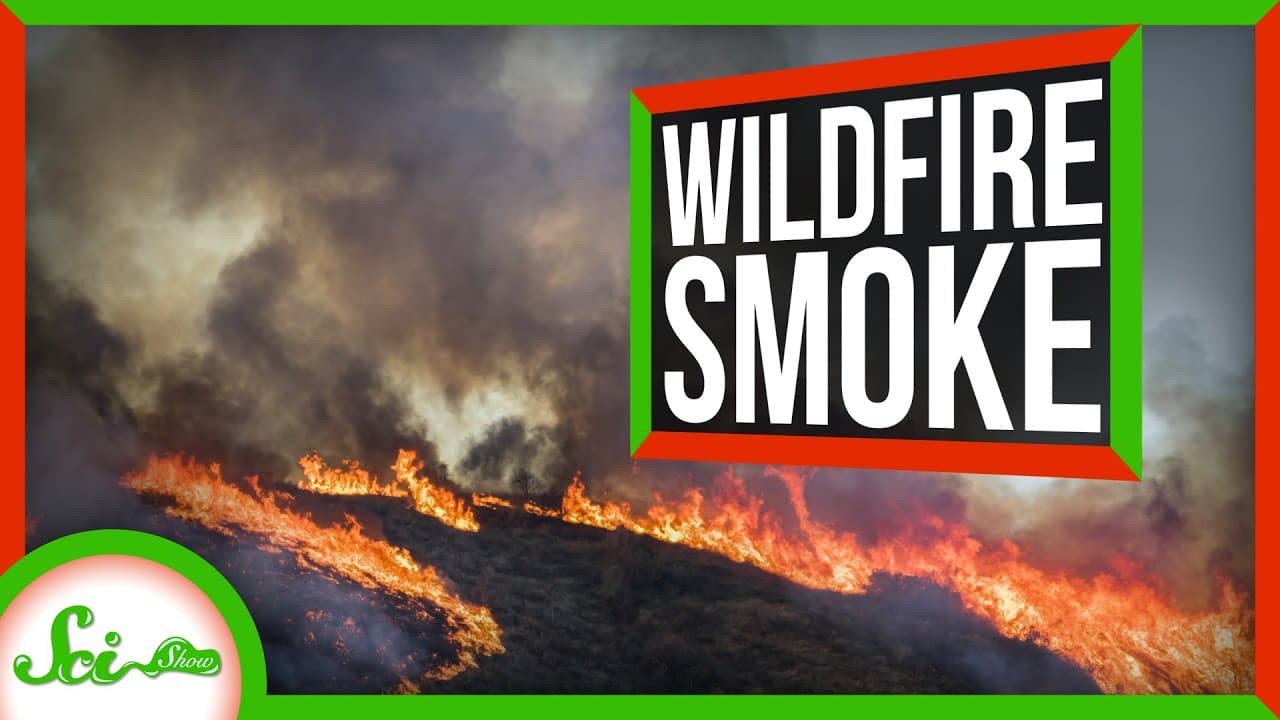
What Are the Health Risks of Wildfire Smoke?
TL;DR
Wildfire smoke poses significant health risks due to harmful particles that can irritate the lungs and exacerbate conditions like asthma and heart disease. Recommended protective measures include wearing N95 masks outdoors, improving indoor air filtration with high-MERV filters, and avoiding activities that increase airborne particles.
Transcript
[♩INTRO] Last week, the smoke from wildfires in the western US crossed the country. While air has cleared in some areas, fires continue to burn. And seeing as nasty wildfire seasons are becoming our new normal, it’s unfortunately always a good time to talk about smoke. So this week, we’re giving you the lowdown: what it is, what it does to us, and ... Read More
Key Insights
- 💦 Wildfire smoke is composed of various compounds, including water vapor, carbon monoxide, and microscopic particles of ash and chemicals.
- 👱 The Air Quality Index (AQI) measures air quality during wildfires and reflects the level of harmful pollutants present.
- 😃 Short-term effects of smoke exposure include irritation of the eyes, throat, and lungs, as well as fatigue.
- 🥺 Smoke particles can damage lung cells, cause chronic inflammation, and potentially enter the bloodstream, leading to various health problems.
- 🥰 Individuals with asthma, COPD, and heart disease are at a higher risk for worsened symptoms and long-term health effects due to smoke exposure.
- 🥳 Wildfire smoke has been linked to increased mortality, decreased birth weights, and potential infectious disease spread, although more research is needed in some areas.
- 😷 Masks, improved indoor air filtration systems, and reducing activities that increase airborne particles are recommended for protecting against smoke exposure.
Install to Summarize YouTube Videos and Get Transcripts
Explore YouTube Video Summarizer or Get YouTube Transcript Extractor
Questions & Answers
Q: What is wildfire smoke composed of?
Wildfire smoke consists of water vapor, carbon monoxide, chemicals from flames, and small particles of ash and other substances.
Q: How is air quality measured during a wildfire?
The Air Quality Index (AQI) is utilized, which is a color-coded scale that reflects the level of harmful pollutants in the air, with higher values indicating worse air quality.
Q: What are the short-term effects of smoke exposure?
Short-term effects include symptoms like stinging eyes, scratchy throat, coughing, wheezing, and fatigue.
Q: Who is most at risk for health problems from smoke exposure?
Individuals with conditions such as asthma, COPD, and heart disease are particularly susceptible to exacerbated symptoms and long-term health effects due to smoke exposure.
Q: Can wildfire smoke cause long-term harm?
Wildfire smoke contains microscopic particles that can damage lung cells and cause chronic inflammation. Studies have linked smoke exposure to increased mortality, decreased birth weights, and potential infectious disease spread.
Q: How can individuals protect themselves from smoke exposure?
Wearing masks, improving indoor air filtration systems with higher MERV ratings or certified HEPA filters, and avoiding activities that increase airborne particles can help reduce smoke exposure.
Q: What should be avoided to maintain clean air indoors during a wildfire?
Activities that increase airborne particles, such as lighting candles, smoking, using gas stoves, or frying food, should be avoided.
Q: Can DIY air purifiers be effective in reducing smoke exposure?
DIY air purifiers, created by attaching a high-MERV filter to a box fan, can provide some level of air filtration in a pinch.
Summary & Key Takeaways
-
Wildfire smoke is composed of water vapor, gases like carbon monoxide, chemicals produced by flames, and small particles of ash. The Air Quality Index (AQI) is used to measure the air quality, with higher values indicating more harmful pollutants.
-
Exposure to smoke can cause short-term effects such as stinging eyes, coughing, and wheezing. Individuals with conditions like asthma or heart disease are at a higher risk for long-term health problems.
-
Wildfire smoke particles can damage lung cells, irritate the lungs, and cause chronic inflammation. There might be a link between smoke exposure and increased mortality, decreased birth weights, and infectious disease spread.
Read in Other Languages (beta)
Share This Summary 📚
Summarize YouTube Videos and Get Video Transcripts with 1-Click
Try YouTube Summary with ChatGPT & Claude or YouTube Transcript Generator
Explore More Summaries from SciShow 📚


Summarize YouTube Videos and Get Video Transcripts with 1-Click
Try YouTube Summary with ChatGPT & Claude or YouTube Transcript Generator