Chemistry - Atomic Structure - EXPLAINED!
TL;DR
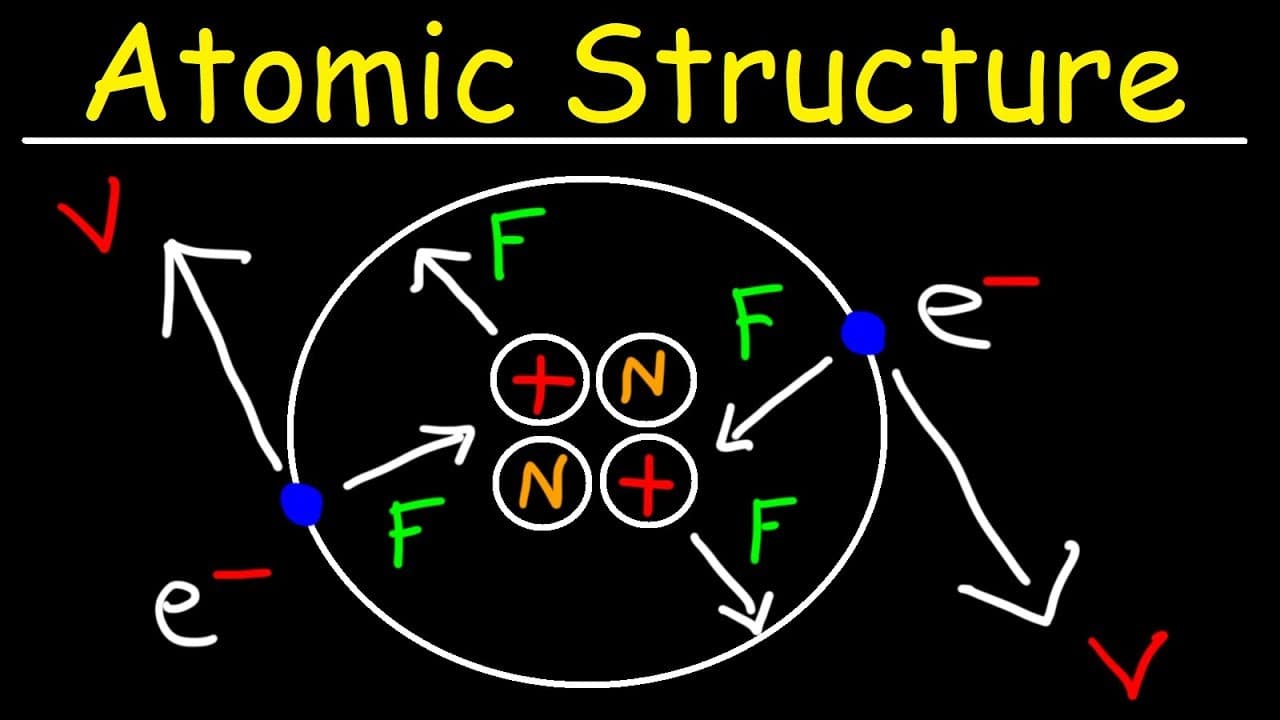
This video provides a quiz-style review of basic atomic structure, covering topics such as particles within an atom, electron orbit, electrostatic force, strong nuclear force, and mass of particles.
Transcript
so this video is a quiz for those of you who need to review basic atomic structure the structure within an atom so let's start with this question which of the following particles is found outside of the nucleus is it the electrons the neutrons the protons or is it a combination of two of the three answer choices listed here well let's talk about th... Read More
Key Insights
- 😶🌫️ The structure of an atom includes a nucleus with protons and neutrons, surrounded by electrons in the electron cloud.
- 🐎 Electrons are attracted to the nucleus due to the electrostatic force but remain in orbit due to their speed and the electrostatic force.
- 💪 The strong nuclear force is stronger than the electrostatic force and keeps protons together in the nucleus.
- 💆 Neutrons have slightly more mass than protons, while electrons have significantly less mass.
- 😑 The net charge of an ion is determined by the difference in the number of protons and electrons.
- 😐 Atoms are electrically neutral, while ions have a positive or negative charge.
- 😑 Ions can have unequal numbers of protons and neutrons, contrary to the statement that ions always have equal numbers.
Install to Summarize YouTube Videos and Get Transcripts
Explore YouTube Video Summarizer or Get YouTube Transcript Extractor
Questions & Answers
Q: Which particles are found outside of the nucleus?
Electrons are found outside of the nucleus, forming the electron cloud.
Q: Which subatomic particle carries a positive charge?
Protons carry a positive charge.
Q: Why don't electrons fall into the nucleus?
The electron's speed and the electrostatic force between electrons and protons keep them in orbit around the nucleus.
Q: What keeps the protons in the nucleus despite their positive charges?
The strong nuclear force, which is stronger than the electrostatic force, keeps the protons close together in the nucleus.
Q: Which particle has the greatest amount of mass?
Neutrons have slightly more mass than protons.
Q: How is the net charge of an ion calculated?
The net charge of an ion is equal to the sum of the charges of the protons and electrons. If there are more protons than electrons, the ion has a positive charge.
Q: Are atoms electrically neutral?
Yes, atoms are electrically neutral because they have an equal number of protons and electrons.
Q: Are ions always made up of an equal number of protons and neutrons?
No, ions can have unequal numbers of protons and neutrons, with the majority having different numbers of protons and neutrons.
Summary & Key Takeaways
-
The structure of an atom consists of a nucleus containing protons and neutrons, with electrons orbiting around it in the electron cloud.
-
Electrons are found outside of the nucleus, while protons carry a positive charge and neutrons are electrically neutral.
-
The electrostatic force between electrons and protons keeps the electrons in orbit, preventing them from falling into the nucleus.
-
The strong nuclear force within the nucleus keeps protons together despite their positive charges.
Read in Other Languages (beta)
Share This Summary 📚
Summarize YouTube Videos and Get Video Transcripts with 1-Click
Try YouTube Summary with ChatGPT & Claude or YouTube Transcript Generator
Explore More Summaries from The Organic Chemistry Tutor 📚


Summarize YouTube Videos and Get Video Transcripts with 1-Click
Try YouTube Summary with ChatGPT & Claude or YouTube Transcript Generator