The hardest problems in robotics | Robert Playter and Lex Fridman
TL;DR
General purpose robots strive to perform a wide variety of tasks, but they face difficulties in dealing with uncertainty and unexpected situations.
Transcript
this is the curse of a general purpose robot that they're not perfect at any one thing but they might be able to do a wide variety of things and and that is that is the goal at the end of the day you know I think we all want to build general purpose robots that can be used for lots of different activities but it's hard and um and the wisdom in in b... Read More
Key Insights
- 🤖 General purpose robots aim to perform a wide variety of tasks, but their versatility comes at the cost of specialization.
- 😀 Robots face challenges in dealing with uncertainty and unexpected situations, which require predictive and adaptive capabilities.
- 🥺 Failure to anticipate certain actions and unexpected forces can lead to robot instability and inefficiency.
- 🧡 Robotics development involves integrating multiple layers of control, ranging from individual joint motion to overall body motion and perception.
- 🤖 The speed and accuracy of calculations play a crucial role in a robot's performance, necessitating efficient handling of computer time.
- 🤖 Advances in computing power enable more sophisticated models and predictions for general purpose robots.
- 🤖 General purpose robots can learn from human experiences, such as adjusting actions based on the weight and perception of objects.
Install to Summarize YouTube Videos and Get Transcripts
Explore YouTube Video Summarizer or Get YouTube Transcript Extractor
Questions & Answers
Q: Why are general purpose robots not perfect at any one thing?
General purpose robots are designed to handle a wide range of tasks, making it challenging for them to specialize in one area. They prioritize versatility over specific skills.
Q: Why do robots need to deal with uncertainty?
To be useful in the future, robots should be able to handle unexpected situations and adapt to unpredictable environments. Dealing with uncertainty enables their successful operation.
Q: What are some common failures of general purpose robots?
General purpose robots can struggle with simple actions that humans take for granted, such as grasping objects accurately or maintaining balance in response to external forces.
Q: How does predictive control contribute to robot performance?
Model predictive control allows robots to predict and adapt to future scenarios. By constantly updating their predictions based on real-world feedback, robots can optimize their actions and respond effectively.
Summary & Key Takeaways
-
General purpose robots aim to be versatile but struggle to excel in specific tasks due to the need to handle uncertainty.
-
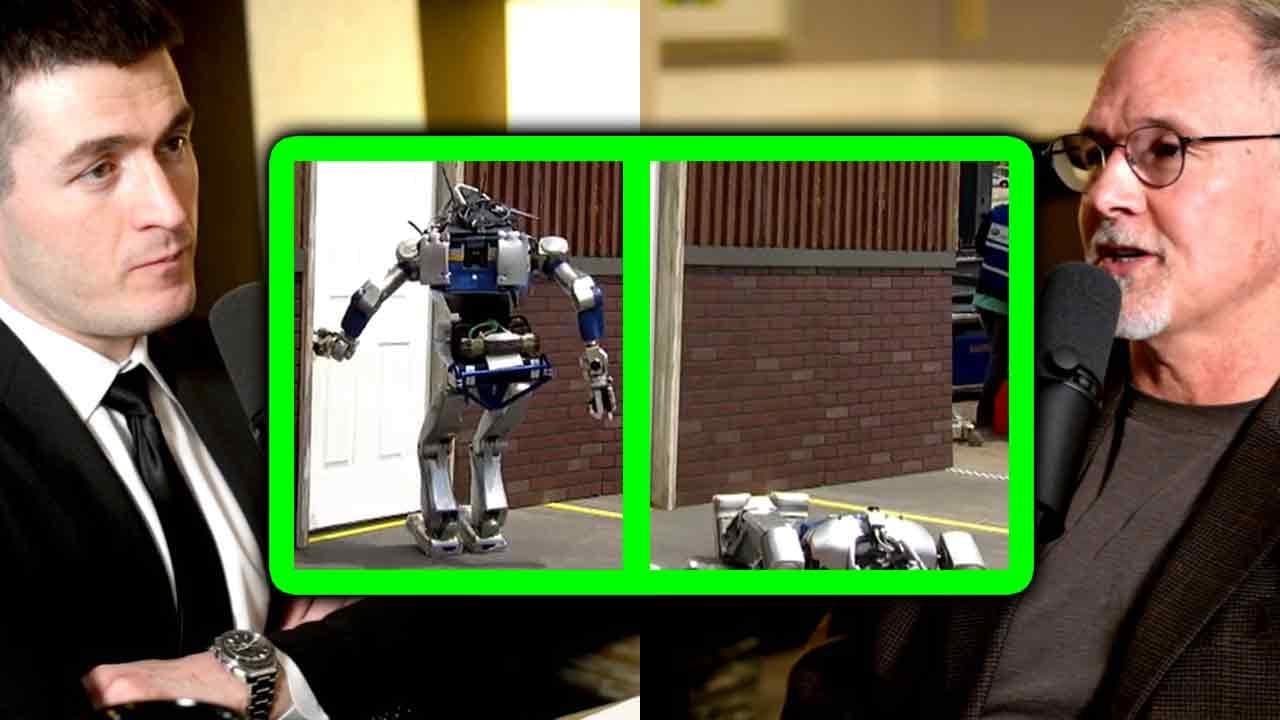
Robots often face unexpected situations and fail to anticipate certain actions, such as missing a door handle and losing balance.
-
The development of general purpose robots requires predicting and adapting to different circumstances, similar to how humans adjust their actions when handling objects.
Read in Other Languages (beta)
Share This Summary 📚
Summarize YouTube Videos and Get Video Transcripts with 1-Click
Try YouTube Summary with ChatGPT & Claude or YouTube Transcript Generator
Explore More Summaries from Lex Clips 📚




Summarize YouTube Videos and Get Video Transcripts with 1-Click
Try YouTube Summary with ChatGPT & Claude or YouTube Transcript Generator