How Can Scientists Revive the Woolly Mammoth?
TL;DR
Scientists can potentially revive the woolly mammoth by sequencing its genome from well-preserved remains found in permafrost and using advanced DNA technology. By modifying the chromosomes of Asian elephants and utilizing stem cells, they aim to create a creature that resembles the woolly mammoth, which could thrive in suitable northern climates.
Transcript
Translator: Joseph Geni Reviewer: Morton Bast When I was a young boy, I used to gaze through the microscope of my father at the insects in amber that he kept in the house. And they were remarkably well preserved, morphologically just phenomenal. And we used to imagine that someday, they would actually come to life and they would crawl out of the re... Read More
Key Insights
- 🔬 The sequencing of extinct genomes is now a modern-day reality, and the revival of extinct species, like woolly mammoths, is within reach thanks to advances in DNA technology.
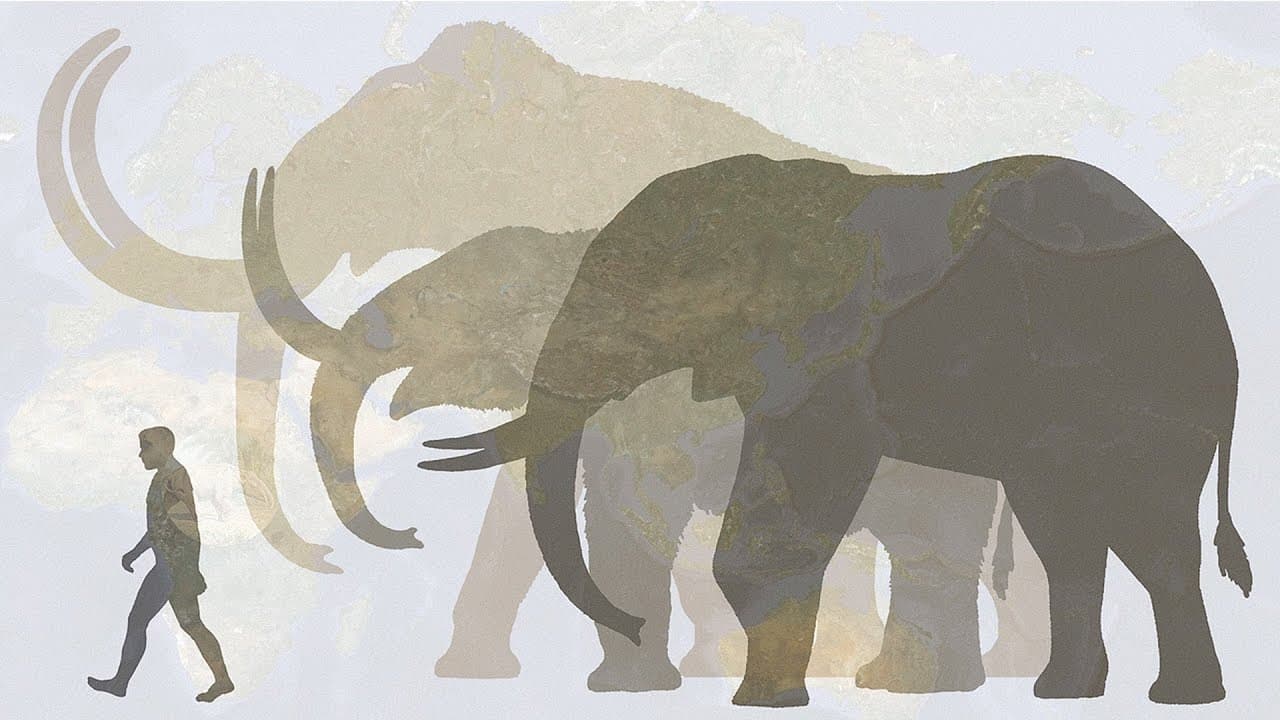
- 🌍 Woolly mammoths share a deep connection with humans and elephants, as they originated in Africa millions of years ago and migrated to Europe and Asia as habitats changed.
- 🏔 Mammoths adapted to changing climates and environments, migrating across the Bering land bridge and coexisting with other mammoth species like the Columbian mammoth.
- ❄️ The preservation of DNA depends on factors such as the burial depth and temperature consistency, with the consistency of temperature being the most important.
- 🔎 Scientists can extract DNA fragments from mammoth bones and teeth, but they must differentiate between mammoth DNA and other organisms' DNA using advanced techniques.
- 🐘 The mammoth genome is much larger than a hominid genome and is composed of repetitive DNA sequences, making it difficult to reconstruct the entire genome structure.
- 🔬 Advances in ancient DNA technology allow scientists to sequence the genomes of other extinct mammoth species, such as the woolly and Columbian mammoths.
- 🦣 By modifying Asian elephant chromosomes and utilizing stem cells, scientists may be able to bring back a creature resembling a woolly mammoth, potentially in habitats in northern Siberia and Yukon.
Install to Summarize YouTube Videos and Get Transcripts
Explore YouTube Video Summarizer or Get YouTube Transcript Extractor
Questions & Answers
Q: Is it possible to sequence the genome of extinct animals?
Yes, the sequencing of extinct genomes is not only a possibility but a modern-day reality.
Q: Can we revive an extinct species?
Yes, the revival of an extinct species is within reach, particularly from the well-preserved remains of woolly mammoths found in the permafrost.
Q: What were woolly mammoths like?
Woolly mammoths were large, hairy animals with large tusks. They were adapted to cold environments and had a deep connection with humans, similar to elephants.
Q: How is DNA preserved in fossils?
The preservation of DNA in fossils depends on factors such as burial depth and temperature consistency. Consistency of temperature is more important than the length of preservation time.
Q: What challenges are faced in extracting DNA from fossils?
Extracting DNA from fossils is challenging because bacteria that lived symbiotically with the mammoth during its lifetime can break apart DNA into smaller fragments. Advanced clean room technology and high-throughput sequencing are used to overcome these challenges.
Q: What is the relationship between mammoths and Asian elephants?
Mammoths and Asian elephants share a most recent common ancestor about six million years ago, slightly closer than the African elephant. The sequencing of mammoth genomes reveals interesting relationships between extinct mammoth forms and their living relatives.
Q: Can we use the Asian elephant to revive woolly mammoths?
There is a possibility of using Asian elephant chromosomes to modify and differentiate stem cells to create an organism that resembles a woolly mammoth. This would not be an exact replica due to the limitations of short DNA fragments.
Summary & Key Takeaways
-
The speaker discusses the possibility of sequencing the genomes of extinct animals and reviving extinct species, using woolly mammoths as an example.
-
The preservation and survival of DNA in fossils depends on factors such as burial depth and temperature consistency.
-
Through advances in technology and DNA sequencing, scientists can extract and analyze DNA fragments from mammoth fossils, providing insights into their genetic relationship with living elephants.
Read in Other Languages (beta)
Share This Summary 📚
Summarize YouTube Videos and Get Video Transcripts with 1-Click
Try YouTube Summary with ChatGPT & Claude or YouTube Transcript Generator
Explore More Summaries from TED 📚






Summarize YouTube Videos and Get Video Transcripts with 1-Click
Try YouTube Summary with ChatGPT & Claude or YouTube Transcript Generator