Intro to the Bond Market
TL;DR
Bonds offer a way for companies and governments to raise funds.
Transcript
♪ [music] ♪ [Alex] As we've seen, most individuals who want a loan -- they borrow money from a bank. But for a well-known corporation, like Starbucks, borrowing money may be available through another type of financial intermediary: the bond market. A bond is essentially an IOU. It documents who owes how much and when payment must be made. Like stoc... Read More
Key Insights
- Bonds are financial instruments used by companies and governments to raise capital, functioning as an IOU with specified repayment terms.
- Unlike stocks, bonds do not confer ownership in a company; they represent a loan from the bondholder to the issuer.
- Bondholders receive regular interest payments, known as coupon payments, until the principal is repaid at maturity.
- The bond market can offer better borrowing terms for well-established companies compared to traditional bank loans.
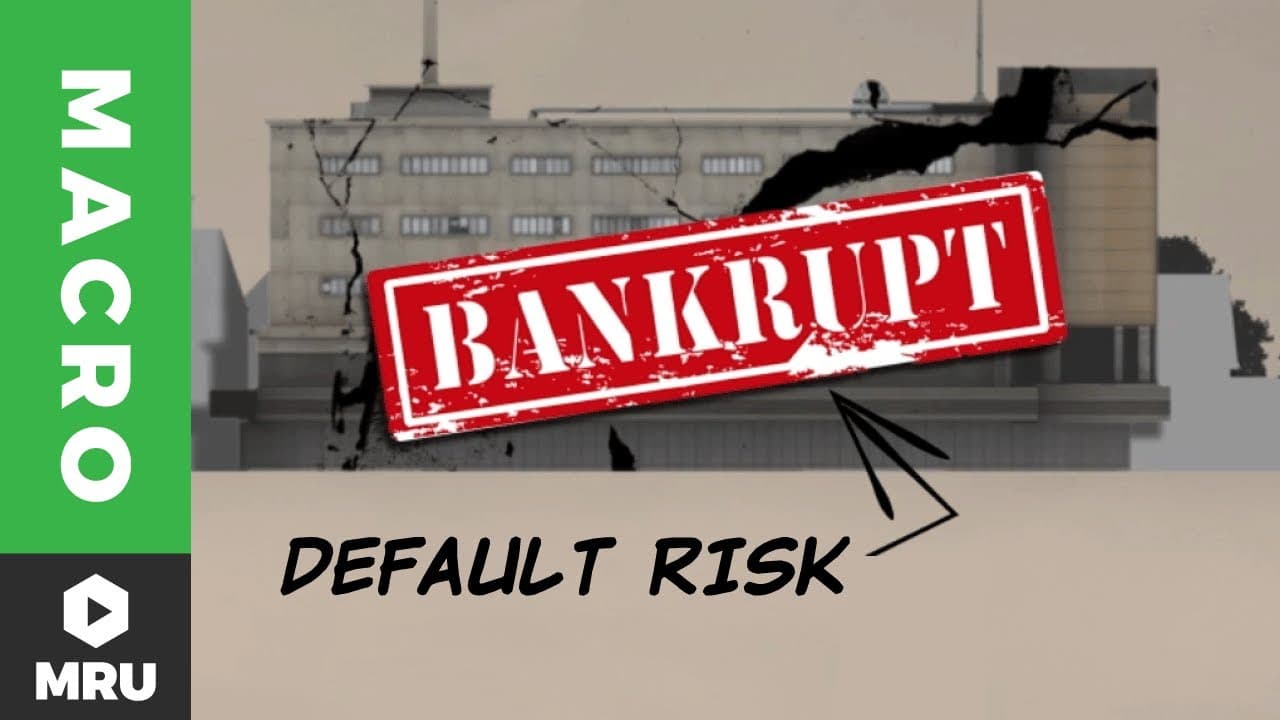
- Bond ratings, provided by agencies like S&P, assess the default risk of the issuer, influencing the interest rate demanded by investors.
- Higher-rated bonds are considered safer and thus typically come with lower interest rates, while lower-rated bonds, or junk bonds, carry higher risks and interest rates.
- The concept of 'crowding out' occurs when government borrowing increases interest rates, reducing private investment and consumption.
- Collateral can affect bond interest rates, with secured loans typically offering lower rates due to reduced risk for lenders.
Install to Summarize YouTube Videos and Get Transcripts
Explore YouTube Video Summarizer or Get YouTube Transcript Extractor
Questions & Answers
Q: What distinguishes bonds from stocks?
Bonds differ from stocks in that they do not provide ownership in a company. Instead, bonds are essentially loans made by investors to the issuer, who promises to repay the principal amount along with interest. Stocks, on the other hand, represent equity ownership and entitle shareholders to a portion of the company's profits, often in the form of dividends.
Q: How do bond ratings influence investment decisions?
Bond ratings, assigned by agencies like Standard & Poor's, reflect the default risk of the issuer. Higher-rated bonds are deemed safer, often offering lower interest rates due to reduced risk. Conversely, lower-rated bonds, or junk bonds, are riskier and thus offer higher interest rates to attract investors. These ratings help investors assess the risk-return profile of bond investments.
Q: What is the 'crowding out' effect in the bond market?
The 'crowding out' effect occurs when increased government borrowing raises interest rates, which in turn reduces private sector investment and consumption. As the government absorbs more loanable funds, the cost of borrowing for private entities rises, leading them to invest less. This effect highlights the interplay between public sector borrowing and private sector economic activity.
Q: Why might a company choose to issue bonds instead of seeking a bank loan?
Companies may opt to issue bonds rather than seek bank loans to potentially secure better borrowing terms. For well-established firms with strong reputations, the bond market can offer lower interest rates and more favorable conditions compared to banks. Additionally, bonds enable companies to access a broader pool of investors, diversifying their funding sources.
Q: How do coupon payments work in the context of bonds?
Coupon payments are regular interest payments made to bondholders, typically on a semi-annual basis, as compensation for lending money to the issuer. These payments are predetermined and continue until the bond reaches its maturity date, at which point the principal amount is repaid. Coupons provide a steady income stream to investors throughout the bond's term.
Q: What role does collateral play in determining bond interest rates?
Collateral can significantly influence bond interest rates. Secured bonds, backed by collateral, pose less risk to investors, resulting in lower interest rates. In contrast, unsecured bonds, lacking collateral, carry higher risk, prompting investors to demand higher interest rates. Collateral provides a safety net for lenders, ensuring they can recover some value if the issuer defaults.
Q: How does the bond market impact the overall economy?
The bond market plays a crucial role in the economy by providing a mechanism for governments and corporations to raise funds for various projects and investments. It influences interest rates, affecting consumer spending and business investment. Additionally, government borrowing through bonds can impact saving and borrowing markets, altering economic dynamics such as investment levels and consumption patterns.
Q: What are the risks associated with investing in bonds?
Investing in bonds involves several risks, including interest rate risk, credit risk, and inflation risk. Interest rate risk arises from fluctuating rates that can affect bond prices. Credit risk pertains to the issuer's potential default, while inflation risk involves the erosion of purchasing power over time. Despite these risks, bonds are generally considered safer than stocks, as bondholders are prioritized over shareholders in the event of bankruptcy.
Summary & Key Takeaways
-
Bonds are a form of loan used by corporations and governments to raise funds, differing from stocks as they do not confer ownership but promise repayment with interest. Established companies like Starbucks often use bonds to secure better borrowing terms than banks offer.
-
Bond ratings, assigned by agencies like S&P, measure the default risk of the issuer, affecting the interest rate investors demand. Higher ratings indicate safer investments with lower interest rates, while lower ratings, or junk bonds, require higher rates due to increased risk.
-
Government borrowing in the bond market can lead to higher interest rates, a phenomenon known as 'crowding out,' which decreases private sector investment and consumption. Collateral can mitigate interest rates, as secured loans pose less risk to lenders.
Read in Other Languages (beta)
Share This Summary 📚
Summarize YouTube Videos and Get Video Transcripts with 1-Click
Try YouTube Summary with ChatGPT & Claude or YouTube Transcript Generator
Explore More Summaries from Marginal Revolution University 📚

Summarize YouTube Videos and Get Video Transcripts with 1-Click
Try YouTube Summary with ChatGPT & Claude or YouTube Transcript Generator