What Is Open Simplex Noise and How to Use It in Processing?
TL;DR
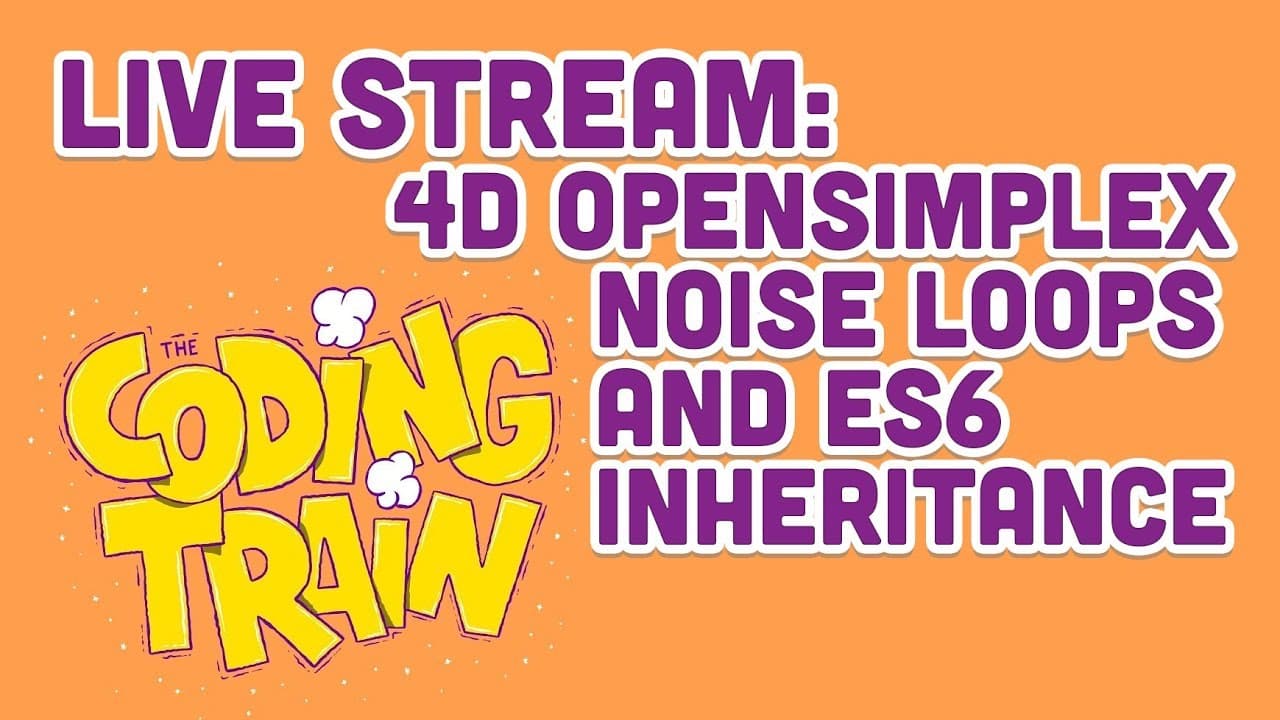
Open Simplex Noise is an advanced noise algorithm that improves upon classic Perlin Noise by eliminating directional artifacts, resulting in smoother visual effects. In this tutorial, you'll learn how to implement Open Simplex Noise in a Processing sketch and explore the concept of looping behavior using four-dimensional noise to create seamless visualizations.
Transcript
[Applause] so this is random this is noise Perley noise that is in the core random algorithm the actual random algorithm itself those numbers aren't related at all you pick like I'm picking random numbers between zero and ten nine two seven six one nine four eight nine to one thirty I pick nine a lot apparently but with Perlin noise I might pick nu... Read More
Key Insights
- 🏛️ Open Simplex Noise provides a smoother noise algorithm compared to classic Perlin Noise with no directional artifacts.
- 🔁 Leveraging four-dimensional noise enables the creation of seamless loop visualization with Open Simplex Noise.
- 👻 Transforming polar coordinates to Cartesian coordinates allows for circular motion representation in the third dimension for looping effects.
Install to Summarize YouTube Videos and Get Transcripts
Explore YouTube Video Summarizer or Get YouTube Transcript Extractor
Questions & Answers
Q: What is the key distinction between classic Perlin Noise and Open Simplex Noise?
The key distinction lies in the quality of the noise, with Open Simplex Noise having less directional artifacts and providing smooth visual effects compared to classic Perlin Noise.
Q: How is looping achieved in a gif loop using Open Simplex Noise?
By using four-dimensional noise, specifically by revolving around a circular path in the third dimension, a seamless loop of the noise values is created.
Q: How does the visual quality of Open Simplex Noise differ from classic Perlin Noise?
Open Simplex Noise offers a smoother and more visually appealing randomness without the herky-jerky directional artifacts present in classic Perlin Noise.
Q: Why is it necessary to use four-dimensional noise for creating looping effects?
Four-dimensional noise is essential for introducing circular motion in the third dimension, allowing for the seamless looping of noise values in a gif.
Summary & Key Takeaways
-
Open Simplex Noise introduced as an upgrade to classic Perlin Noise, providing smooth randomness.
-
Demonstrated use of Open Simplex Noise in a basic processing sketch for visual effects.
-
Exploring looping behavior by leveraging four-dimensional noise to create a seamless loop of noise values.
Read in Other Languages (beta)
Share This Summary 📚
Summarize YouTube Videos and Get Video Transcripts with 1-Click
Try YouTube Summary with ChatGPT & Claude or YouTube Transcript Generator
Explore More Summaries from The Coding Train 📚

Summarize YouTube Videos and Get Video Transcripts with 1-Click
Try YouTube Summary with ChatGPT & Claude or YouTube Transcript Generator