Why Are Wildfires Getting Worse and What Can We Do?
TL;DR
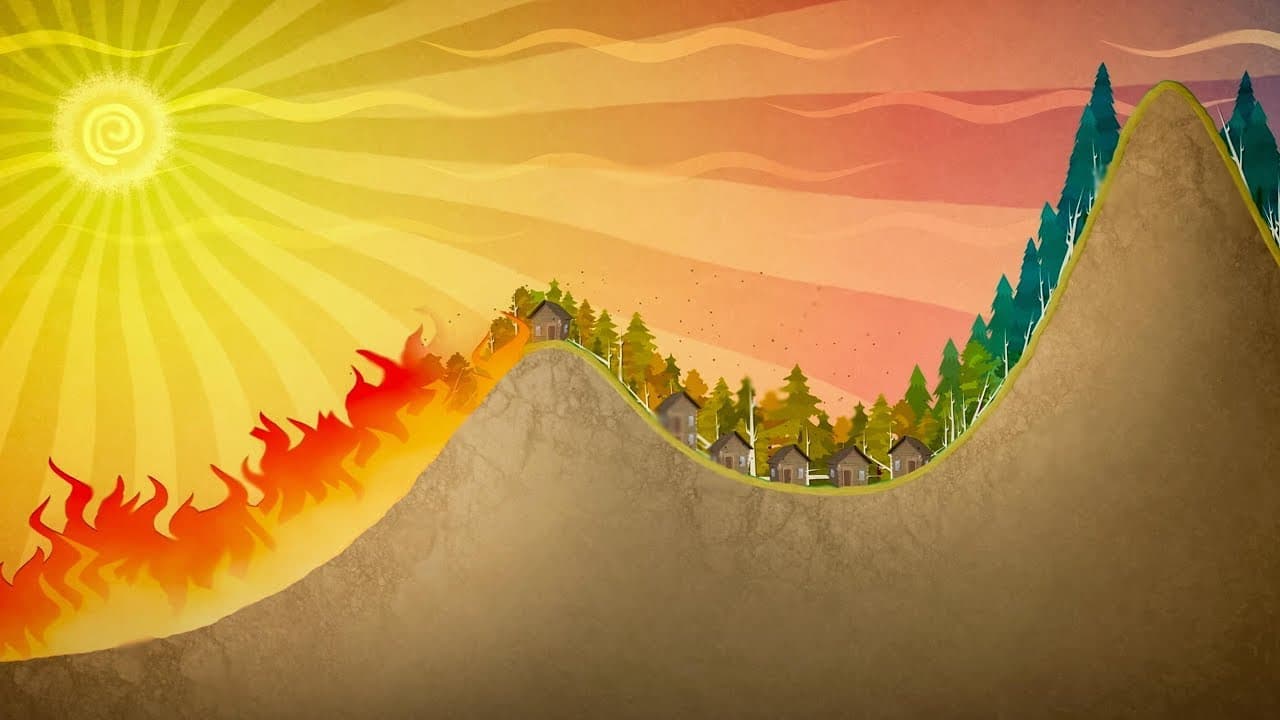
Wildfires are worsening due to a combination of factors including poor fire management, climate change, and human development in flammable areas. To combat this, we need to restore the historical forest patchwork using prescribed burns and managed wildfires, which can significantly reduce the severity and spread of future fires. Public support and awareness are crucial for implementing these necessary changes.
Transcript
As you've probably noticed, in recent years, a lot of western forests have burned in large and destructive wildfires. If you're like me -- this western landscape is actually why my family and I live here. And as a scientist and a father, I've become deeply concerned about what we're leaving behind for our kids, and now my five grandkids. In the US,... Read More
Key Insights
- 🔥 The area burned by wildfires in western forests has steadily increased over the past three decades, with the rise of "megafires" that are larger than 100,000 acres.
- 🌲 The current dense forest landscape, filled with small, fire-sensitive trees, is a result of fire suppression, logging, and other human activities that have disrupted the natural patchwork of forests.
- 💡 Restoring the patchwork of open and closed canopy forests through prescribed burning and managed wildfires can help reduce the severity of future fires and prevent their spread across the landscape.
- 💨 Prescribed burning produces less smoke than wildfires, but its use is limited due to current air quality regulations that treat prescribed burning smoke as a nuisance.
- 🏡 More than 60% of new housing starts are being built in flammable areas, increasing the risk of large areas going up in smoke during wildfires.
- 👥 Addressing the wildfire issue is a social problem that requires public support for tools like prescribed burning and managed wildfires.
- 🔒 Without taking action to address the current situation, losses to megafires will continue, threatening beloved forests and natural spaces.
- 🌍 It is up to us, as owners of public lands, to prioritize and advocate for better fire and forest management to protect our cherished landscapes.
Install to Summarize YouTube Videos and Get Transcripts
Explore YouTube Video Summarizer or Get YouTube Transcript Extractor
Questions & Answers
Q: Why have there been an increasing number of destructive wildfires in western forests in recent years?
The increase in destructive wildfires is due to the way the western landscape has been managed over the last 150 years, coupled with a steadily warming climate. The destruction could have been avoided if fire management habits were changed.
Q: What were the historical forests of the western landscape like?
Historical forests were patchy and constantly evolving, with open and closed canopy forests of all ages. There was evidence of fire and the landscape consisted of meadows and open canopy forests. Different forest types and environmental factors shaped the way the forests grew and how fire behaved on the landscape.
Q: How did Native Americans and European settlement impact the forests?
Native Americans intentionally used fire to burn meadows and thin certain forests to promote the growth of food and improve grazing for animals. European settlement brought livestock grazing, fire suppression, and logging. These factors collectively led to the filling in of the forest with dense, fire-sensitive trees.
Q: What are the current challenges in managing wildfires?
The current challenges in managing wildfires include the dense carpet of forest created by the lack of fire, the susceptibility to diseases and insect outbreaks, and the accumulation of dead branches and trees on the forest floor. Additionally, hotter, drier, and windier summers have extended the fire season. The construction of houses in flammable areas also poses a risk.
Q: What tools and strategies can be used to address the wildfire problem?
Tools and strategies that can be used to address the wildfire problem include prescribed burning to intentionally thin out trees and burn up dead fuels, mechanical thinning in appropriate areas, and the use of managed wildfires to thin forests and reduce dead fuels. Cooperation and support from the public and lawmakers are crucial to implementing these measures.
Q: Why is there a lack of public support for prescribed burning and managed wildfires?
There is a lack of public support for prescribed burning and managed wildfires mainly due to the perception of smoke as a nuisance. Prescribed burning smoke is regulated under air quality rules, while wildfire smoke is not. To address this, there needs to be a change in regulations and a better understanding of the importance of these tools in reducing the severity of future fires.
Q: What is the role of humans in solving the wildfire problem?
The wildfire problem is a social problem that requires human intervention. Public support and prioritization of fire management on public lands are necessary for addressing the current situation and preventing further losses to megafires. Spreading awareness and advocating for change to lawmakers and those responsible for managing fires and forests is crucial in finding a solution.
Q: What would happen if the current situation is not addressed?
If the current situation is not addressed, there will continue to be losses to megafires, resulting in the destruction of beloved forests. This will impact recreational activities and the ability to breathe clean air in these areas. It is therefore imperative for action to be taken to mitigate the risks and manage fires more effectively.
Summary & Key Takeaways
-
Western forests in the US have experienced large and destructive wildfires in recent years, causing significant damage to homes and natural landscapes.
-
These wildfires, known as "megafires," are a result of poor fire-management habits and a steadily warming climate.
-
To address this issue, it is necessary to restore the historical patchwork of forests through tools like prescribed burning and managed wildfires, but public support and awareness are needed for these solutions.
Read in Other Languages (beta)
Share This Summary 📚
Summarize YouTube Videos and Get Video Transcripts with 1-Click
Try YouTube Summary with ChatGPT & Claude or YouTube Transcript Generator
Explore More Summaries from TED 📚

Summarize YouTube Videos and Get Video Transcripts with 1-Click
Try YouTube Summary with ChatGPT & Claude or YouTube Transcript Generator