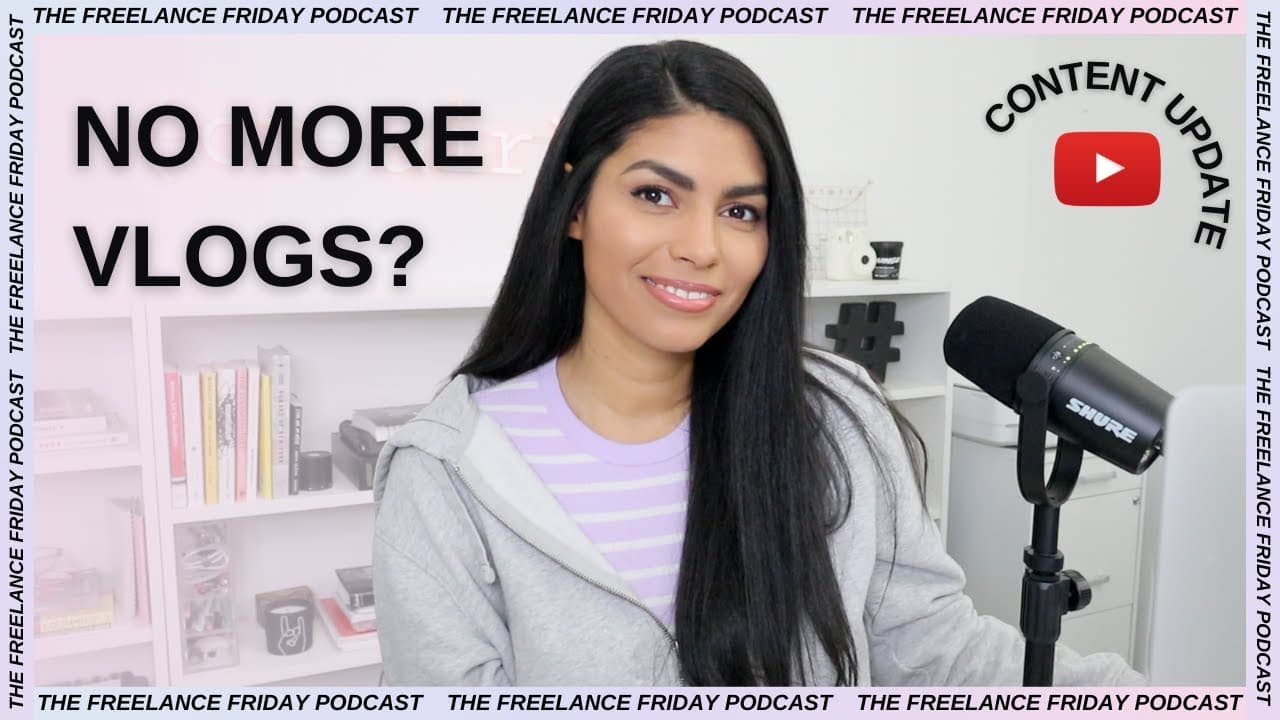
How I'm changing my content marketing strategy for 2022
TL;DR
Content strategy changes include reduced uploads and focus on quality.
Transcript
Hey, Hey, there, what's up and welcome back to another episode of the freelance Friday podcast. Today's episode is going to be a really chill casual one, and hopefully pretty sure. I just kind of wanted to have a little production meeting with you really, and just kind of share that. State of my content, I suppose I wanted to share the updates that... Read More
Key Insights
- Content strategy needs constant reevaluation, ideally every year or even monthly, to stay relevant and effective.
- Reducing YouTube uploads from three to two videos per week to focus on quality and prevent burnout.
- Analytics reveal that simpler, less produced content is often more popular and effective for audience engagement.
- Balancing educational and entertaining content is crucial; too technical content can alienate a portion of the audience.
- Podcast growth is challenging due to less effective SEO compared to platforms like YouTube or Google.
- Exploring monetization options for the podcast, as currently, it generates no direct revenue.
- TikTok provides a surface-level connection with the audience and is not as effective for deep engagement as other platforms.
- A shift towards long-form content like newsletters and potential book writing to foster deeper audience connections.
Install to Summarize YouTube Videos and Get Transcripts
Explore YouTube Video Summarizer or Get YouTube Transcript Extractor
Questions & Answers
Q: Why is the YouTube upload schedule changing?
The YouTube upload schedule is changing from three videos a week to two to focus on producing higher-quality content and to prevent burnout. While three videos a week contributed to channel growth, it also led to a decline in content quality and personal enjoyment, necessitating the change.
Q: What role does analytics play in content creation?
Analytics play a crucial role in content creation by providing insights into what the audience is searching for and engaging with. This data-driven approach helps in making informed decisions about the types of content to produce, ensuring that it meets audience needs and contributes to channel growth.
Q: How does the podcast contribute to the content strategy?
The podcast is an integral part of the content strategy, offering a platform for deeper audience engagement and exploration of diverse topics through guest interviews. However, it currently generates no direct revenue, prompting the exploration of monetization opportunities to sustain its production.
Q: What challenges are associated with podcast growth?
Podcast growth is challenging due to the less effective SEO on podcasting platforms compared to YouTube or Google. This makes it harder to rank and gain visibility, requiring alternative strategies like guest interviews and cross-promotion on platforms like YouTube to increase reach and engagement.
Q: Why is TikTok not a primary focus for content strategy?
TikTok is not a primary focus because it offers a surface-level connection with the audience, lacking the depth of engagement seen on platforms like YouTube or podcasts. While it can help reach new audiences, it has not shown significant quantifiable value for the brand's growth and engagement goals.
Q: How is long-form content being integrated into the strategy?
Long-form content is being integrated through newsletters and the exploration of book writing, aiming to establish deeper connections with the audience. This shift caters to a desire for more meaningful interactions and provides a platform for sharing comprehensive insights and personal stories.
Q: What are the monetization plans for the podcast?
The monetization plans for the podcast include exploring sponsorship opportunities, as the podcast currently generates no direct revenue. The goal is to secure a consistent sponsor to support the podcast financially, allowing for continued production and potential growth.
Q: What changes are being made to vlog content?
Vlog content will focus more on significant events like travel or business milestones, moving away from routine personal updates. This shift aims to provide more meaningful and engaging content, while also respecting personal boundaries and preventing oversharing of daily life details.
Summary & Key Takeaways
-
The content strategy for 2022 focuses on quality over quantity, reducing YouTube uploads to prevent burnout while maintaining audience engagement. Analytics-driven decisions highlight the importance of producing content that is both easy to create and aligns with audience interests.
-
Podcasts are being evaluated for monetization opportunities, as they currently generate no direct revenue. The podcast will continue to feature guest interviews, which have proven to be enjoyable and beneficial for audience engagement.
-
While TikTok is being tested, it is not the primary focus due to its transient nature. Instead, the strategy includes exploring long-form content like newsletters and book writing to establish deeper connections with the audience.
Read in Other Languages (beta)
Share This Summary 📚
Summarize YouTube Videos and Get Video Transcripts with 1-Click
Try YouTube Summary with ChatGPT & Claude or YouTube Transcript Generator
Explore More Summaries from Latasha James 📚





Summarize YouTube Videos and Get Video Transcripts with 1-Click
Try YouTube Summary with ChatGPT & Claude or YouTube Transcript Generator