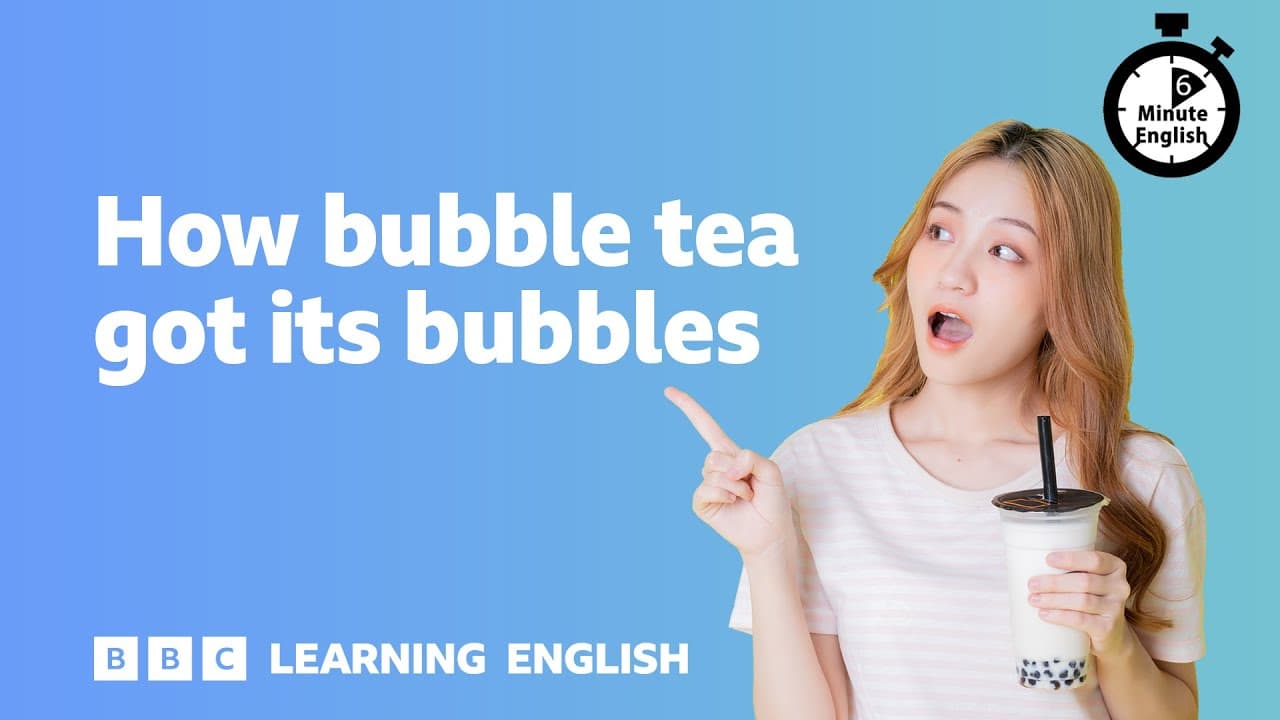
How bubble tea got its bubbles ⏲️ 6 Minute English
TL;DR
Bubble tea, invented in Taiwan, became globally popular.
Transcript
Hello. This is 6 Minute English from BBC Learning English. I'm Neil. And I'm Beth. Are you a tea or coffee drinker, Neil? Well, I usually drink a cup of coffee in the morning. How about you, Beth? I'm definitely a tea drinker. There's nothing like a good cuppa to start the day. Yes, a cuppa - it's a word in British English meaning a cup of tea, rig... Read More
Key Insights
- Bubble tea, also known as pearl milk tea, was invented by Taiwanese teashop owner Liu Han-Chieh in 1987, featuring chewy tapioca balls as its signature ingredient.
- The drink gained international fame when celebrities like Michael Jordan and Jackie Chan became fans, helping it spread rapidly across the globe.
- The term 'cuppa' is an informal British English word for a cup of tea, illustrating the cultural significance of tea in the UK.
- Despite the rise of coffee, 59% of Brits still regularly drink tea, showing the enduring popularity of this traditional beverage.
- Bubble tea's signature chewy tapioca balls are made from a starch that requires significant chewing before swallowing, offering a unique texture.
- The drink's innovative nature allows for a variety of flavors, making it a versatile and customizable beverage for consumers.
- The phrase 'spread like wildfire' describes how bubble tea quickly became known worldwide, highlighting its rapid rise in popularity.
- A 'miracle' is a very lucky event that is surprising and unexpected, which Liu Han-Chieh attributes to the global success of bubble tea.
Install to Summarize YouTube Videos and Get Transcripts
Explore YouTube Video Summarizer or Get YouTube Transcript Extractor
Questions & Answers
Q: How did bubble tea become popular internationally?
Bubble tea's international popularity can be attributed to the endorsement by famous celebrities such as Michael Jordan and Jackie Chan. Their patronage brought significant media attention to the drink, causing it to 'spread like wildfire' across the globe. This celebrity influence helped introduce bubble tea to new markets and audiences, leading to its widespread acclaim.
Q: What is the significance of the tapioca balls in bubble tea?
The tapioca balls in bubble tea are its signature ingredient, providing a unique chewy texture that distinguishes it from other beverages. Made from a starch, these balls require significant chewing before swallowing, offering a distinct sensory experience. Their flavorless nature allows for the addition of various flavors, making bubble tea highly customizable and appealing to diverse tastes.
Q: What role did cultural exchange play in the invention of bubble tea?
Cultural exchange played a crucial role in the invention of bubble tea. Liu Han-Chieh was inspired by a trip to Japan, where he observed people enjoying iced milk tea. This experience influenced him to experiment with adding tapioca balls to tea upon his return to Taiwan, resulting in the creation of bubble tea. This cross-cultural inspiration highlights how cultural interactions can lead to innovative culinary creations.
Q: Why is bubble tea considered an innovative drink?
Bubble tea is considered innovative due to its unique combination of tea, milk, and chewy tapioca balls, which create a novel drinking experience. The ability to customize flavors further enhances its appeal, allowing consumers to tailor the drink to their preferences. This versatility and originality distinguish bubble tea from traditional beverages, contributing to its global popularity and status as a modern drink.
Q: What does the term 'cuppa' signify in British English?
In British English, the term 'cuppa' is an informal word for a cup of tea. It reflects the cultural significance of tea in the UK, where tea drinking is a longstanding tradition. The term embodies the casual and social aspects of tea consumption, highlighting its role as a comforting and familiar part of daily life for many Britons.
Q: How does bubble tea offer a modern twist on traditional tea?
Bubble tea offers a modern twist on traditional tea by incorporating elements like milk, crushed ice, and chewy tapioca balls, creating a unique texture and flavor profile. This innovative approach allows for a wide range of flavor customizations, appealing to contemporary tastes and preferences. As a result, bubble tea has become a popular alternative to conventional tea, particularly among younger consumers.
Q: What is the meaning of 'spread like wildfire' in the context of bubble tea?
In the context of bubble tea, 'spread like wildfire' describes the rapid and widespread popularity that the drink achieved after its creation. The phrase indicates how quickly bubble tea became known and loved by people worldwide, largely due to celebrity endorsements and media coverage. This idiom captures the swift and extensive reach of bubble tea's appeal across different cultures and markets.
Q: What percentage of Brits still regularly drink tea, despite the rise of coffee?
Despite the increasing popularity of coffee, around 59% of Brits still regularly drink tea. This statistic underscores the enduring cultural significance of tea in the UK, where it remains a staple beverage. The preference for tea highlights its continued relevance and appeal, even as new drink trends like bubble tea emerge and gain traction among consumers.
Summary & Key Takeaways
-
Bubble tea, or pearl milk tea, was created by Liu Han-Chieh in Taiwan in 1987. Its unique feature is the chewy tapioca balls, which are flavorless and allow for various flavors to be added, making it an innovative drink.
-
The drink's popularity soared when international celebrities like Michael Jordan and Jackie Chan endorsed it, helping it spread quickly across the world. This phenomenon is described by the idiom 'spread like wildfire.'
-
Despite the global rise of coffee, tea remains a staple in the UK, with 59% of Brits regularly drinking it. Bubble tea offers a modern twist to traditional tea, potentially sparking a new tea trend in Britain.
Read in Other Languages (beta)
Share This Summary 📚
Summarize YouTube Videos and Get Video Transcripts with 1-Click
Try YouTube Summary with ChatGPT & Claude or YouTube Transcript Generator
Explore More Summaries from BBC Learning English 📚
Summarize YouTube Videos and Get Video Transcripts with 1-Click
Try YouTube Summary with ChatGPT & Claude or YouTube Transcript Generator