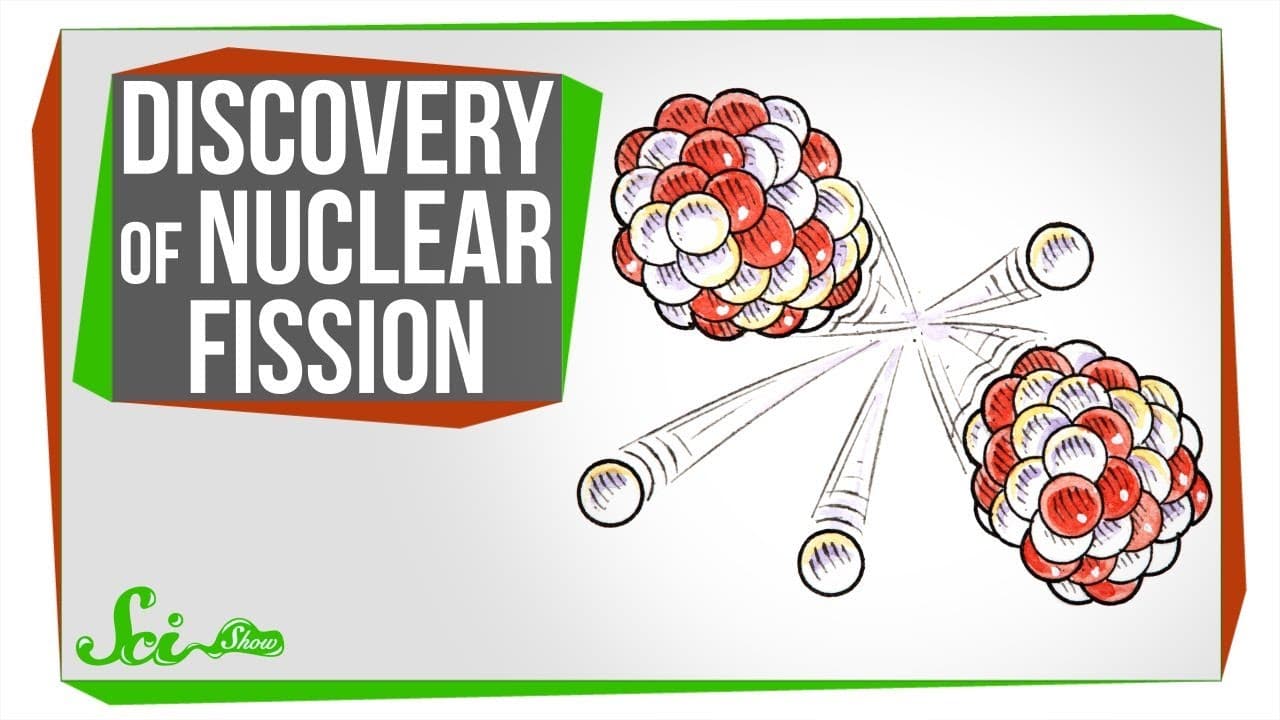
What Really Happened the First Time We Split a Heavy Atom in Half
TL;DR
Physicist Lise Meitner discovered nuclear fission but was not recognized for her contribution, which led to the development of the atomic bomb.
Transcript
This episode of SciShow is brought to you by Emerson. Visit Emerson.com/WeLoveSTEM to learn more. [♩INTRO] Some of the most important scientific discoveries were famously made by accident like penicillin, plastic, and vulcanized rubber. But there’s one that you don’t hear about quite as often: that time in 1938 when scientists accidentally split an... Read More
Key Insights
- 🥺 Lise Meitner played a crucial role in discovering nuclear fission, leading to both advancements in nuclear power and the creation of the atomic bomb.
- 😀 Meitner faced gender discrimination and worked under challenging circumstances, but that did not deter her from pursuing her passion for science.
- 🤦♀️ Her contributions were often overlooked, and she did not receive proper recognition, highlighting the biases faced by women scientists at the time.
- 😒 Meitner's dedication to the peaceful use of nuclear energy and her refusal to contribute to the creation of destructive weapons demonstrate her commitment to ethical scientific practices.
Install to Summarize YouTube Videos and Get Transcripts
Explore YouTube Video Summarizer or Get YouTube Transcript Extractor
Questions & Answers
Q: How did Lise Meitner contribute to the discovery of nuclear fission?
Lise Meitner worked alongside Otto Hahn and Fritz Strassmann, and proposed the idea of nuclear fission, explaining how atoms could split into smaller elements when bombarded with neutrons.
Q: Why was Lise Meitner not credited for her contributions to nuclear fission?
Despite discovering nuclear fission, Meitner did not receive the Nobel Prize. Otto Hahn, her research partner, received the prize solely based on his role in the experiments that led to the discovery.
Q: How did Lise Meitner contribute to the peaceful advancement of knowledge?
Meitner dedicated her life to the pursuit of truth and refused to be involved in the development of atomic bombs. She advocated for the peaceful use of nuclear energy and the ethical implications of scientific discoveries.
Q: What recognition did Lise Meitner receive for her contributions?
Element 109, meitnerium, is named after Meitner. Additionally, an asteroid, craters on Venus and the Moon, and her significant impact on nuclear research have all served as memorials to her legacy.
Summary & Key Takeaways
-
In 1938, scientists accidentally split an atom and discovered nuclear fission, with Lise Meitner later figuring out the significance of their findings.
-
Meitner faced gender discrimination and worked in difficult conditions but made significant contributions to the field of nuclear research.
-
She warned about the destructive potential of nuclear fission and refused to be involved in the development of the atomic bomb.
Read in Other Languages (beta)
Share This Summary 📚
Summarize YouTube Videos and Get Video Transcripts with 1-Click
Try YouTube Summary with ChatGPT & Claude or YouTube Transcript Generator
Explore More Summaries from SciShow 📚


Summarize YouTube Videos and Get Video Transcripts with 1-Click
Try YouTube Summary with ChatGPT & Claude or YouTube Transcript Generator