How to Design a Spacious West Village Apartment
TL;DR
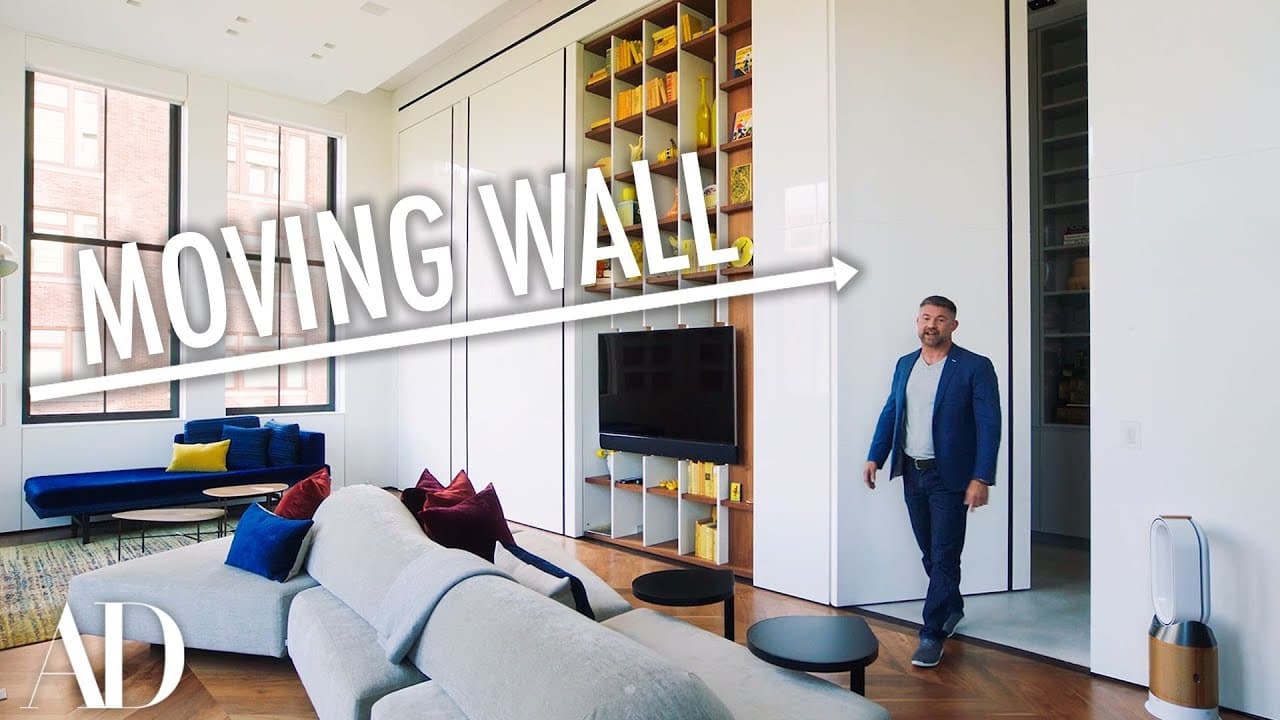
Transforming a cramped West Village apartment into a spacious 3,300-square-foot home involves innovative design solutions. By merging three units, the architect created a bird's nest-inspired mezzanine that showcases a rich collection of artifacts, emphasizing both functionality and aesthetics while maintaining essential structural integrity.
Transcript
good architecture is all about using clever design to solve challenging problems my name is matt berman and welcome to the printing house every project has its challenges and this apartment is very different we were dealing with compressed spaces we were dealing with an owner that wanted a lot of flexibility in the use of their space and we were de... Read More
Key Insights
- 🤗 Clever design can overcome spatial limitations and create open and flowing spaces.
- 🪡 Combining multiple units can maximize square footage and address the need for flexibility.
- 😎 Lightweight glass and steel structures can provide structural support while adding a sense of lightness and transparency to the space.
- 💨 Incorporating unique elements, such as a bird's nest-like mezzanine, can showcase collections in a curated and interactive way.
- 👾 Designing functional and versatile kitchen spaces is essential in modern homes.
- 🙂 Privacy can be maintained without sacrificing openness through the use of switch light glass.
- 😒 Thoughtful curation of objects and use of color can enhance the overall design aesthetic.
Install to Summarize YouTube Videos and Get Transcripts
Explore YouTube Video Summarizer or Get YouTube Transcript Extractor
Questions & Answers
Q: What were the main challenges the architect faced in designing the apartment?
The architect had to address compressed spaces, low ceiling heights, and accommodating a large collection of objects and books.
Q: How did the architect solve the problem of limited space while retaining square footage?
By combining three separate apartments, the architect created a 3,300-square-foot space and incorporated a bird's nest-like mezzanine to maximize vertical space.
Q: What materials were used in the construction of the mezzanine and staircase?
The mezzanine and staircase were constructed using steel, which provided structural support. Glass was also introduced for its diaphanous quality and to create a sense of height.
Q: How did the architect ensure privacy in the master suite without sacrificing openness?
The architect incorporated switch light glass into the shower wall, allowing the occupants to control the transparency of the glass for privacy when needed.
Summary & Key Takeaways
-
The Printing House, originally a printing house converted into apartments, posed challenges such as compressed spaces and limited ceiling height.
-
The architect combined three separate apartments to create a 3,300-square-foot space, incorporating a bird's nest-like mezzanine to showcase a collection of objects and books.
-
Through the use of lightweight glass and steel structures, clever cantilevering, and strategic placement of glass, the architect created open and flowing spaces while maintaining structural support.
Read in Other Languages (beta)
Share This Summary 📚
Summarize YouTube Videos and Get Video Transcripts with 1-Click
Try YouTube Summary with ChatGPT & Claude or YouTube Transcript Generator
Explore More Summaries from Architectural Digest 📚




Summarize YouTube Videos and Get Video Transcripts with 1-Click
Try YouTube Summary with ChatGPT & Claude or YouTube Transcript Generator