Conical scan tracking | Radar Systems | Lec-46
TL;DR
The conical scan method helps track moving targets using radar by generating and minimizing error signals.
Transcript
hi everyone in this video I'm going to explain about conical scan method conical scan method is nothing but another type of error generating method so what do you mean by error generating method I have already explained in the previous videos so error signal can be generated by using two different methods one is the sequential method and another on... Read More
Key Insights
- 🎯 The conical scan method is a specific radar tracking technique designed to adapt to moving targets through dynamic adjustments.
- 📡 Error signals are fundamental for tracking accuracy, continuously guiding the radar's antenna to minimize angular discrepancies.
- 🎯 The method's conical rotation enables comprehensive area coverage, essential for identifying targets in motion.
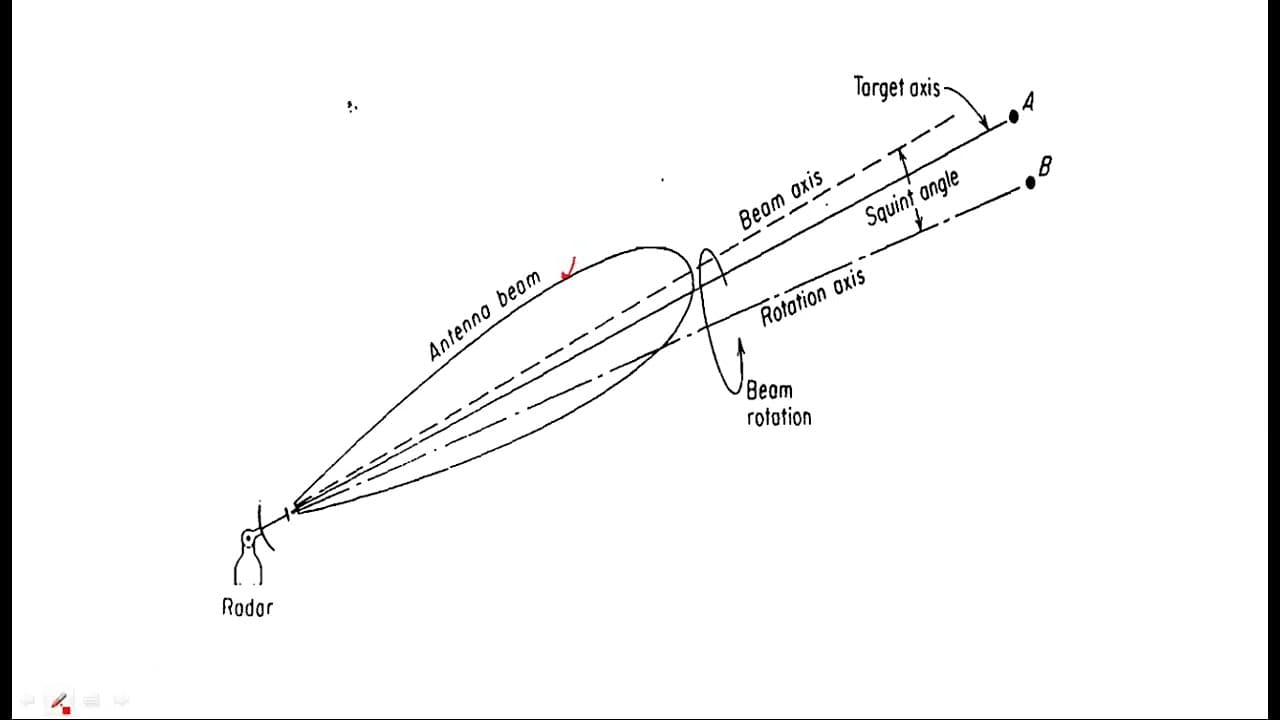
- 😁 Understanding the differences between the beam axis, rotational axis, and target axis is key to mastering radar tracking mechanics.
- ✋ Maintaining a zero error signal ensures the highest tracking precision, aligning radar with the target seamlessly.
- ❓ The conical scan method highlights the interplay between technology and mathematics in optimizing radar functions and tracking capabilities.
- 🎯 Elevational and azimuthal errors are integral components of the tracking process, illustrating the complexities of target localization.
Install to Summarize YouTube Videos and Get Transcripts
Explore YouTube Video Summarizer or Get YouTube Transcript Extractor
Questions & Answers
Q: What is the main purpose of the conical scan method in radar systems?
The main purpose of the conical scan method is to track moving targets effectively using radar technology. By generating error signals based on the difference between the target's and radar's axes, the system ensures that the radar antenna is oriented correctly to maintain continuous tracking as the target moves.
Q: How does the conical scan method generate error signals?
Error signals are generated by analyzing the difference between the target axis and the rotational axis of the radar system. As the target moves, these differences create an angular error, which the radar antenna constantly adjusts to minimize, ensuring the target is consistently tracked.
Q: Why is it important for the error signal to be zero in the tracking process?
Achieving a zero error signal is crucial as it indicates that the radar's rotational axis aligns perfectly with the target's axis. This alignment ensures that the target is at the center of the radar's vision, facilitating effective detection and tracking through continuous adjustments in antenna orientation.
Q: Can you explain the conical shape of the radar antenna's movement?
In the conical scan method, the radar antenna rotates in a conical shape around a central axis. This movement allows the antenna to cover a broader area while adjusting its position based on the target’s location, facilitating better detection of targets that are in motion.
Q: What are the two types of errors involved in the tracking process described in the video?
The two types of errors mentioned in the tracking process are elevational error and azimuthal error. Elevational error pertains to positioning in the vertical direction, while azimuthal error relates to horizontal positioning. These errors are crucial in maintaining accurate alignment with the moving target.
Q: How does the radar control the antenna's movement based on the error signals?
The radar system receives error signals that indicate the target's positional changes, which are positive or negative based on the target's direction of movement. These signals are fed into servomotors, which adjust the antenna's position to align the radar's axis with the target's, ensuring continuous tracking.
Summary & Key Takeaways
-
The conical scan method is a radar tracking technique that generates error signals to ensure the target remains within the radar's vicinity for effective identification and tracking.
-
This method involves rotating the radar antenna in a conical shape, allowing it to continuously adjust its position relative to a moving target based on generated error signals.
-
It aims to minimize the angular error between the target and the radar's rotational axis by adjusting the antenna's orientation, thus maintaining accurate tracking of dynamic targets.
Read in Other Languages (beta)
Share This Summary 📚
Summarize YouTube Videos and Get Video Transcripts with 1-Click
Try YouTube Summary with ChatGPT & Claude or YouTube Transcript Generator