What Causes Autoimmune Hepatitis and How Is It Treated?
TL;DR
Autoimmune hepatitis occurs when the immune system incorrectly targets liver cells, causing inflammation and damage. It is more prevalent in women and can have various symptoms, ranging from asymptomatic liver function abnormalities to acute liver failure. Treatment typically involves immunosuppressive drugs and, in severe cases, liver transplantation.
Transcript
autoimmune hepatitis as the name suggests is when the body's own immune cells attack the liver cells resulting in inflammation the disease may be asymptomatic meaning no symptoms initially or can start as acute hepatitis and progress to Chronic liver disease and even liver curosis which is scarring of the liver autoimmune hepatitis is four ... Read More
Key Insights
- Autoimmune hepatitis is an immune-mediated liver disease where the body's immune cells mistakenly attack liver cells, leading to inflammation and potential liver damage.
- The disease can be asymptomatic or present with symptoms such as fatigue, weight loss, jaundice, and right upper quadrant pain, progressing to chronic liver disease or cirrhosis.
- Autoimmune hepatitis is four times more common in women than men and can occur at any age, often associated with other autoimmune conditions.
- Three main theories explain the disease's mechanism: molecular mimicry, immune activation upon self-antigen presentation, and loss of self-tolerance.
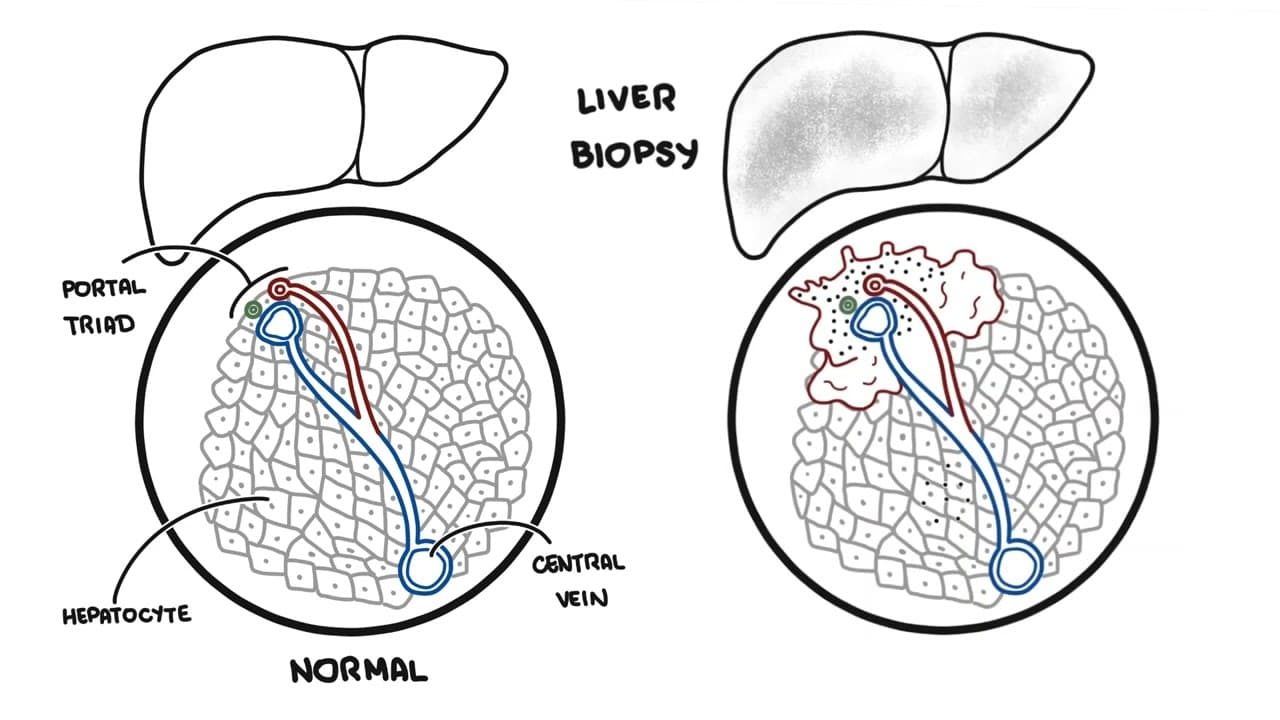
- Diagnosis involves elevated liver function tests, presence of specific autoantibodies, high immunoglobulin G levels, and liver biopsy findings.
- There are two main types of autoimmune hepatitis based on autoantibodies: Type 1, the most common form, and Type 2, which mainly affects children.
- Treatment typically involves immunosuppressive medications like prednisone and azathioprine, with a treatment duration of at least 2 to 3 years.
- Liver transplantation may be necessary for patients with aggressive disease or those unresponsive to standard treatment.
Install to Summarize YouTube Videos and Get Transcripts
Explore YouTube Video Summarizer or Get YouTube Transcript Extractor
Questions & Answers
Q: What are the main symptoms of autoimmune hepatitis?
Autoimmune hepatitis can be asymptomatic or present with symptoms such as fatigue, weight loss, jaundice, and right upper quadrant pain. In some cases, it can lead to acute liver failure or progress to chronic liver disease and cirrhosis if not properly managed.
Q: How is autoimmune hepatitis diagnosed?
Diagnosis of autoimmune hepatitis involves elevated liver function tests, specifically transaminases and ALT levels, presence of specific autoantibodies, high immunoglobulin G levels, and liver biopsy findings. The biopsy reveals dense mononuclear and plasma cell infiltration, which confirms the diagnosis.
Q: What are the theories behind the cause of autoimmune hepatitis?
Three main theories explain the cause of autoimmune hepatitis: molecular mimicry, where immune cells mistake liver proteins for viral proteins; immune activation upon self-antigen presentation, leading to an immune response against liver cells; and loss of self-tolerance, where regulatory mechanisms fail, allowing immune cells to attack liver tissue.
Q: What are the treatment options for autoimmune hepatitis?
Treatment for autoimmune hepatitis typically includes immunosuppressive medications like prednisone and azathioprine. Prednisone monotherapy is less preferable due to side effects. Other options include mercaptopurine or mycophenolate. Treatment duration is usually 2 to 3 years, with regular monitoring of liver function and histological response.
Q: What are the differences between Type 1 and Type 2 autoimmune hepatitis?
Type 1 autoimmune hepatitis is the most common form, accounting for over 90% of cases, and is associated with autoantibodies like anti-nuclear, anti-smooth muscle, and anti-actin antibodies. Type 2 primarily affects children and is more severe, characterized by autoantibodies against liver-kidney microsomes and liver cytosol antigen.
Q: Why is liver biopsy important in diagnosing autoimmune hepatitis?
Liver biopsy is crucial for diagnosing autoimmune hepatitis as it provides histological evidence of dense mononuclear and plasma cell infiltration in the portal areas, leading to hepatocyte damage. Although no single histological feature is pathognomonic, biopsy helps confirm the diagnosis and assess the extent of liver damage.
Q: What role do autoantibodies play in autoimmune hepatitis?
Autoantibodies play a significant role in autoimmune hepatitis, serving as markers for diagnosis and classification of the disease. Type 1 is associated with anti-nuclear and anti-smooth muscle antibodies, while Type 2 involves antibodies against liver-kidney microsomes. Their presence helps differentiate autoimmune hepatitis from other liver diseases.
Q: When is liver transplantation considered for autoimmune hepatitis patients?
Liver transplantation is considered for autoimmune hepatitis patients with aggressive disease or those who do not respond to standard immunosuppressive treatment over several years. It becomes necessary when the liver damage is extensive, and the patient's condition does not improve with medication, ensuring long-term management of the disease.
Summary & Key Takeaways
-
Autoimmune hepatitis is a liver condition where the immune system attacks liver cells, causing inflammation and potential liver damage. It is more common in women and can be asymptomatic or present with acute symptoms.
-
The disease is linked to various autoimmune conditions and is diagnosed through liver function tests, autoantibody presence, and liver biopsy. Treatment involves immunosuppressive drugs, and in severe cases, liver transplantation.
-
Theories explaining autoimmune hepatitis include molecular mimicry, immune activation, and loss of self-tolerance. Management requires long-term medication, and regular monitoring is essential to prevent disease progression.
Read in Other Languages (beta)
Share This Summary 📚
Summarize YouTube Videos and Get Video Transcripts with 1-Click
Try YouTube Summary with ChatGPT & Claude or YouTube Transcript Generator
Explore More Summaries from Armando Hasudungan 📚




Summarize YouTube Videos and Get Video Transcripts with 1-Click
Try YouTube Summary with ChatGPT & Claude or YouTube Transcript Generator