What Is Paul Romer's Contribution to Economics?
TL;DR
Paul Romer is renowned for developing new growth theory, emphasizing the role of ideas in economic growth. His work highlights the importance of ideas produced by for-profit firms in monopolistically competitive markets. Romer also pioneered the concept of charter cities to implement new governance rules, aiming to spur development in underdeveloped regions.
Transcript
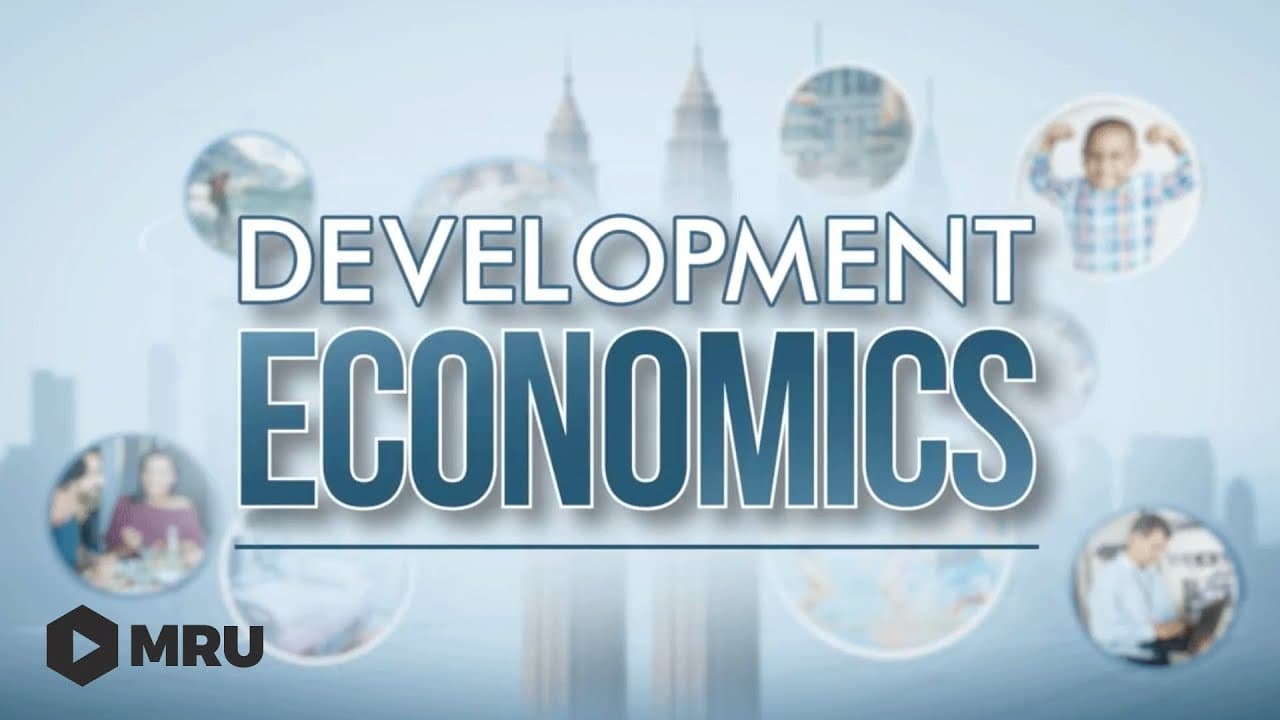
Today, we're going to be talking about Paul Romer. Paul Romer taught for a long time at Stanford University. More recently, he moved to New York University. And he's most famous for being one of the architects of new growth theory, though, more recently, he's becoming famous for his work in development economics, in fact, for his entrepreneurship... Read More
Key Insights
- Paul Romer is a key figure in new growth theory, which places ideas at the center of economic growth.
- Romer's seminal paper, 'Endogenous Technical Change,' challenged the Solow model by integrating ideas as a key growth factor.
- Ideas are non-rivalrous and cannot be sold in competitive markets due to zero marginal cost.
- Romer's model suggests that monopolistic markets are necessary for funding research and development.
- Romer's concept of 'charter cities' aims to implement new governance rules to foster economic development.
- Romer's entrepreneurial venture, Aplia, revolutionized online education by offering interactive economics tools.
- The success of charter cities depends on external governance to establish effective rules and attract voluntary settlers.
- Romer's work has influenced economic thought on intellectual property, human capital, and market incentives.
Install to Summarize YouTube Videos and Get Transcripts
Explore YouTube Video Summarizer or Get YouTube Transcript Extractor
Questions & Answers
Q: What is Paul Romer's contribution to new growth theory?
Paul Romer's contribution to new growth theory is his emphasis on the role of ideas in driving economic growth. He challenged the traditional Solow model by integrating ideas as an endogenous factor, produced by for-profit firms in monopolistically competitive markets. Romer's model highlights the non-rivalrous nature of ideas and the necessity of monopoly power to fund research and development.
Q: How does Romer's model address the limitations of the Solow model?
Romer's model addresses the limitations of the Solow model by incorporating ideas as an endogenous factor in economic growth. Unlike the Solow model, which treated ideas as exogenous and freely available, Romer argued that ideas are produced by for-profit firms and require monopoly power for funding. This approach provides a more realistic framework for understanding the role of innovation in economic development.
Q: What is the concept of 'charter cities' proposed by Paul Romer?
The concept of 'charter cities' proposed by Paul Romer involves creating new cities with external governance to implement effective rules and foster economic development. These cities would operate under a new set of rules, often imported from successful regions, to overcome coordination traps and attract voluntary settlers. Charter cities aim to serve as demonstration projects, influencing broader economic reforms in underdeveloped regions.
Q: Why are ideas considered non-rivalrous in Romer's model?
In Romer's model, ideas are considered non-rivalrous because their use by one firm or individual does not diminish their availability to others. This characteristic means that ideas cannot be sold in competitive markets, as the marginal cost of using an idea is zero. Consequently, monopoly power is necessary to fund the initial research and development of ideas, as competitive markets would not provide sufficient returns.
Q: What role did Aplia play in Paul Romer's career?
Aplia played a significant role in Paul Romer's career as it marked his venture into entrepreneurship and online education. Aplia provided interactive tools for economics courses, allowing professors to assign quizzes and conduct experiments online. This venture reflects Romer's belief in the power of ideas to drive productivity and innovation, aligning with his broader contributions to economic growth theory.
Q: How do charter cities aim to overcome coordination traps?
Charter cities aim to overcome coordination traps by establishing new governance rules externally and attracting voluntary settlers. By creating a new equilibrium with effective rules, these cities can break free from entrenched practices like corruption. The external governance provides a fresh start, allowing the city to demonstrate the benefits of improved rules and potentially influence broader reforms in the region.
Q: What challenges do charter cities face in implementation?
Charter cities face challenges in implementation, such as securing external governance willing to establish and enforce new rules. Attracting voluntary settlers who trust the new system is crucial. Additionally, the city must demonstrate the effectiveness of its governance to influence broader reforms. The success of charter cities depends on overcoming local resistance and proving the viability of the new rules in practice.
Q: How has Paul Romer's work influenced economic thought?
Paul Romer's work has significantly influenced economic thought by emphasizing the role of ideas in growth and development. His new growth theory integrates ideas as an endogenous factor, challenging traditional models. Romer's work has shaped discussions on intellectual property, human capital, and market incentives, highlighting the importance of innovation and entrepreneurship in driving economic progress.
Summary & Key Takeaways
-
Paul Romer revolutionized economic growth theory by emphasizing the role of ideas. Unlike the Solow model, which treated ideas as exogenous, Romer argued that ideas are endogenously produced by for-profit firms in monopolistically competitive markets. His work highlights the non-rivalrous nature of ideas and the necessity of monopoly power for research funding.
-
Romer's concept of 'charter cities' proposes creating new cities with external governance to implement effective rules. This idea aims to overcome coordination traps and foster development in underdeveloped regions. Romer's model suggests that successful charter cities could serve as demonstration projects, influencing broader economic reforms.
-
Romer's entrepreneurial venture, Aplia, transformed online education by providing interactive tools for economics courses. This venture reflects Romer's belief in the power of ideas to drive productivity and innovation. His work continues to influence economic thought on intellectual property, human capital, and market incentives.
Read in Other Languages (beta)
Share This Summary 📚
Summarize YouTube Videos and Get Video Transcripts with 1-Click
Try YouTube Summary with ChatGPT & Claude or YouTube Transcript Generator
Explore More Summaries from Marginal Revolution University 📚
Summarize YouTube Videos and Get Video Transcripts with 1-Click
Try YouTube Summary with ChatGPT & Claude or YouTube Transcript Generator