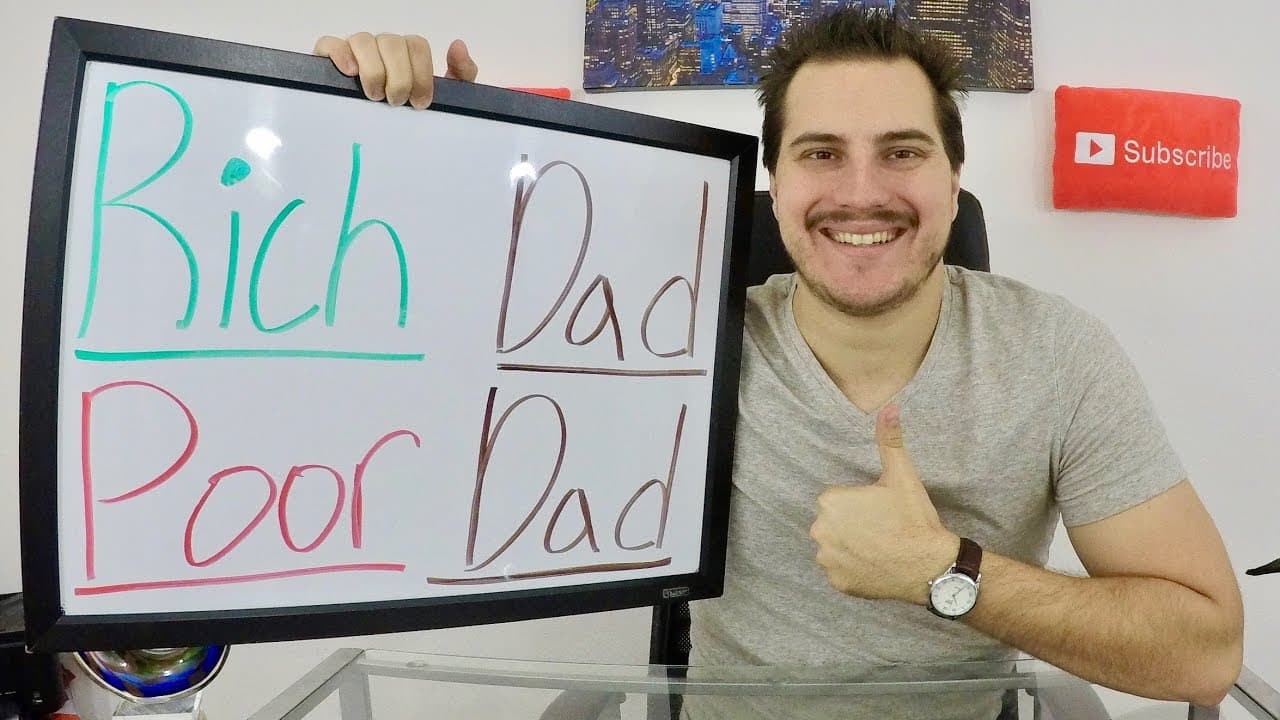
Rich Dad Poor Dad by Robert Kiyosaki EXPLAINED!
TL;DR
Robert Kiyosaki's Rich Dad Poor Dad book breaks down financial mindsets into four categories, emphasizing the importance of moving from an employee mindset to that of a business owner or investor.
Transcript
good day subscribers thank you so much for joining me today I am Jeremy and this is a financial education Channel and today my voice is just coming back if you notice my voice is still a little rough so I have to speak a little quieter than I usually do CES was a long event and my voice is just so freakin done but it's coming back it's getting bett... Read More
Key Insights
- 👨💼 Understand the four categories of financial mindsets outlined by Kiyosaki: employees (E), small business owners/specialists (S), big business owners (B), and investors (I).
- 🫵 Challenge the traditional view of assets by considering the income-generating potential of investments.
- 🎮 Prioritize controlling expenses over increasing income to accumulate savings for investment opportunities.
Install to Summarize YouTube Videos and Get Transcripts
Explore YouTube Video Summarizer or Get YouTube Transcript Extractor
Questions & Answers
Q: What are the four main categories outlined in Rich Dad Poor Dad, and why is it important to move from an employee mindset to that of a business owner or investor?
The four main categories are employees (E), small business owners/specialists (S), big business owners (B), and investors (I). Moving from an employee mindset to that of a business owner or investor is crucial for achieving financial independence and building wealth.
Q: How does Robert Kiyosaki challenge the traditional view of a house being an asset in his book Rich Dad Poor Dad?
Kiyosaki argues that a house is not an asset until fully paid off, as it only generates liabilities in the early years of a mortgage. However, once the house is owned outright and has significant equity, it can be considered an asset.
Q: What does Kiyosaki emphasize about controlling expenses in Rich Dad Poor Dad, and why is it crucial for financial success?
Kiyosaki stresses that controlling expenses is more important than focusing solely on income, as it determines the amount of money left over for investment and wealth-building. This mindset allows individuals to make their money work for them.
Q: How does Kiyosaki differentiate between the spending habits of the poor, middle class, and rich in Rich Dad Poor Dad?
Kiyosaki explains that the poor spend all their money, the middle class save some money, and the rich know how to multiply their money. The key to wealth accumulation lies in multiplying money through smart investments and financial strategies.
Summary & Key Takeaways
-
Robert Kiyosaki's book, Rich Dad Poor Dad, outlines four main categories: employees (E), small business owners/specialists (S), big business owners (B), and investors (I).
-
Kiyosaki discusses the concept that assets are things that make you money, contrasting the idea that a house is not an asset until fully paid off.
-
The book emphasizes the significance of controlling expenses rather than focusing solely on income, along with the importance of multiplying money to attain wealth.
Read in Other Languages (beta)
Share This Summary 📚
Summarize YouTube Videos and Get Video Transcripts with 1-Click
Try YouTube Summary with ChatGPT & Claude or YouTube Transcript Generator
Explore More Summaries from Financial Education 📚




Summarize YouTube Videos and Get Video Transcripts with 1-Click
Try YouTube Summary with ChatGPT & Claude or YouTube Transcript Generator