Jeremy Bentham on government debt
TL;DR
Jeremy Bentham proposed innovative ideas on government debt and financial intermediation.
Transcript
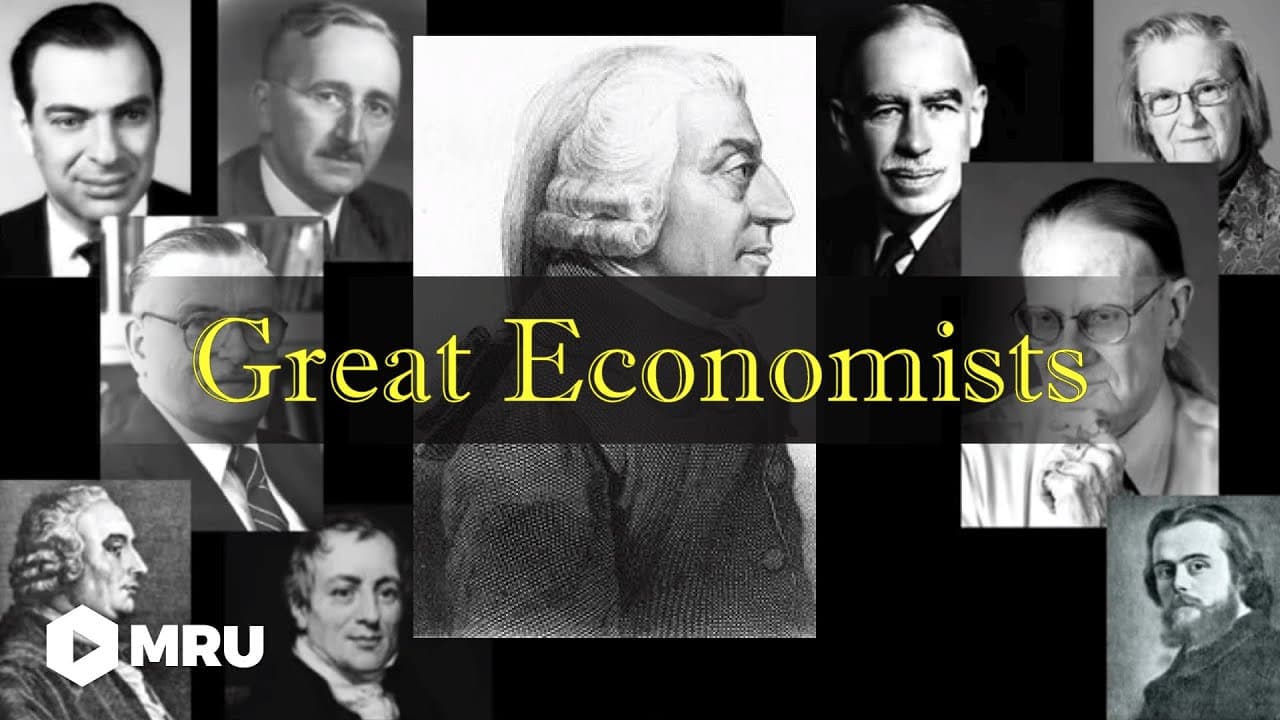
Now let's consider some of the ideas of Jeremy Bentham on government debt but also on financial intermediation and monetary policy. Bentham was a famous British philosopher and also a public figure and perhaps, in the history of ideas, he's most important for being really the central figure of utilitarian thought. He wrote on a wide variety of topi... Read More
Key Insights
- Jeremy Bentham, a central figure in utilitarian thought, also made significant contributions to economic theories, particularly regarding government debt and financial intermediation.
- Bentham proposed that individuals should hold small denomination government securities as a form of money, suggesting a greater role for the government in financial intermediation.
- His ideas can be likened to modern money market mutual funds, where government securities circulate as money, blurring the line between money and credit.
- Bentham recognized the potential danger of crowding out private banks, advocating for a balanced approach without displacing all private capital.
- He suggested complex methods for calculating interest on government securities, acknowledging practical challenges yet emphasizing potential gains.
- Bentham's work was ahead of its time, with ideas that resonate with later economists like Milton Friedman and Neil Wallace.
- His longest work, 'Abstract of Compressed View of a Trace Intituled Circulating Annuities,' further explores the concept of annuities circulating as currency.
- Bentham's economic writings are still relevant today, offering insights into monetary policy and financial intermediation.
Install to Summarize YouTube Videos and Get Transcripts
Explore YouTube Video Summarizer or Get YouTube Transcript Extractor
Questions & Answers
Q: What was Jeremy Bentham's main proposal regarding government debt?
Jeremy Bentham proposed that individuals should hold small denomination government securities as a form of money, effectively allowing these securities to circulate as currency. He envisioned a greater role for the government as a financial intermediary, suggesting that government-backed assets could be more secure and reliable than those offered by private banks.
Q: How did Bentham's ideas relate to modern financial concepts?
Bentham's ideas can be likened to modern money market mutual funds, where government securities circulate as money. His proposals blurred the line between money and credit, suggesting that credit, such as treasury securities, could function as currency. This concept of government-backed securities circulating as money is a precursor to modern financial instruments.
Q: What challenges did Bentham acknowledge in his proposals?
Bentham acknowledged the practical challenges of calculating interest on circulating government securities for small transactions. He proposed complex tables for calculating interest, understanding the transactional inconveniences involved. Despite these challenges, he emphasized the potential gains from adopting his system, believing it could improve financial intermediation.
Q: Did Bentham believe in completely displacing private banks?
No, Bentham did not advocate for completely displacing private banks. He recognized the potential danger of crowding out private capital and believed in a balanced approach. Bentham suggested that the government should not control the entire supply of capital, acknowledging the importance of private financial institutions in the economy.
Q: How did Bentham's work compare to later economists?
Bentham's work was ahead of its time and remains relevant today. His ideas align with later economists like Milton Friedman and Neil Wallace, who also explored the concept of interest-bearing securities circulating as money. Although Friedman and Wallace developed more advanced theories, Bentham's early discussions laid the groundwork for these modern economic ideas.
Q: What was Bentham's longest work on this topic?
Bentham's longest work on this topic is titled 'Abstract of Compressed View of a Trace Intituled Circulating Annuities,' published in 1800. In this work, he further explored the idea of annuities circulating as currency, continuing his efforts to blur the distinction between money and credit by proposing that interest-bearing securities could function as currency.
Q: What resources are recommended for further reading on Bentham's economic ideas?
For further reading on Bentham's economic ideas, the writings of William Stark, particularly his introduction to Jeremy Bentham's Economic Writings, volume 2, are invaluable. Bentham's writings are also available through Google Books. Additionally, the book 'Explorations in the New Monetary Economics' by Tyler Cowen and Randall Kroszner offers a comparison of Bentham's works to more recent ideas in monetary economics.
Q: What impact did Bentham's proposals have on financial intermediation?
Bentham's proposals had a significant impact on the concept of financial intermediation by suggesting that government securities could serve as a form of currency. His ideas encouraged a rethinking of the government's role in financial markets, emphasizing the potential security and reliability of government-backed assets. Bentham's work laid the foundation for later discussions on the intersection of money and credit.
Summary & Key Takeaways
-
Jeremy Bentham, a renowned philosopher and utilitarian thinker, also contributed significantly to economic thought, particularly on government debt and financial intermediation. His ideas, though conceived in the late 18th century, are remarkably modern, suggesting a greater role for the government in financial markets.
-
Bentham proposed that government securities could circulate as money, offering a more secure alternative to bank notes. He acknowledged the potential risks of crowding out private banks but argued for a balanced approach to financial intermediation.
-
Despite practical challenges in calculating interest on circulating government securities, Bentham believed in the potential gains of his proposals. His work remains influential, aligning with later economic theories by figures like Milton Friedman and Neil Wallace.
Read in Other Languages (beta)
Share This Summary 📚
Summarize YouTube Videos and Get Video Transcripts with 1-Click
Try YouTube Summary with ChatGPT & Claude or YouTube Transcript Generator
Explore More Summaries from Marginal Revolution University 📚

Summarize YouTube Videos and Get Video Transcripts with 1-Click
Try YouTube Summary with ChatGPT & Claude or YouTube Transcript Generator