Tesla's Humanoid Robot Will Change Everything
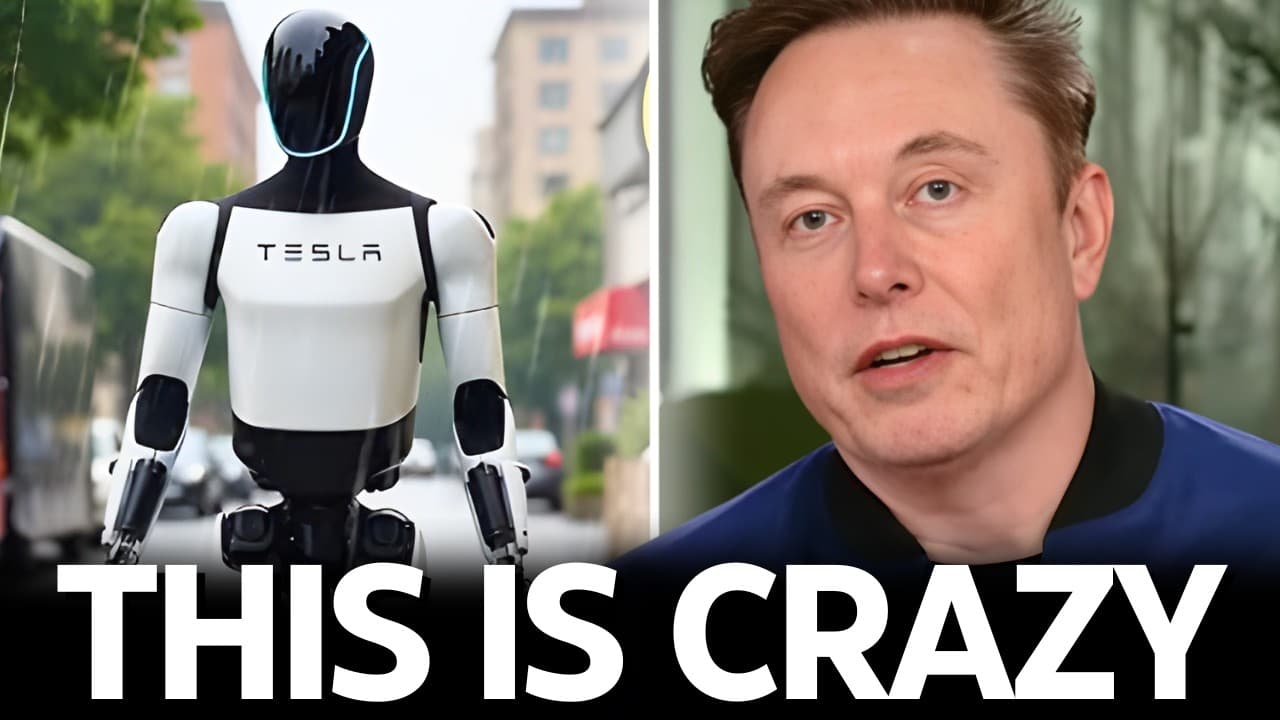
TL;DR
Robots are here, changing the labor landscape significantly.
Transcript
um the robots are coming has been your ex Banner since you began is this a wakeup call of techno optimism or a subtle warning to your viewers both so my my idea behind the robots are coming was what's the most neutral way that I can create awareness about the inevitable it's like the robots are coming okay great and what's i... Read More
Key Insights
- The arrival of robots is inevitable, with differing public perceptions ranging from optimism to fear of job loss.
- Technological advancements, particularly in AI and actuators, have made autonomous robots more feasible.
- Tesla is likely to lead in robotics due to its vertical integration and focus on efficient actuator production.
- Battery technology improvements are crucial for extending robots' operational hours and reducing downtime.
- The labor market could be disrupted as robots become more cost-effective than human labor.
- Universal basic income and finding personal meaning may become critical as robots take over routine jobs.
- There is a risk of societal unrest if people cannot find meaningful ways to spend their increased free time.
- Governments and corporations must address potential inequalities as a few entities could control major production means.
Install to Summarize YouTube Videos and Get Transcripts
Explore YouTube Video Summarizer or Get YouTube Transcript Extractor
Questions & Answers
Q: What is the main theme of the discussion?
The main theme revolves around the inevitable integration of robots into the workforce and the resulting societal and economic implications. The conversation addresses both the technological advancements enabling this shift and the potential challenges, such as job displacement and finding personal meaning in a robot-dominated world.
Q: How does Tesla plan to lead in the robotics industry?
Tesla plans to lead by vertically integrating its production processes, focusing on efficient actuator manufacturing, and leveraging its advancements in AI technology. By controlling these critical components, Tesla aims to produce cost-effective robots that can outperform human labor, positioning itself as a dominant player in the robotics industry.
Q: What technological advancements have made autonomous robots more feasible?
Advancements in AI and actuator technology have significantly contributed to the feasibility of autonomous robots. The development of a 'brain' capable of perceiving and interacting with the real world, combined with efficient actuators for movement, has overcome previous limitations, paving the way for practical and useful robotic applications.
Q: What are the potential societal impacts of widespread robotics adoption?
Widespread robotics adoption could lead to significant societal impacts, including job displacement and a crisis of meaning as people seek fulfillment beyond traditional employment. The discussion suggests that universal basic income and opportunities for personal development may become crucial to address these challenges and prevent societal unrest.
Q: Why is battery technology important for robotics?
Battery technology is crucial because it determines how long robots can operate before needing to recharge. Improved battery density can extend operational hours, making robots more efficient and cost-effective. This reduces downtime and enhances productivity, which is vital for robots to be competitive with human labor.
Q: What concerns are raised about economic inequality in a robot-dominated future?
The discussion raises concerns that a few corporations could control the majority of robotic production, leading to economic inequality. This concentration of power could exacerbate societal disparities, as those without access to robotic resources may struggle to compete, highlighting the need for equitable distribution and regulatory oversight.
Q: How might universal basic income play a role in a future with robots?
Universal basic income could provide financial security in a future where robots perform most routine jobs, allowing individuals to pursue personal interests and find meaning beyond traditional employment. This safety net could help mitigate the negative impacts of job displacement and support societal stability during the transition to a robot-driven economy.
Q: What role do governments and corporations play in addressing the challenges of robotics adoption?
Governments and corporations must proactively address the challenges of robotics adoption by ensuring equitable access to technology and preventing economic disparities. They should implement policies to support displaced workers, promote personal development opportunities, and engage in discussions to align technological advancements with societal well-being.
Summary & Key Takeaways
-
The conversation explores the inevitability of robots in the workforce, highlighting both excitement and concerns about job displacement. Technological advancements, especially in AI, are making autonomous robots more viable, with Tesla positioned as a leader in this field.
-
Battery efficiency and actuator technology are pivotal for robotics' success, as they determine operational efficiency and cost-effectiveness compared to human labor. The potential for robots to outperform humans in cost efficiency could revolutionize labor markets.
-
The societal impact of widespread robotics adoption could lead to a crisis of meaning for many, emphasizing the need for universal basic income and personal fulfillment. The concentration of robotic production in a few corporations raises concerns about economic inequality and societal unrest.
Read in Other Languages (beta)
Share This Summary 📚
Summarize YouTube Videos and Get Video Transcripts with 1-Click
Try YouTube Summary with ChatGPT & Claude or YouTube Transcript Generator
Explore More Summaries from Farzad 📚






Summarize YouTube Videos and Get Video Transcripts with 1-Click
Try YouTube Summary with ChatGPT & Claude or YouTube Transcript Generator