Farming on a Rooftop | National Geographic
TL;DR
Transforming urban rooftops into productive agricultural spaces benefits the environment and reconnects communities.
Transcript
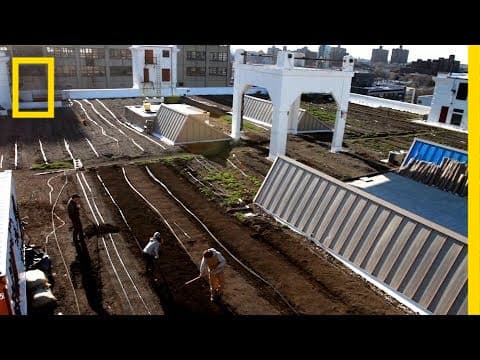
so many cities face the same challenge of aging infrastructure and rooftop farming is a terrific way of making use of these industrial buildings and then of course they really have such a tremendous environmental benefit to the ecosystem at the small scale at which it's practiced in cities around the world you know it's a drop in the bucket but if ... Read More
Key Insights
- 👳 Rooftop farming repurposes urban infrastructure for sustainable agriculture.
- 👾 Utilizing underused rooftop spaces benefits the environment and community.
- 💦 Proper soil management on rooftops ensures successful plant growth and water retention.
- 🤩 Stormwater management and air quality improvement are key environmental benefits of rooftop farming.
- 😋 Rooftop farms contribute to a healthier, more beautiful cityscape and reconnect communities to food production.
- 😋 While rooftop farming may not meet all food needs, its benefits justify its implementation.
- 💨 Rooftop farms are a way to address urban challenges and create a more sustainable city.
Install to Summarize YouTube Videos and Get Transcripts
Explore YouTube Video Summarizer or Get YouTube Transcript Extractor
Questions & Answers
Q: What inspired the speaker to start rooftop farming?
The speaker was inspired by the unused flat roofs in New York City, seeing a great opportunity to utilize these spaces for agriculture and make a positive impact on the environment and community.
Q: How is soil transported to rooftop farms?
Soil is pumped up to rooftop farms using a blower truck, which pushes a mixture of compost and porous stones to ensure proper drainage, aeration, and water retention for plant growth.
Q: What environmental benefits do rooftop farms provide?
Rooftop farms help manage stormwater, reduce urban heat island effect, clean the air, and decrease HVAC needs, contributing to a more sustainable and environmentally friendly cityscape.
Q: How do rooftop farms benefit the local community?
Rooftop farms reconnect urban residents to food production, providing educational opportunities, promoting healthier eating habits, and fostering a sense of community engagement.
Summary & Key Takeaways
-
Rooftop farming transforms underutilized urban spaces into productive agricultural areas.
-
Benefits include environmental advantages like stormwater management and reducing urban heat island effect.
-
Rooftop farms also reconnect communities to food production and create a healthier, more beautiful city.
Read in Other Languages (beta)
Share This Summary 📚
Summarize YouTube Videos and Get Video Transcripts with 1-Click
Try YouTube Summary with ChatGPT & Claude or YouTube Transcript Generator
Explore More Summaries from National Geographic 📚



Summarize YouTube Videos and Get Video Transcripts with 1-Click
Try YouTube Summary with ChatGPT & Claude or YouTube Transcript Generator