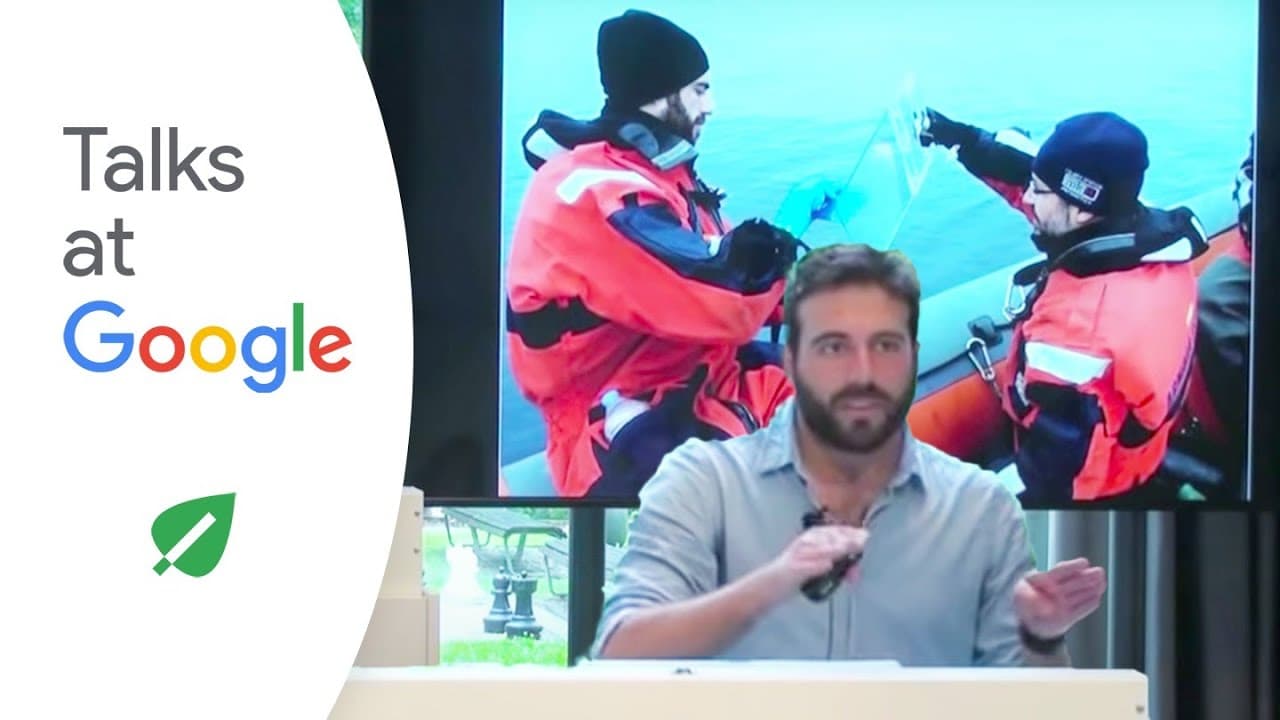
Trace Gases in Remote Oceanic Regions | Pablo Rodriguez | Talks at Google
TL;DR
Biogeochemistry is a complex science that studies the interactions between biology, geology, and chemistry in marine ecosystems. By studying trace gases and particles in the ocean, scientists hope to better understand the global climate system and its potential impact on the Earth.
Transcript
[MUSIC PLAYING] PABLO RODRIGUEZ: So hi there, everyone. My name is Pablo Rodriguez. I'm from south of Spain and currently working and doing my PhD in Barcelona in the Institute of Marine Sciences, which is close to Barcelona [INAUDIBLE].. I don't know if you have ever been here. So my research topic for my PhD is mostly focused on biogeochemistry. ... Read More
Key Insights
- 🏑 Biogeochemistry is a multidisciplinary field that studies the interactions between biology, geology, and chemistry in the Earth's ecosystems.
- 🫢 Trace gases and particles in the ocean and atmosphere are crucial for climate regulation and the formation of clouds.
- 👨🔬 Expeditions and research cruises are essential for gathering data and samples to better understand biogeochemical processes and improve climate change models.
Install to Summarize YouTube Videos and Get Transcripts
Explore YouTube Video Summarizer or Get YouTube Transcript Extractor
Questions & Answers
Q: What is biogeochemistry?
Biogeochemistry is a scientific field that investigates the interactions and cycles of elements and compounds in the Earth's ecosystems, including the oceans. It encompasses the study of biology, geology, and chemistry.
Q: What are trace gases and particles, and why are they important?
Trace gases and particles are substances found in low concentrations in the atmosphere and ocean. They play a crucial role in climate regulation, including the formation of clouds, which can reflect sunlight and help cool the Earth.
Q: How do trace gases and particles in the ocean interact with the atmosphere?
Trace gases are released by microorganisms in the ocean, such as phytoplankton, and interact with sulfur compounds in the atmosphere. These interactions can lead to the formation of aerosol particles, which contribute to cloud formation and climate regulation.
Q: Why do researchers study the South End Ocean and other remote locations?
Remote locations, such as the South End Ocean, provide valuable insights into oceanic processes and their impact on climate. These regions often have unique ecosystems and can serve as indicators for global climate change trends.
Summary & Key Takeaways
-
Biogeochemistry is a multidisciplinary science that examines the roles of various elements and compounds in the Earth's ecosystems, with a particular focus on the oceans.
-
Trace gases and particles in the atmosphere and ocean play important roles in climate regulation, including the formation of clouds and the reflection of sunlight.
-
Research expeditions, both on and off land, are essential for gathering data and samples to study these processes and improve climate change models.
Read in Other Languages (beta)
Share This Summary 📚
Summarize YouTube Videos and Get Video Transcripts with 1-Click
Try YouTube Summary with ChatGPT & Claude or YouTube Transcript Generator
Explore More Summaries from Talks at Google 📚

Summarize YouTube Videos and Get Video Transcripts with 1-Click
Try YouTube Summary with ChatGPT & Claude or YouTube Transcript Generator