How Does the Prison Economy Affect Society?
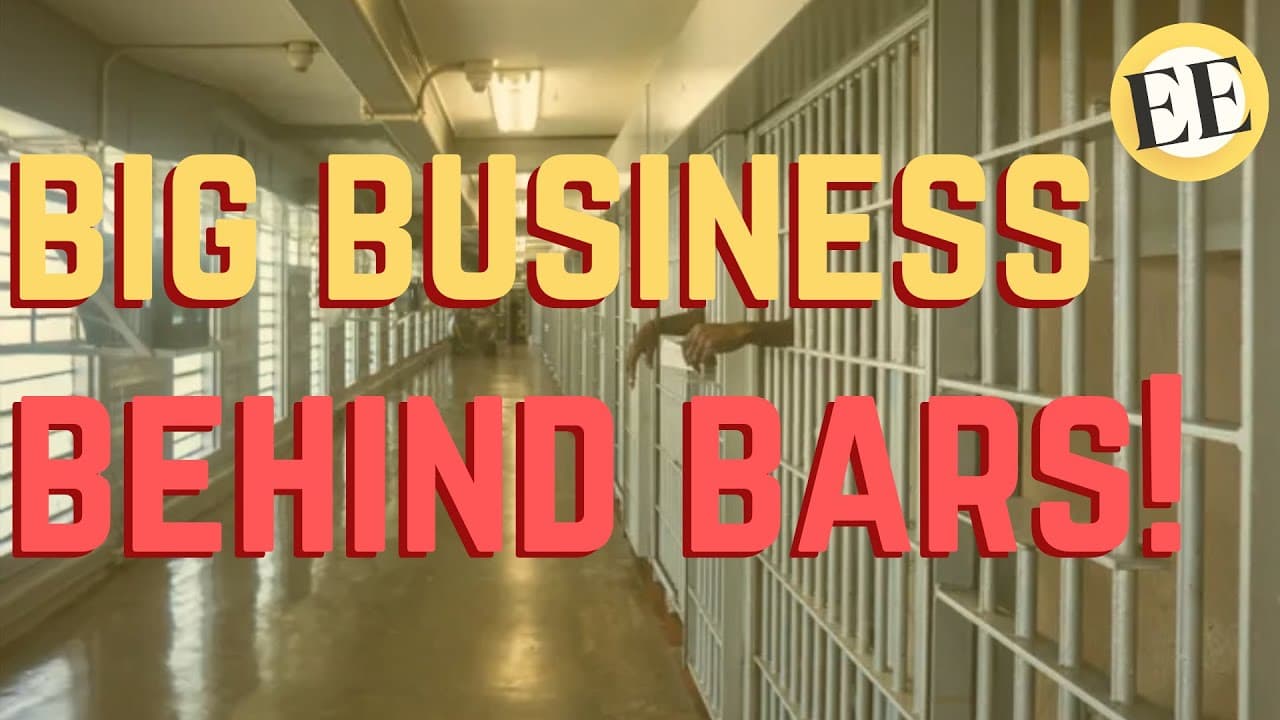
TL;DR
The prison industrial complex significantly impacts national economies through the opportunity cost of incarceration and the economic role of prison labor. The cost of maintaining prisons is substantial, often outweighing the benefits, and prison labor can displace regular jobs, affecting employment and wages. Understanding these economic dynamics is crucial for addressing the broader implications of incarceration.
Transcript
There are over 10 million people in some form of government incarceration around the world today. There are 2.3 million in the USA alone and anyway you slice it that is a huge population of people. The population of people living in prisons is larger than the population of people living in most countries on earth. Now the arguments for and again... Read More
Key Insights
- The global prison population exceeds 10 million, with 2.3 million in the USA, creating a significant economic impact.
- Prisons are expensive, with costs in New York reaching $892,206 per prisoner annually, affecting state budgets and taxes.
- Prison costs are categorized into anticipation, consequence, and response to crime, influencing economic decisions.
- Nonviolent offenders may incur less cost, questioning the economic efficiency of their incarceration.
- Prison labor provides vocational training but often displaces regular workers due to lower wages.
- Private companies benefit from prison labor, yet costs per inmate have risen despite increased labor.
- Prison labor affects low-skilled job markets, contributing to economic inequality and poverty cycles.
- The prison system's economic impact extends to employment, community stability, and taxpayer burdens.
Install to Summarize YouTube Videos and Get Transcripts
Explore YouTube Video Summarizer or Get YouTube Transcript Extractor
Questions & Answers
Q: How does the prison system impact national economies?
The prison system impacts national economies through high maintenance costs, opportunity costs of incarceration, and the economic role of prison labor. Prisons require substantial funding from state budgets, often leading to increased taxes. Prison labor can displace regular jobs, affecting employment and wages, while private companies benefit from low-cost labor, exacerbating economic inequality.
Q: What are the costs associated with maintaining prisons?
The costs associated with maintaining prisons include direct expenses such as housing, feeding, and supervising inmates, as well as indirect costs like court operations and public defense. In New York, for example, the cost per prisoner can reach $892,206 annually. These costs are categorized into anticipation, consequence, and response to crime, impacting state budgets and taxpayer burdens.
Q: How does prison labor affect the job market?
Prison labor affects the job market by providing a pool of low-cost workers who are paid significantly less than regular employees. This can lead to the displacement of regular workers, particularly in low-skilled professions, as companies opt for cheaper prison labor. This dynamic contributes to economic inequality and can perpetuate poverty cycles, impacting community stability and employment rates.
Q: What is the opportunity cost of incarceration?
The opportunity cost of incarceration refers to the potential economic contributions lost when individuals are imprisoned instead of participating in the workforce. This includes lost productivity, wages, and economic activity that could have been generated by these individuals if they were not incarcerated. Additionally, the resources spent on maintaining prisons could be allocated to other societal needs, such as education or infrastructure.
Q: Why are private companies involved in prison labor?
Private companies are involved in prison labor because it provides access to a low-cost workforce. These companies can reduce operational costs by employing inmates who are paid significantly less than regular workers. While this arrangement can offer vocational training to inmates, it primarily benefits private institutions financially, contributing to rising costs per inmate and economic inequality.
Q: How does incarceration contribute to economic inequality?
Incarceration contributes to economic inequality by displacing regular workers with low-cost prison labor, reducing job opportunities and wages for non-incarcerated individuals. Additionally, the economic burden of maintaining prisons falls on taxpayers, often disproportionately affecting lower-income communities. This cycle of poverty and incarceration can perpetuate economic disparities within society.
Q: What are the externalities of the prison system?
The externalities of the prison system include both positive and negative effects on society. Positive externalities may involve vocational training for inmates, while negative externalities include economic inequality, displacement of regular workers, and high taxpayer burdens. The system's impact on community stability, employment, and overall economic health are significant considerations when evaluating prison policies.
Q: How can the economic impact of prisons be addressed?
The economic impact of prisons can be addressed by evaluating cost-benefit analyses of incarceration, particularly for nonviolent offenders, and exploring alternatives that reduce costs while maintaining public safety. Reforms could focus on reducing prison populations, improving rehabilitation and reentry programs, and ensuring fair wages for prison labor to mitigate economic inequality and enhance community stability.
Summary & Key Takeaways
-
The prison industrial complex involves high economic costs and opportunity costs, affecting national and state economies. Prisons are costly to maintain, with significant taxpayer burdens, particularly in states like New York. These costs are broken down into anticipation, consequence, and response to crime, influencing economic and policy decisions.
-
Prison labor provides vocational training but poses issues such as displacing regular workers due to low wages. Private companies benefit from this labor, yet the cost per inmate continues to rise. This dynamic contributes to economic inequality and affects low-skilled job markets, perpetuating poverty cycles.
-
The economic impact of the prison system extends beyond incarceration costs, affecting employment, community stability, and taxpayer burdens. Understanding these economic dynamics is crucial for addressing the broader implications of incarceration and seeking more efficient solutions.
Read in Other Languages (beta)
Share This Summary 📚
Summarize YouTube Videos and Get Video Transcripts with 1-Click
Try YouTube Summary with ChatGPT & Claude or YouTube Transcript Generator
Explore More Summaries from Economics Explained 📚






Summarize YouTube Videos and Get Video Transcripts with 1-Click
Try YouTube Summary with ChatGPT & Claude or YouTube Transcript Generator