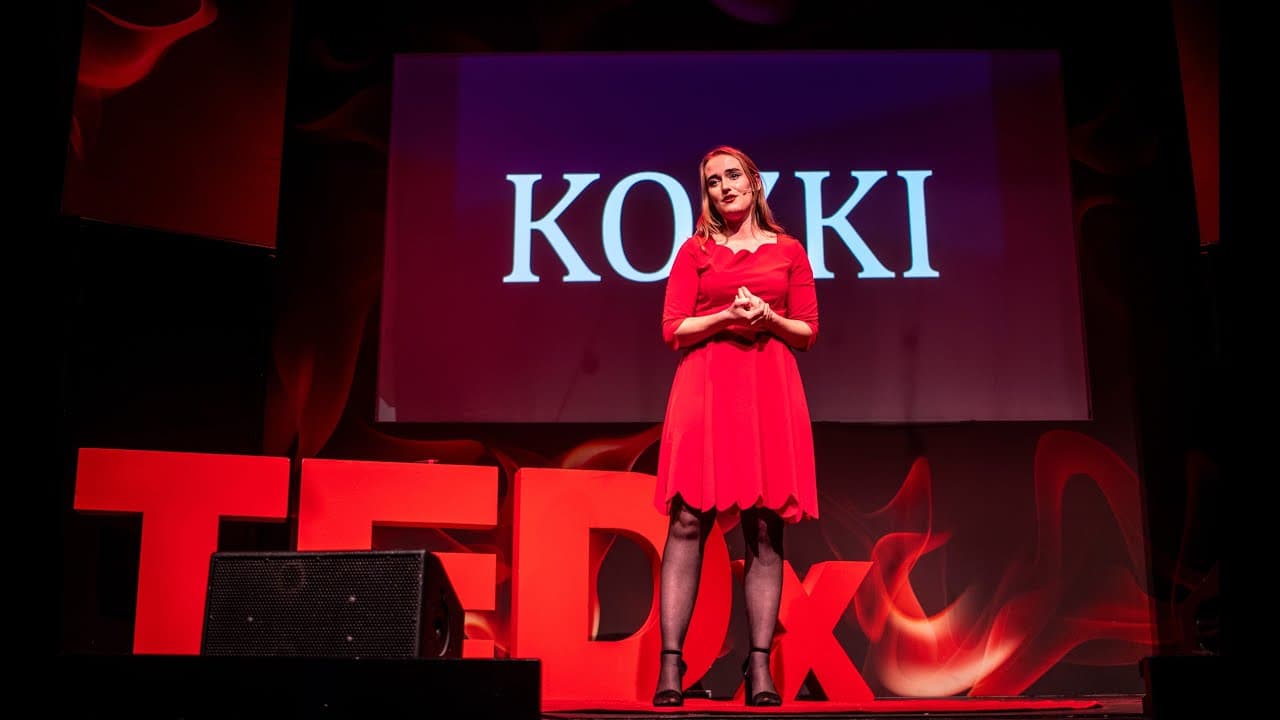
Kozki - A new form to withdraw sexual consent | Lora Luna Hoogendijk | TEDxUniversiteitVanAmsterdam
TL;DR
Proposing a new word, Koski, as a tool for clear and respectful communication of consent in intimate situations.
Transcript
welcome and thank you for coming to my TED Talk wow what a dream to say these words out loud all right so behind me you see a word it's Koski I will reveal the meaning later but for now you'll have to have a little bit of patience I'm going to put this here no means no we all know that right but does yes also mean yes in a recent Scandal a certain ... Read More
Key Insights
- ⛑️ Non-verbal cues and body language are inadequate for determining consent.
- 😃 Enthusiastic verbal yes may not always convey true intention.
- 😑 Societal conditioning can hinder individuals from expressing lack of desire or discomfort.
- ✋ Koski offers a solution to communicate stopping a sexual situation clearly and without guilt.
- 🔑 Using words like Koski can reshape cultural norms and promote a culture of consent.
- 💱 Shifting responsibility for communication of boundaries onto individuals or the collective can empower change.
- 🔨 Language is a powerful tool in reshaping culture, values, and beliefs.
Install to Summarize YouTube Videos and Get Transcripts
Explore YouTube Video Summarizer or Get YouTube Transcript Extractor
Questions & Answers
Q: Why are non-verbal cues and body language not reliable indicators of consent?
Non-verbal cues can be misinterpreted, as seen in the example of a football player being forcibly kissed despite her open and smiling body language.
Q: How does the proposed word, Koski, aim to improve communication of consent?
Koski provides a clear and immediate signal to stop without the fear of social compliance, empowering individuals to communicate their boundaries effectively.
Q: How does societal conditioning affect the communication of consent?
Societal conditioning, such as the 'nice girl syndrome,' influences individuals to prioritize social expectations over their own boundaries, making it challenging to communicate lack of desire or discomfort.
Q: How can Koski contribute to reshaping cultural norms around consent?
Koski serves as a catalyst for change by shifting the responsibility of clear communication onto individuals or the collective, fostering a culture of respect and understanding.
Summary & Key Takeaways
-
Non-verbal cues and body language are insufficient indicators of consent.
-
Enthusiastic verbal yes is not always reliable for consent.
-
Proposing Koski as a new word to communicate stopping a sexual situation clearly and respectfully.
Read in Other Languages (beta)
Share This Summary 📚
Summarize YouTube Videos and Get Video Transcripts with 1-Click
Try YouTube Summary with ChatGPT & Claude or YouTube Transcript Generator
Explore More Summaries from TEDx Talks 📚
Summarize YouTube Videos and Get Video Transcripts with 1-Click
Try YouTube Summary with ChatGPT & Claude or YouTube Transcript Generator