Scott Galloway: Will AI Replace All Jobs, and Who Benefits?
TL;DR
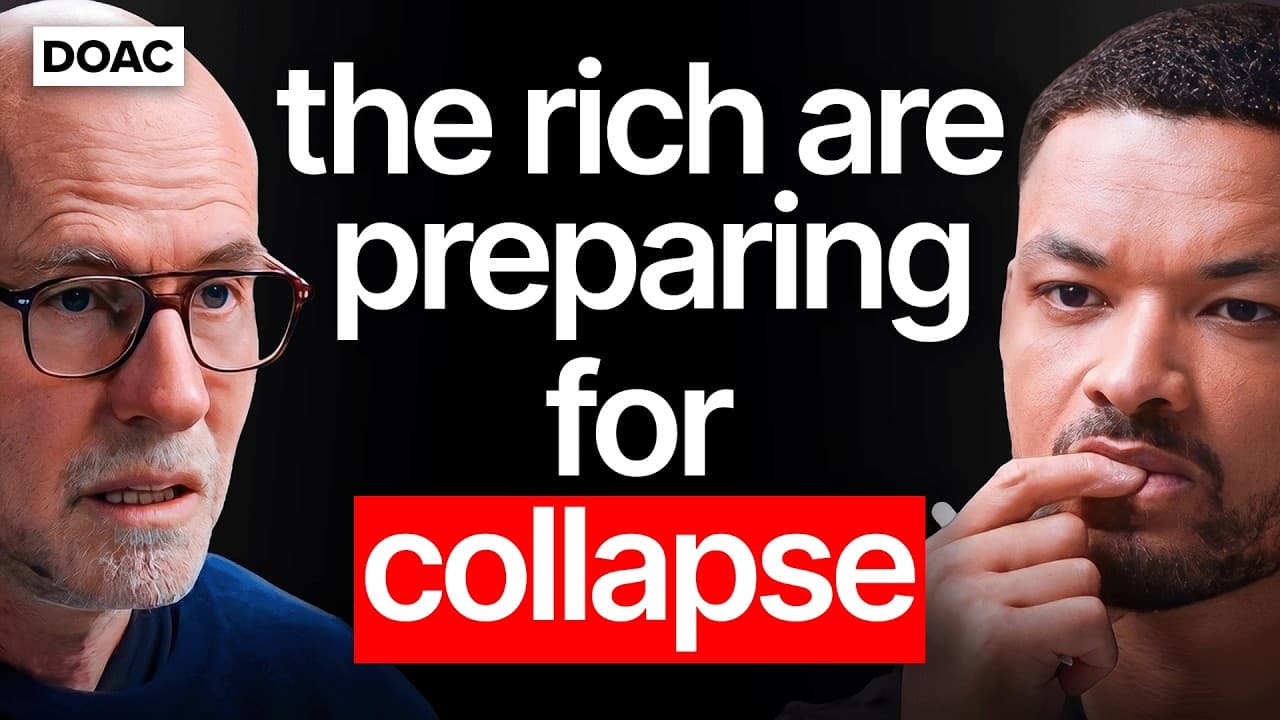
Scott Galloway argues that AI will create more jobs than it destroys, despite executives’ warnings about widespread replacement. He says AI’s reputation has eroded over the last 18 months because its benefits appear concentrated among wealthy people, particularly those earning over $200,000, while middle-class households face higher electricity bills. He also warns that frictionless online relationships may weaken young people’s ability to endure rejection. Read on for his reasoning.
Transcript
I think the greatest brand destruction over the last 18 months is the US brand abroad and AI. So with America, Trump has been convinced that this was his defining moment of being known as the president that liberated the Middle East. But I think the Trump administration will be known for criminal corruption and incompetence. And that incompetence i... Read More
Key Insights
- AI is expected to create more jobs than it destroys over the medium and long term.
- Wealthy individuals generally have a positive view of AI as it benefits their investments.
- Middle-class individuals may feel excluded from AI's benefits due to rising costs and lack of access.
- AI's frictionless interactions may hinder young people's ability to handle rejection.
- There is skepticism about AI's potential for massive job destruction, viewing it as marketing hype.
- AI's impact on job markets may lead to reshaping rather than eliminating roles.
- The narrative around AI often involves catastrophizing to justify high valuations.
- AI's convergence may prevent a small number of companies from capturing all shareholder value.
Install to Summarize YouTube Videos and Get Transcripts
Explore YouTube Video Summarizer or Get YouTube Transcript Extractor
Questions & Answers
Q: Will AI replace all jobs?
Scott Galloway does not believe AI will replace all jobs. He argues that the employment data does not show a major external shock approaching and expects AI to create more jobs than it destroys.
Q: Why is Scott Galloway skeptical of predictions that AI will destroy jobs?
Galloway views much of the catastrophizing as a marketing tactic. He argues that portraying AI as powerful enough to transform society helps companies justify extremely high valuations.
Q: Why has public perception of AI deteriorated?
Galloway says AI went from seeming scary but potentially optimistic and wealth-creating to appearing very scary and primarily beneficial to people who are already wealthy. He describes its brand as suffering tremendous erosion over the last 18 months.
Q: How does wealth affect people’s attitudes toward AI?
Galloway says attitudes toward AI are directly correlated with wealth. The only group he identifies as rating AI positively is people earning over $200,000, who often see it supporting their portfolios, innovation, and a rising S&P.
Q: Why might middle-class people feel excluded from AI’s benefits?
An average middle-class person may notice rising electricity bills without having access to investments in leading AI companies. From that perspective, AI can look like a wealth creator for the wealthiest rather than a broadly shared opportunity.
Q: What concern does Scott Galloway raise about AI and young people?
Galloway worries that AI and frictionless online relationships are causing many young people to lose the ability to endure rejection. His concern focuses on how easier digital interactions may affect their tolerance for difficult interpersonal experiences.
Q: Does Scott Galloway trust AI companies to protect the public’s interests?
No. Although Galloway calls himself an AI optimist, he says these technology companies do not have the public’s best interests at heart and criticizes how their leaders have managed AI’s image.
Q: What AI-industry claims are discussed in the conversation?
The conversation cites Elon Musk’s claim that AI and robots will replace all jobs and make work optional. It also cites Sam Altman’s prediction that, by the end of 2028, more of the world’s intellectual capacity could reside inside data centers than outside them; Galloway questions how much of such messaging is truth versus marketing.
Summary & Key Takeaways
-
AI is anticipated to generate more employment opportunities than it eliminates, though it will cause significant changes in the job market. Wealthy individuals tend to view AI favorably as it enhances their investment portfolios, whereas middle-class individuals may feel marginalized due to increased costs and limited access. Concerns exist about AI's effect on young people's resilience to rejection, as online interactions become increasingly frictionless.
-
There is skepticism regarding claims of AI causing massive job losses, with some viewing such narratives as marketing ploys to justify high valuations. AI's influence on employment may lead to a transformation rather than an outright elimination of roles. The convergence of AI technologies might make it challenging for a few companies to monopolize shareholder value.
-
Despite concerns about AI's potential for widespread job destruction, evidence suggests that AI will likely create more jobs than it eliminates. The technology's impact on employment markets might result in a reshaping of roles rather than their elimination. The narrative surrounding AI often involves catastrophizing to support high valuations, but there is skepticism about such claims.
Read in Other Languages (beta)
Share This Summary 📚
Summarize YouTube Videos and Get Video Transcripts with 1-Click
Try YouTube Summary with ChatGPT & Claude or YouTube Transcript Generator
Explore More Summaries from The Diary Of A CEO 📚






Summarize YouTube Videos and Get Video Transcripts with 1-Click
Try YouTube Summary with ChatGPT & Claude or YouTube Transcript Generator