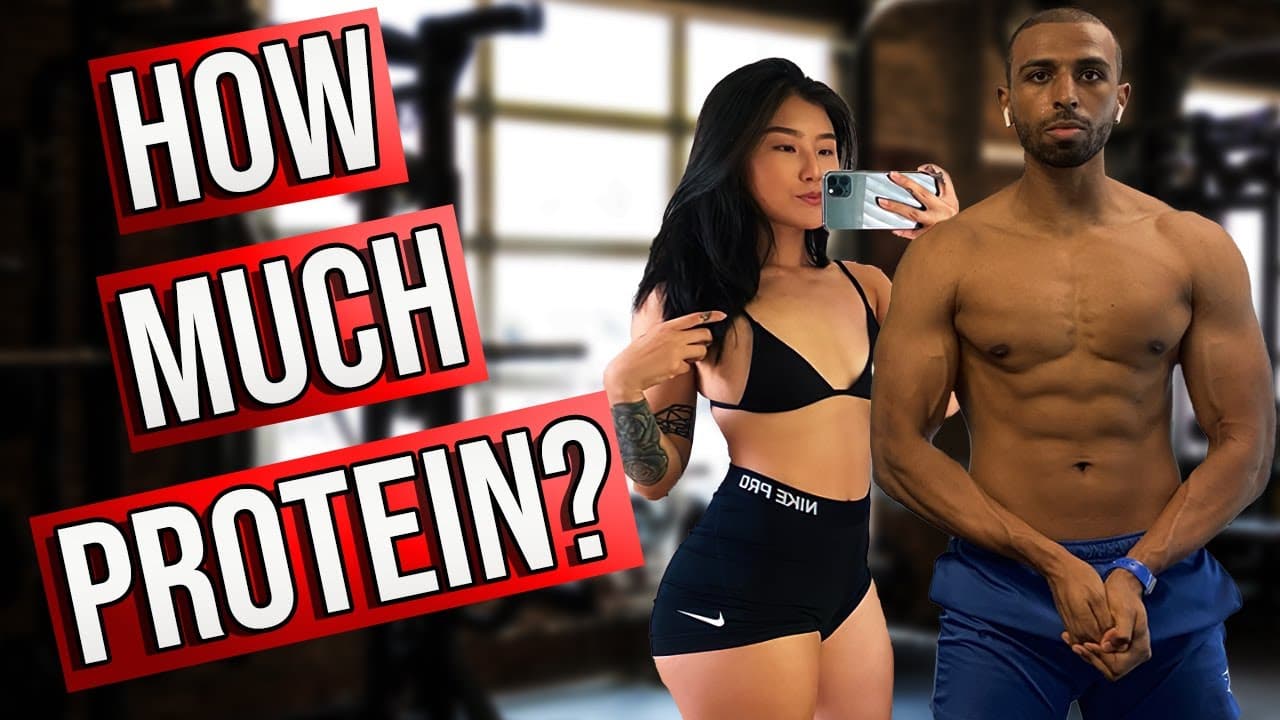
How much protein per day [Sowon] protein intake
TL;DR
Effective protein intake is crucial for improving body composition and muscle development.
Transcript
what's up guys martin gaines here from unblock fitness today i got two special guests with me salon and flucky and we're going to talk to you guys about protein let's get into it so when it comes to how much protein you should eat a lot of people have a skewed idea a lot of people under eat their protein especially when it comes to improving their ... Read More
Key Insights
- 🥅 Many individuals misjudge their protein requirements, failing to consume enough to support their fitness goals.
- 🥺 Women, in particular, are often misled to believe increased protein leads to bulkiness, but this is largely a misconception.
- ⚾ The recommended protein intake varies based on personal fitness objectives, highlighting the need for tailored dietary strategies.
- 💆 Achieving optimal protein consumption might necessitate calculating lean body mass versus total body weight.
- 👾 Research on protein absorption is inconclusive; however, spacing out protein intake into multiple meals is generally recommended for better muscle recovery.
- 💪 Protein absorption is not solely about quantity; the quality and type of protein consumed can also influence muscle synthesis.
- 💪 The body absorbs all ingested protein, but how much is used for muscle building is contingent on several factors, including meal structure and overall nutrient composition.
Install to Summarize YouTube Videos and Get Transcripts
Explore YouTube Video Summarizer or Get YouTube Transcript Extractor
Questions & Answers
Q: How much protein should one consume for optimal body composition?
For optimal body composition, aim for at least 0.8 grams per pound of body weight. To maximize results, 1 gram per pound is practical for most, with an ideal range being 1.2 to 1.6 grams per pound of lean body mass, which requires calculating body fat percentage.
Q: Can women become bulky from eating too much protein?
No, women typically do not become bulky from increased protein intake without significant effort in strength training. Adequate protein is vital for building curves and supporting fat loss while maintaining a toned appearance, debunking the myth linked to increased protein consumption.
Q: How is protein absorption affected by meal frequency?
Protein absorption varies based on meal frequency, with some studies suggesting that spreading protein intake across three to five meals may enhance muscle synthesis. Aiming for equally distributed protein meals can keep the body in an anabolic state and optimize muscle repair post-exercise.
Q: Is it necessary to have smaller, frequent protein meals to maximize results?
While there is conflicting evidence about meal size and frequency, it is advisable to distribute protein across multiple meals to ensure consistent amino acid levels for muscle synthesis. However, the total daily intake is most significant, so choose a method that allows for better adherence to your goals.
Summary & Key Takeaways
-
Many people underestimate their protein needs, especially those seeking better body composition; athletes and fitness enthusiasts should increase protein intake beyond average levels.
-
Women often fear bulky physiques from high protein diets, but adequate protein is essential for muscle growth and fat loss without resulting in unwanted bulkiness.
-
Optimal protein intake ranges between 0.8 to 1.6 grams per pound of body weight, depending on goals, and spacing meals for protein absorption is key for muscle synthesis.
Read in Other Languages (beta)
Share This Summary 📚
Summarize YouTube Videos and Get Video Transcripts with 1-Click
Try YouTube Summary with ChatGPT & Claude or YouTube Transcript Generator
Explore More Summaries from FreshandFit 📚
Summarize YouTube Videos and Get Video Transcripts with 1-Click
Try YouTube Summary with ChatGPT & Claude or YouTube Transcript Generator