Why Could Vodafone, Tesco, and Phoenix Group Return Up to 20%?

TL;DR
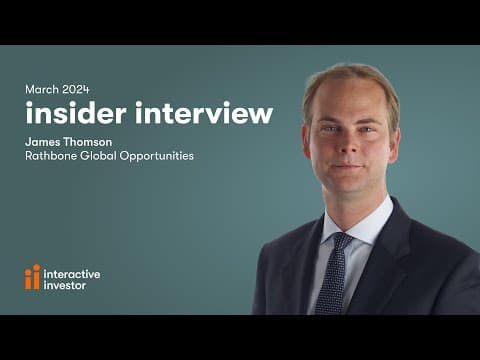
Vodafone, Tesco, and Phoenix Group could deliver 10%, 15%, or 20% returns over the next year or two because each can improve its own fortunes without relying on economic growth. Tesco is pursuing a turnaround under Dave Lewis, Vodafone is benefiting from stronger European pricing and consolidation, and Phoenix Group can consolidate closed life insurance businesses. Read on to understand the specific investment case for each company.
Transcript
well I look for two particular types of companies primarily to invest in my fund one is quality companies have very strong franchisees and that we think of being undervalued by the market right now in terms of their strengths and the other is at the opposite end of the spectrum really which is self-help or recovery type companies where they've had ... Read More
Key Insights
- 🤳 The investor focuses on quality companies that are undervalued by the market and self-help or recovery companies.
- 😋 He is currently interested in telecoms group Vodafone and food retailer Tesco, both of which are showing signs of improvement.
- 🥡 The investor has also recently started investing in the life insurance company Phoenix Group, taking advantage of industry consolidation opportunities.
- 🙈 Stock market valuations are high, making it harder to find value, but the investor sees value in sectors like oil, pharmaceuticals, and companies like Tesco.
- 👀 The investor is cautious about the market outlook and expects modest returns, so he looks for companies that can improve their own fortunes without relying on economic growth.
- ↩️ Companies like Phoenix Group, Tesco, and Vodafone are expected to provide decent returns over the next year or two.
- 🛟 The investor believes that the ongoing consolidation in the life insurance industry presents favorable opportunities for Phoenix Group.
Install to Summarize YouTube Videos and Get Transcripts
Explore YouTube Video Summarizer or Get YouTube Transcript Extractor
Questions & Answers
Q: Why could Vodafone, Tesco, and Phoenix Group return up to 20%?
The investor believes these companies can improve their own fortunes without depending on economic growth. If everything goes to plan, he sees the potential for 10%, 15%, or 20% returns over the next year or two.
Q: What types of companies does the investor seek for his fund?
He primarily seeks quality companies with very strong franchises that appear undervalued by the market. He also targets self-help or recovery companies that have experienced problems but are changing in ways that could improve their prospects.
Q: Why does the investor see an opportunity in Tesco?
Tesco is a turnaround situation under Dave Lewis, who is about 18 months into a program to rehabilitate the company. The effort is focused particularly on making its UK business more profitable, and the early results look promising.
Q: Why is the investor keen on Vodafone?
Vodafone has substantial operations in continental Europe, where mobile telecom markets have gradually improved over the last few years. Better pricing power and industry consolidation have strengthened Vodafone's position and its ability to generate more profit.
Q: What makes Phoenix Group an attractive investment?
Phoenix Group operates closed life insurance businesses that no longer sell policies to new customers. It is well placed to acquire smaller closed businesses, consolidate them into its operations, and capture cost savings and synergies.
Q: How is life insurance industry consolidation helping Phoenix Group?
The investor expects the life insurance industry to undergo further consolidation and believes Phoenix Group is ideally positioned to benefit. Phoenix completed two transactions last year, which he views as only the beginning of that process.
Q: How does the investor view current stock market valuations?
He believes valuations have become quite high after a very strong stock market upswing, making value harder to find. However, he still sees pockets of value in oil companies, pharmaceutical companies, and businesses such as Tesco.
Q: Why does the investor favor companies that can improve independently?
He is cautious about the market outlook and does not expect great overall returns in the near term. He therefore favors companies such as Phoenix Group, Tesco, and Vodafone that can improve through their own actions rather than relying on economic growth.
Summary & Key Takeaways
-
The investor looks for quality companies that are undervalued by the market and self-help or recovery companies.
-
He is particularly interested in telecoms group Vodafone and food retailer Tesco, which are showing signs of improvement.
-
The investor has also recently started investing in the life insurance company Phoenix Group, taking advantage of industry consolidation opportunities.
Read in Other Languages (beta)
Share This Summary 📚
Summarize YouTube Videos and Get Video Transcripts with 1-Click
Try YouTube Summary with ChatGPT & Claude or YouTube Transcript Generator
Explore More Summaries from interactive investor 📚


Summarize YouTube Videos and Get Video Transcripts with 1-Click
Try YouTube Summary with ChatGPT & Claude or YouTube Transcript Generator