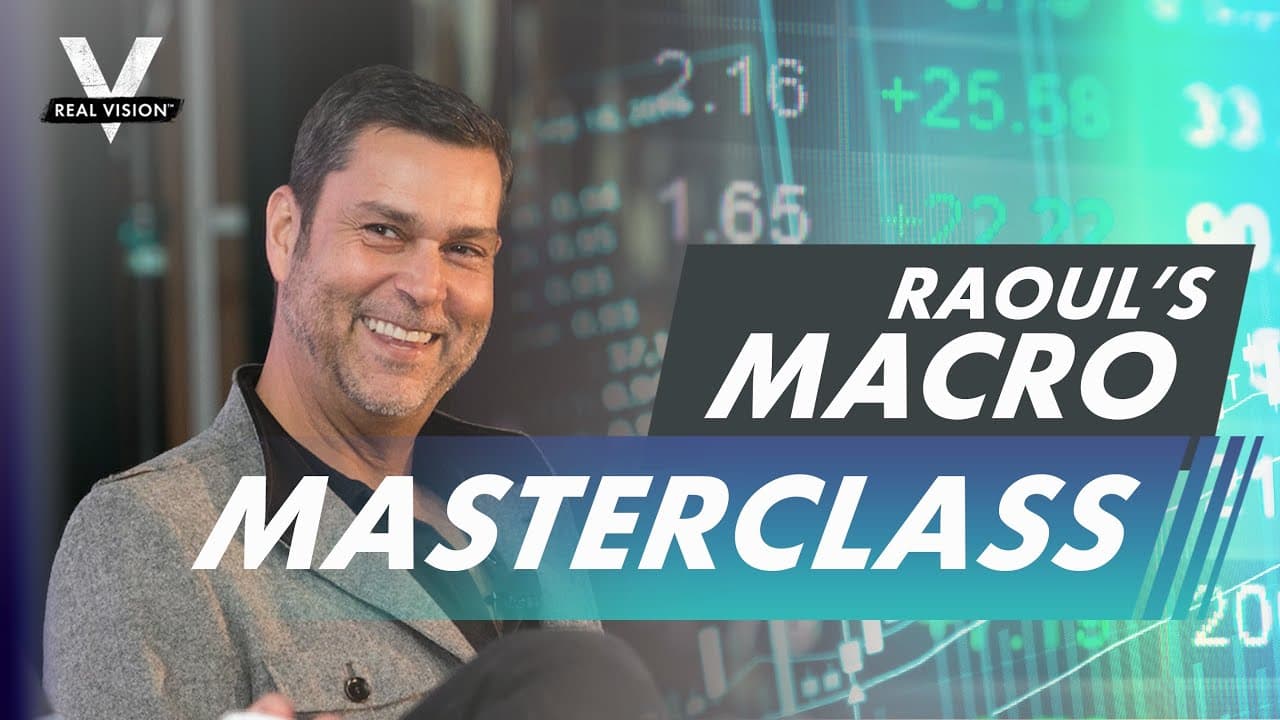
Raoul Pal: Macro Masterclass
TL;DR
Raoul Pal argues that inflation fears may have peaked and that the economy is shifting toward lower growth and declining inflation. CPI had reached 8%, but commodity inflation’s year-on-year rate of change was falling and supply chains were beginning to ease. He explains how demand destruction, bonds, growth equities, and technologies such as AI, robotics, and crypto fit his macro framework. Read on for the portfolio implications.
Transcript
RAOUL PAL: Micro investing is a journey. Join me, Raoul Pal, as I go on a journey of discovery through the macro landscape. This is how I build my macro framework, by talking to the smartest people in the world. Hi, everyone. I'm Raoul Pal, the CEO and co-founder of Real Vision. But today, I'm going to talk to you guys as CEO and founder of Global ... Read More
Key Insights
- Raoul Pal emphasizes the importance of understanding macroeconomic frameworks, especially during complex times with supply shocks and potential recessions.
- The current economic environment is marked by inflation reminiscent of the 1970s, driven by supply chain disruptions and geopolitical tensions.
- Pal suggests that inflation fears may have peaked and anticipates a shift towards lower growth and reducing inflation, impacting portfolios and markets.
- Supply chain issues are easing, but the potential for a recession or growth shock remains, with indicators like ISM suggesting economic slowdown.
- Demand destruction due to high prices is a key theme, affecting consumer behavior and potentially moderating commodity prices.
- The bond market is not currently pricing in economic weakness, but Pal anticipates a shift as inflation moderates and growth slows.
- Pal draws parallels between the current environment and the 1940s, suggesting a period of financial repression with opportunities for growth.
- Technology and the exponential age present significant investment opportunities, despite concerns about inflation and market volatility.
Install to Summarize YouTube Videos and Get Transcripts
Explore YouTube Video Summarizer or Get YouTube Transcript Extractor
Questions & Answers
Q: Why does Raoul Pal think inflation fears may have peaked?
Pal says commodity inflation’s year-on-year rate of change has been falling and should eventually feed through to CPI. He also points to easing supply chains and demand destruction from high prices as forces that could reduce inflationary pressure.
Q: What caused inflation to reach 8% in Raoul Pal’s analysis?
Pal attributes the inflation surge primarily to supply shocks rather than the kind of demographic demand shock seen in the 1970s. Pandemic shutdowns disrupted manufacturing, trucking, and the movement of goods, while commodity underinvestment and the war in Ukraine further constrained supply.
Q: How is the current inflation different from inflation in the 1970s?
Pal says the 1970s combined a major demand shock from Baby Boomers entering their prime buying years with supply shocks such as the 1973–1974 Arab oil embargo and the 1979 Iran crisis. He views the current episode as more heavily driven by pandemic disruptions, insufficient commodity capacity, and commodities removed from the market during the Russian crisis and war in Ukraine.
Q: Does falling food commodity inflation mean food prices will become cheaper?
No. Pal says a falling year-on-year rate of change does not necessarily mean food prices decline; it means they rise at a less shocking pace. He also warns that fertilizer problems, the Western harvest, and whether food continues to flow from Russia could affect shortages.
Q: How does Raoul Pal assess the risk of recession?
Pal sees a significant risk of economic weakness, with indicators such as ISM pointing toward a slowdown. His framework leans toward a growth shock driven by high prices, reduced demand, and moderating inflation, though he explicitly examines whether that deterioration could become a recession.
Q: What does demand destruction mean in Pal’s macro framework?
Demand destruction occurs when high prices act like a tax on consumers and businesses, leaving less money for discretionary spending. The resulting decline in demand can moderate commodity inflation while also weakening economic growth.
Q: What is Raoul Pal’s outlook for bonds and growth equities?
Pal expects lower growth and declining inflation to change the market environment. The existing analysis identifies potential opportunities in bonds and growth equities as markets begin to recognize economic weakness and the inflation narrative shifts.
Q: Which technology investments does Raoul Pal highlight?
Pal highlights AI, robotics, and crypto as opportunities associated with the exponential age of technological adoption. He argues that technology can drive down costs and support growth even during a period of financial repression and market volatility.
Summary & Key Takeaways
-
Raoul Pal discusses the current economic landscape, highlighting inflationary pressures and potential recession risks. He emphasizes the role of supply chain disruptions and geopolitical tensions in shaping these dynamics.
-
Pal argues that inflation fears may have peaked and anticipates a shift towards lower growth and reduced inflation. This transition could significantly impact portfolios, with opportunities in bonds and growth equities.
-
Drawing parallels with the 1940s, Pal suggests that financial repression could coexist with technological growth, offering investment opportunities in sectors like AI, robotics, and crypto, despite market volatility.
Read in Other Languages (beta)
Share This Summary 📚
Summarize YouTube Videos and Get Video Transcripts with 1-Click
Try YouTube Summary with ChatGPT & Claude or YouTube Transcript Generator
Explore More Summaries from Real Vision 📚


Summarize YouTube Videos and Get Video Transcripts with 1-Click
Try YouTube Summary with ChatGPT & Claude or YouTube Transcript Generator